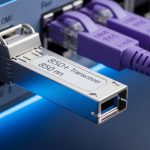
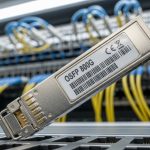
SFP Transceivers for OTN and SONET Networks: A Practical Guide for Modern Telecom Infrastructures
As optical networks evolve, the role of Small Form-factor Pluggable (SFP) transceivers in Optical Transport Network (OTN) and Synchronous Optical Networking (SONET) architectures has grown from a convenience feature to a foundational element. SFP transceivers offer modularity, scalability, and field-replaceable flexibility that are essential for maintaining high-availability, carrier-grade networks. This article explores how SFP transceivers are used in OTN and SONET environments, the key technical considerations, and best practices for selecting, deploying, and maintaining them for optimal performance and cost-efficiency.
Understanding SFP Transceivers in OTN and SONET Environments
OTN and SONET networks serve as the backbone of long-haul and metro connectivity, providing robust transport, error correction, and monitoring capabilities. SFP transceivers are compact, hot-swappable devices that convert electrical signals to optical signals (and vice versa) for transmission over fiber. In OTN, SFPs are often used for client-side interfaces (e.g., Ethernet, Fibre Channel) and for line-side connections in less-than-28 Gbps channelized paths. In SONET/SDH networks, SFPs support legacy DS1/DS3, OC-3/12/48, and higher-order STS-1/OC-3-STM-1/STM-4 interfaces, enabling seamless upgrades and mixed-network deployments. The versatility of SFPs helps operators bridge different technologies, scale capacity, and simplify maintenance with plug-and-play replaceability.
Key Technical Considerations for SFPs in OTN and SONET
- Module Type and Compliance: Choose SFPs that meet industry standards such as SFP MSA, OIF, ITU-T, and IEEE where applicable. For OTN, ensure compatibility with OTUk containers (e.g., OTUk1, OTUk2) and properly support corresponding line rates. For SONET, verify compatibility with STM-1/4/16/64 and OC-3/12/48/192 bit rates.
- Wavelength and Fiber Type: Common wavelengths include 1310 nm and 1550 nm. Multimode (MMF) versus single-mode fiber (SMF) selection matters for reach and dispersion. Long-haul OTN deployments typically favor 1550 nm SMF with dispersion management, while closer metro links may use 1310 nm or MMF variants.
- Data Rate and Modulation: OTN and SONET support varying data rates. SFPs used on the client side may handle 1 Gbps, 2.5 Gbps, 4 Gbps, or higher, while line-side SFPs must align with network timing and framing schemes (e.g., OTUk, SONET STS/STM levels). Some SFPs support SFP+ performance for higher rates and improved optics integration.
- Forward Error Correction (FEC) and Overhead: OTN relies on robust FEC to improve error resilience. Ensure the transceiver and the network element (NE) support the required FEC schemes (e.g., Reed-Solomon) and that FEC overhead is accounted for in capacity planning.
- Wavelength Division Multiplexing (WDM) Compatibility: In WDM-enabled OTN/SONET networks, ensure SFPs are compatible with DWDM systems, including proper ITU grid alignment (e.g., ITU-T G.694.1) and filtering requirements to prevent crosstalk.
- Amplification, Reach, and Dispersion: SFP selection impacts reach. For long-haul, ensure compatibility with Erbium-Doped Fiber Amplifiers (EDFAs), dispersion compensation modules, and reach extension technologies to meet link budgets.
- Diagnostics and Monitoring: Modern SFPs include Digital Optical Monitoring (DOM) and alarms. Look for features like optical power levels, temperature, supply voltage, and lock status to facilitate proactive maintenance and SLA assurance.
Selecting the Right SFP for Your OTN/SONET Network
- Assess Your Network Topology and Requirements: Determine whether the link is metro, regional, or long-haul. Identify target data rates, wavelength plans, and whether the path will carry native OTN payloads, SONET payloads, or client-side traffic (e.g., Ethernet over OTN).
- Ensure Carrier-Grade Quality: For networks requiring high availability, prefer SFPs with proven reliability, robust temperature ranges, and extended mean time between failures (MTBF). Consider vendor support for field-replaceable units and rapid repair services.
- Compatibility with Network Elements: Verify that transceivers are supported by your NE vendors (routers, switches, OTN switches, and muxponder/ROADM devices) to avoid issues with implementation-specific block checks, vendor locking, or warranty conflicts.
- Lifecycle and Spare Strategies: Plan for spares that match your lead times and replacement policies. Maintain a documented interoperability matrix to minimize downtime when swapping transceivers in a live network.
- Security and Firmware: Keep SFP firmware up to date and ensure security best practices for supply chain integrity and device authentication within the NE ecosystem.
Practical Deployment Tips and Best Practices
- Color-Coding and Labeling: Use clear labeling for SFPs showing part numbers, wavelength, rate, and OTUk/STM levels. This reduces swap errors during maintenance windows.
- Thermal Management: SFPs generate heat; ensure adequate airflow and avoid stacking devices beyond recommended density. Overheating can degrade DOM readings and shorten device life.
- Power Budgeting: Align transmitter optical power (Tx) with receiver sensitivity (Rx) margins. In OTN/SONET networks, precise power budgets are critical to maintain the required Bit Error Rate (BER) targets across all hops.
- DOM Utilization: Regularly monitor optical power, temperature, and bias current. Set thresholds to trigger alerts before approaching margin limits. Use these insights for proactive provisioning and maintenance planning.
- Testing and Troubleshooting: When field testing, validate insertion loss, return loss, and end-to-end OTN overhead alignment. Use built-in diagnostic tools and external OTDR traces to verify fiber integrity and transceiver performance.
- Upgrade Path Considerations: Plan for future-proofing by selecting SFPs that support evolving OTN/YANG models, big-endian/little-endian compatibility, and enhanced FEC as standards evolve.
Common SFP Variants Used in OTN and SONET Deployments
- SFP for Ethernet over OTN: These transceivers convert Ethernet frames to optical signals suitable for OTN transport. They are preferred for mobile backhaul, data center interconnects, and enterprise backbone links where OTN offers optical grooming and efficient multiplexing.
- OC/STS/STM SFPs: Conventional SFPs support OC-3/12/48 or STM-1/4/16/64 patterns, enabling seamless integration with SONET/SDH networks. These are essential for legacy transport segments and for maintaining service continuity during modernization efforts.
- OTN-Optimized SFPs: Incorporate OTN framing (e.g., OTUk speeds) and robust FEC capabilities. They enable efficient payload mapping, forward error correction, and enhanced monitoring for modern metro and long-haul links.
- DWDM-Ready SFPs: In dense WDM deployments, DWDM-capable SFPs align with ITU channels and grid spacing, supporting multiplexed channels over a single fiber with optimized crosstalk control and automation.
Reliability, Testing, and Compliance
Reliability is non-negotiable in OTN and SONET networks. Use rigorous testing during procurement, including carrier-grade qualification, environmental stress screening, and adherence to industry standards. Compliance with ITU-T G.695 (optical interfaces), G.709 (OTN), and G.707 (frame structure) guidelines helps ensure interoperability and predictable performance. Regularly update firmware and maintain inventory controls to minimize the risk of incompatibility after hardware refresh cycles.
Conclusion: Maximizing Performance with the Right SFP Strategy
SFP transceivers are a critical, cost-effective tool for delivering scalable, reliable OTN and SONET networks. By selecting the right module type, wavelength, data rate, and FEC support,