
Choosing the right ToR transceiver is critical for data center architects and network engineers optimizing performance and scalability. This guide covers optical transceiver options from 100G to 400G, detailing technical specs, deployment scenarios, and cost considerations to help professionals make informed decisions for modern high-density environments.
Understanding ToR Transceivers: Overview and Technical Specifications
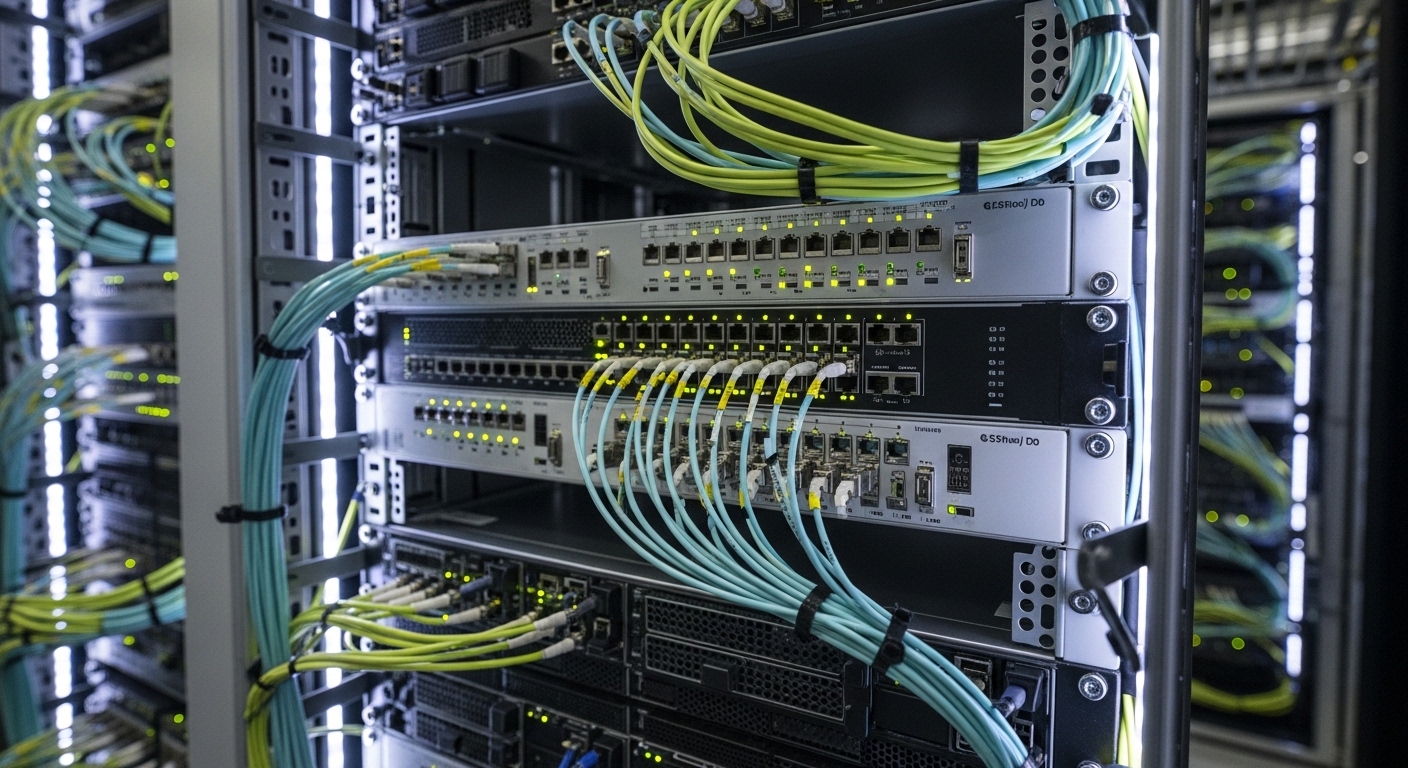
Top-of-Rack (ToR) transceivers act as the physical layer interface in data center switches, delivering high-speed optical connectivity between servers and spine-leaf fabrics. The evolution from 100G to 400G transceivers reflects advances in modulation techniques, wavelength division multiplexing, and connector standards to support increasing bandwidth demands.
| Specification | 100G QSFP28 SR4 | 200G QSFP56 FR4 | 400G QSFP-DD SR8 | 400G QSFP-DD FR8 |
|---|---|---|---|---|
| Wavelength | 850 nm | 1310 nm | 850 nm | 1310 nm |
| Max Reach | 100 m (OM4) | 2 km (Single-mode) | 70 m (OM4) | 2 km (Single-mode) |
| Connector | MPO-12 | LC Duplex | MPO-16 | LC Duplex |
| Data Rate | 100 Gbps | 200 Gbps | 400 Gbps | 400 Gbps |
| Operating Temp | 0 to 70°C | 0 to 70°C | 0 to 70°C | 0 to 70°C |
| Power Consumption | ~4.5 W | ~7 W | ~10 W | ~10 W |
| DOM Support | Yes | Yes | Yes | Yes |
Specifications vary by manufacturer and model, but standards such as IEEE 802.3bm and IEEE 802.3bs govern 100G and 400G transceiver formats respectively IEEE 802.3bs Standard. Popular models include the Cisco SFP-100G-SR4, Finisar FTLX8571D3BCL, and FS.com QSFP-DD-400G-SR8.
Real-World Deployment Scenario: High-Density Leaf-Spine Data Center
Consider a hyperscale data center deploying a leaf-spine topology with 48-port 100G ToR switches connected to 400G spine switches. Each ToR switch uses QSFP28 100G SR4 transceivers to link servers within a 100-meter radius on OM4 multimode fiber. Spine switches employ QSFP-DD 400G SR8 modules aggregating uplinks via MPO-16 connectors.
This setup supports per-rack bandwidth up to 4.8 Tbps (48 ports × 100 Gbps) and spine aggregation exceeding 10 Tbps. The 400G QSFP-DD transceivers facilitate high port density and efficient fiber utilization with low latency. Deployment includes continuous monitoring through DOM (Digital Optical Monitoring) to track temperature, voltage, and optical power, enabling proactive fault management.

Selection Criteria for ToR Transceivers
- Distance and Fiber Type: Choose multimode (OM3/OM4) for short-reach (<100m) and single-mode for extended reach (≥2 km).
- Switch Compatibility: Verify compatibility with switch vendor and model; many switches restrict transceiver brands due to firmware validation.
- Data Rate Requirements: Match transceiver speed to ToR switch port speed and uplink aggregation needs.
- Digital Optical Monitoring (DOM): Essential for real-time diagnostics to reduce troubleshooting downtime.
- Operating Temperature Range: For edge or harsh data center environments, choose industrial-grade optics supporting wider temp ranges.
- Connector and Cable Infrastructure: MPO-12 vs MPO-16 or LC duplex connectors impact cabling design and cost.
- Budget and Vendor Lock-in: Consider OEM transceivers vs validated third-party optics balancing cost and warranty compliance.
Common Mistakes and Troubleshooting Tips
- Incorrect Fiber Type or Reach Mismatch: Using multimode transceivers on single-mode fiber or exceeding max reach causes errors and link failures. Always check fiber plant specs before deployment.
- Non-Compatible Transceivers: Some ToR switches reject unapproved optics, causing interface down or errors. Use vendor-validated transceivers or ensure firmware supports third-party optics.
- Dirty or Damaged Connectors: Dirty MPO/LC connectors cause signal loss and increased bit error rates. Employ fiber inspection microscopes and proper cleaning protocols routinely.
- Ignoring DOM Data: Neglecting DOM readings delays detection of degrading transceivers or fibers, leading to unexpected outages. Integrate monitoring into network management tools.
Cost and ROI Considerations
OEM 100G ToR transceivers typically range from $700 to $1,200 per module, while 400G QSFP-DD optics can cost between $3,000 and $5,000. Third-party optics offer 20-40% savings but may void OEM support. Power consumption differences impact operational expenses; for example, a 400G QSFP-DD module (~10 W) draws more power than a 100G QSFP28 (~4.5 W), adding to cooling costs.
Failure rates and mean time between failure (MTBF) values are critical; higher-grade optics with verified reliability reduce costly downtime. Total cost of ownership (TCO) assessments should include acquisition, power, maintenance, and replacement expenses.
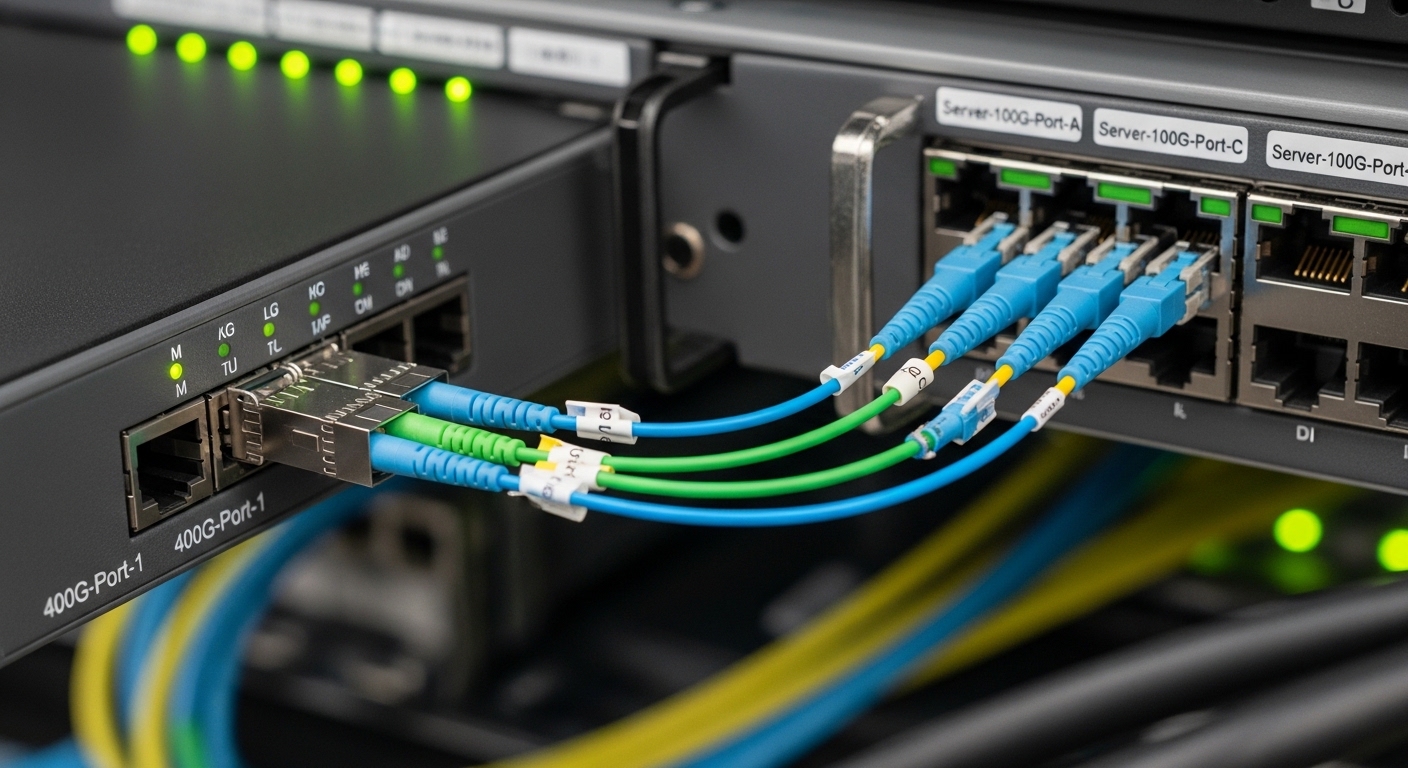
Pro Tip: In high-density ToR deployments, leveraging QSFP-DD breakout cables to split a 400G port into four 100G links can maximize port utilization and simplify cabling management—especially when server NICs support 100G speeds but spine switches require 400G aggregation.
FAQ
- What is the main difference between QSFP28 and QSFP-DD transceivers?
- QSFP28 supports 100G per port using 4 lanes of 25G NRZ modulation, while QSFP-DD doubles the lane count to 8, enabling 400G speeds using PAM4 modulation and providing higher density in the same form factor.
- Can I use third-party ToR transceivers without voiding my switch warranty?
- Many OEMs restrict warranty support if non-approved optics are used. Check vendor policies and consider validated third-party vendors that offer compatibility guarantees.
- How important is DOM support in ToR transceivers?
- DOM is critical for monitoring optical parameters like temperature and power levels in real-time, helping to detect faults early and reduce downtime.
- What factors affect the power consumption of ToR transceivers?
- Power depends on data rate, modulation complexity, and optical components. Higher speeds and advanced modulation (PAM4) typically increase power draw and cooling needs.
- Which fiber type should I choose for ToR transceivers?
- Multimode fiber (OM3/OM4) is cost-effective for short reaches (<100m), while single-mode fiber suits longer distances and future-proofing despite higher initial costs.
Accurate ToR transceiver selection ensures optimal data center performance and scalability. For further insights on optical networking architectures, explore Data Center Fiber Infrastructure Best Practices.
Author: James Thompson, Network Systems Architect with over 15 years designing scalable enterprise and hyperscale data center networks specializing in optical transceiver deployments and fiber infrastructure optimization.
