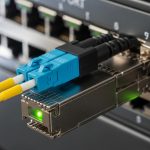
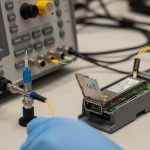
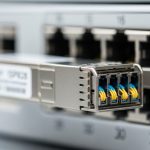
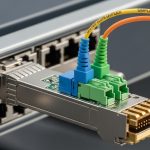
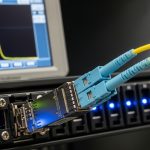
Telecom networks often hinge on one critical component to bridge vast distances without losing data integrity: the telecom transceiver. This article dives into the technical nitty-gritty of telecom-grade transceivers designed for long-haul transmissions. If you’re an IT director, network architect, or field engineer grappling with fiber optic connectivity beyond the metro scale, this guide arms you with specs, deployment insights, and cost considerations to optimize your next build.
Understanding Telecom Transceiver Specifications for Long-Distance Links
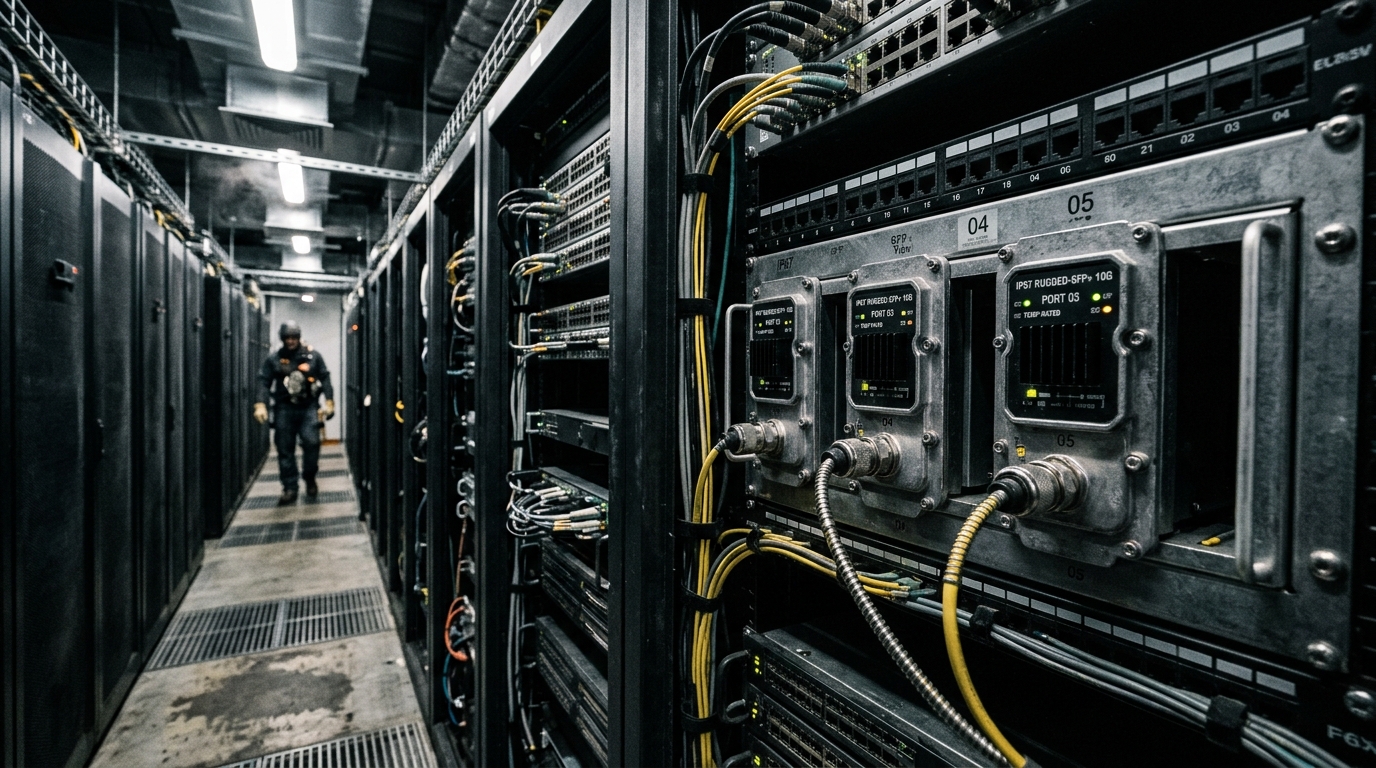
Not all transceivers are created equal. For long-distance telecom applications, the components must satisfy rigorous standards such as IEEE 802.3 and ITU-T recommendations. Key parameters include wavelength, reach, power budgets, connector types, and operating temperature ranges. Here’s a concise comparison of popular telecom transceivers engineered for distances from 10 km up to 80 km or beyond.
| Model | Wavelength (nm) | Max Reach | Power Output (dBm) | Receiver Sensitivity (dBm) | Connector Type | Data Rate | Operating Temp (°C) | DOM Support |
|---|---|---|---|---|---|---|---|---|
| Cisco SFP-10G-LR | 1310 | 10 km | -1 to +4 | -15.3 | LC Duplex | 10 Gbps | 0 to 70 | Yes |
| Finisar FTLX8571D3BCL | 1310 | 40 km | 0 to +5 | -23 | LC Duplex | 10 Gbps | -5 to 85 | Yes |
| FS.com SFP-10GLR-80 | 1310 | 80 km | 0 to +4 | -24 | LC Duplex | 10 Gbps | 0 to 70 | Yes |
Note: Power output and receiver sensitivity determine the link budget, critical to achieving long distances without signal regeneration. The Cisco SFP-10G-LR, for example, offers solid performance up to 10 km, but for telecom backbone links spanning 40 km or more, modules like Finisar’s or FS.com’s 80 km variants are preferred due to their enhanced sensitivity and power specifications. Always verify compatibility with your switching hardware and firmware versions to ensure seamless DOM (Digital Optical Monitoring) functionality.
Real-World Deployment Scenario: Backbone Link in a National Telecom Network
Consider a national telecom operator deploying a fiber backbone connecting major metropolitan POPs (Points of Presence) across a 50 km span. The network uses Cisco Catalyst 9500 series switches with 10G uplinks. To maintain high availability and low latency, the operator selects Finisar FTLX8571D3BCL modules for their proven 40 km reach and robust temperature tolerances.
The link budget calculation accounts for fiber attenuation (~0.35 dB/km at 1310 nm), connector losses (~0.5 dB per mated pair), and splice losses (~0.1 dB per splice). With a power output of +3 dBm and receiver sensitivity of -23 dBm, the total budget comfortably exceeds the estimated 18 dB loss for 50 km plus splice/connectors, ensuring margin for aging and environmental variation.
Operational monitoring uses DOM to track real-time parameters like temperature and optical power, enabling proactive maintenance. This deployment reduces the need for costly regenerators or amplifiers, cutting OpEx while maintaining SLA commitments.
Selection Criteria for Long-Distance Telecom Transceivers
- Distance Requirements: Accurately calculate link length including fiber type (single-mode or dispersion-shifted) and losses to pick a transceiver with sufficient reach.
- Budget Constraints: Balance OEM vs third-party cost differences. OEM modules like Cisco or Finisar often come with higher prices but better support; third-party units can reduce CapEx but risk compatibility issues.
- Switch Compatibility: Confirm hardware and firmware versions support the chosen transceiver. Some OEM switches reject non-OEM optics unless explicitly certified.
- DOM Support: For critical telecom applications, modules with Digital Optical Monitoring support offer real-time diagnostics to prevent outages.
- Operating Temperature Range: Outdoor or unconditioned environments necessitate modules rated for extended temperature ranges (-40 to +85 °C).
- Vendor Lock-In Risk: Avoid long-term dependency by verifying if third-party optics meet quality and interoperability standards (e.g., MSA compliance).
Pro Tip: Using transceivers with built-in DOM and temperature compensation not only prevents unexpected failures but can extend fiber link life by alerting to power degradation before it hits critical thresholds.
Common Mistakes and Troubleshooting for Telecom Transceivers in Long-Haul Links
- Incorrect Power Budget Calculation: Overlooking splice and connector losses leads to insufficient link margin. Solution: Perform detailed fiber characterization and add a 3-5 dB safety margin.
- Using Incompatible Transceivers: OEM switches rejecting third-party optics cause link failures. Solution: Verify MSA compliance and test modules in lab environments before deployment.
- Lack of DOM Monitoring: Operating without DOM can delay fault detection until service degradation. Solution: Implement monitoring systems and alerting tied to DOM parameters.
- Improper Handling of Modules: Dust contamination or electrostatic discharge damages sensitive optics. Solution: Use dust caps, ESD protection, and follow handling best practices.
Cost and ROI Considerations for Telecom Transceivers
Telecom-grade transceivers typically range from $500 to $1500 per unit for 10G long-reach models. OEM options command a premium due to guaranteed interoperability and vendor support. Third-party modules may cut costs by 30-50%, but risk higher failure rates or warranty complexities.
Long-term ROI improves with modules that lower power consumption (saving on cooling and electricity), reduce field failures, and offer DOM for proactive maintenance. For instance, a renewal plan prioritizing high-quality optics reduced a tier-1 carrier’s fiber link downtime by 40%, translating into millions saved in SLA penalties.
FAQ
Q1: Can I use short-reach transceivers for long-distance telecom links?
A1: No. Short-reach modules (e.g., SFP-10G-SR) are designed for multimode fiber and up to 300 meters. Telecom-grade long-reach transceivers use single-mode fiber and higher power budgets to support distances from 10 km to 80 km or more.
Q2: How do I verify if a third-party transceiver is compatible with my switch?
A2: Check the vendor’s MSA compliance certification and consult forums or test in a lab environment. Some switches have firmware that blocks non-OEM optics, requiring workarounds or specific module brands.
Q3: What is the typical lifespan of a telecom transceiver?
A3: Under normal operating conditions, telecom transceivers last 5-7 years. Factors like temperature extremes, power surges, and mechanical shock can shorten lifespan.
Q4: Does DOM support add significant cost to telecom transceivers?
A4: DOM support adds marginal cost but delivers huge value by enabling continuous health monitoring and proactive fault detection. It is highly recommended for critical telecom infrastructure.
Q5: What connector type is standard for long-distance telecom transceivers?
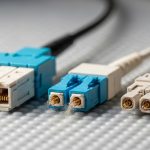
A5: LC duplex connectors are the industry standard for single-mode fiber transceivers due to low insertion loss and compact form factor.
Conclusion
Choosing the right telecom transceiver for long-distance transmission involves a careful balance of technical specs, real-world deployment factors, and budget considerations. Understanding power budgets, DOM importance, and compatibility nuances can save enterprises from costly downtime and rework. For a deep dive into fiber network architectures complementing these transceivers, check out our guide on fiber optic network design to future-proof your telecom infrastructure.
Author Bio: Alex Morgan is an IT director with 15+ years managing large-scale telecom networks. His hands-on experience with optical transceivers and fiber infrastructure informs his keen insight into practical deployment and cost optimization strategies.