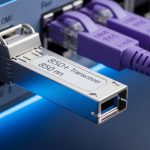
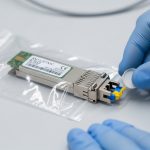
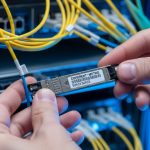
Choosing the right 400G transceiver form factor can feel like picking a favorite child—each with its quirks and strengths. This article dissects the OSFP transceiver versus QSFP-DD showdown, helping data center engineers and network architects understand which 400G option fits their environment best. Expect tech specs, deployment realities, selection criteria, and troubleshooting wisdom all served with a dash of wit.
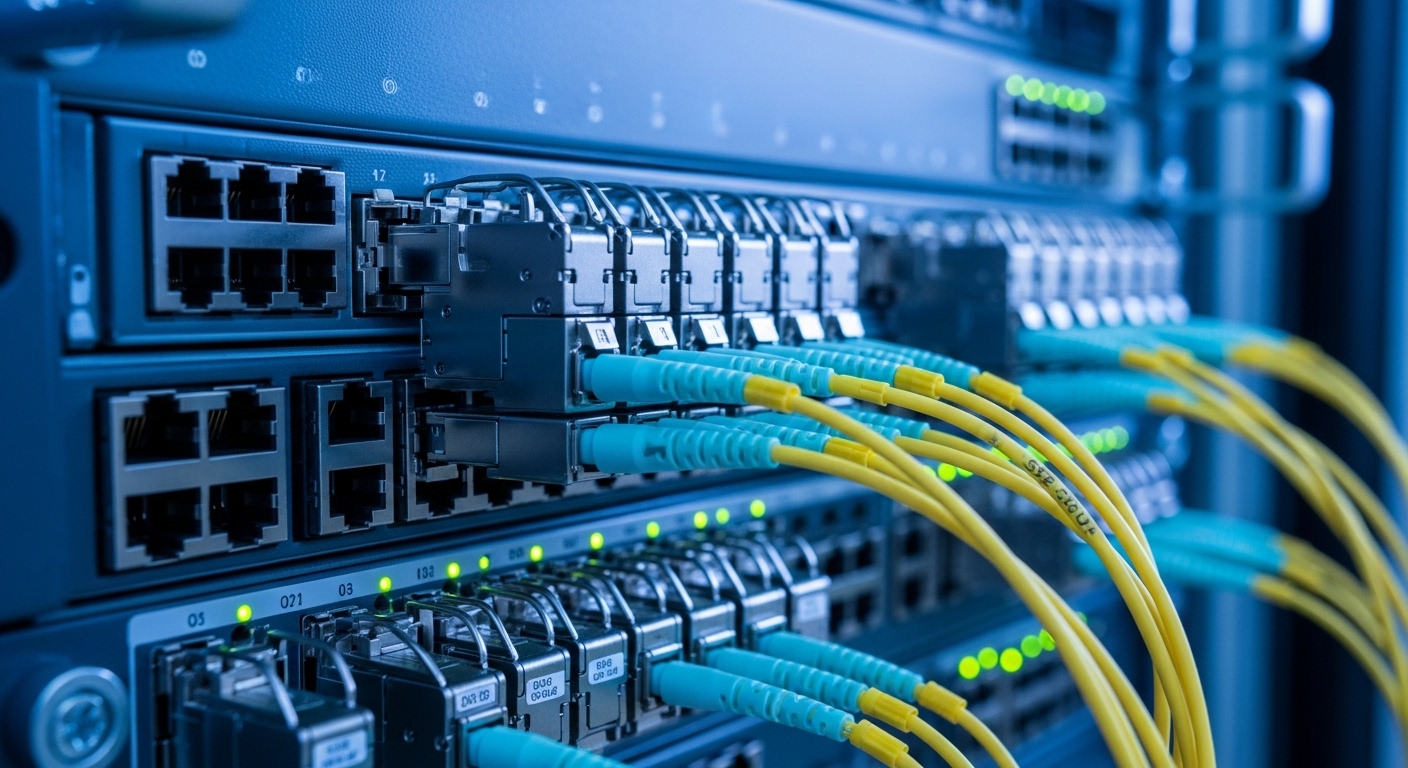
Understanding OSFP and QSFP-DD: The 400G Contenders
The era of 400G Ethernet demands transceivers that juggle blistering speeds, power efficiency, and manageable physical size. Two form factors have emerged as frontrunners:
- OSFP (Octal Small Form-factor Pluggable) – A newer transceiver with a somewhat larger footprint designed for simplicity and thermal headroom.
- QSFP-DD (Quad Small Form-factor Pluggable Double Density) – Builds on the popular QSFP form factor but doubles lane density by adding a second row of electrical contacts.
Both support 400G Ethernet, but their design philosophies differ. OSFP leans on an octal-lane approach (8×50 Gbps), whereas QSFP-DD typically uses 8 lanes at 50 Gbps as well, but in a more compact package.
Technical Specifications Comparison
| Specification | OSFP Transceiver | QSFP-DD Transceiver |
|---|---|---|
| Wavelength | 850 nm (SR), 1310 nm (LR), 1330 nm (ER) | 850 nm (SR), 1310 nm (LR), 1330 nm (ER) |
| Max Reach | Up to 10 km (LR), 40 km (ER) | Up to 10 km (LR), 40 km (ER) |
| Data Rate | 400 Gbps (8×50 Gbps lanes) | 400 Gbps (8×50 Gbps lanes) |
| Connector | 16-fiber MPO/MTP | 16-fiber MPO/MTP |
| Dimensions (L x W x H) | 121.5 mm x 43 mm x 13.5 mm | 109.7 mm x 21.5 mm x 13.5 mm |
| Operating Temperature | 0°C to 70°C (standard) | 0°C to 70°C (standard) |
| Power Consumption | ~12-15 Watts | ~11-15 Watts |
Real-World Deployment Scenario
Consider a hyperscale data center running a leaf-spine architecture with 48-port 400G QSFP-DD switches at the spine layer and 100G QSFP28 at leaf nodes. The engineering team needed to future-proof the spine while balancing thermal constraints. OSFP transceivers were chosen for their superior thermal dissipation due to a larger form factor and integrated heat sinks, ensuring stable operation under heavy 400G loads and high ambient temperatures (~35°C). The switch vendors supported OSFP natively, and the team appreciated the simplified cable management with standard 16-fiber MPO connectors. Power draw averaged 13.5 Watts per transceiver, meeting the data center’s PUE goals.
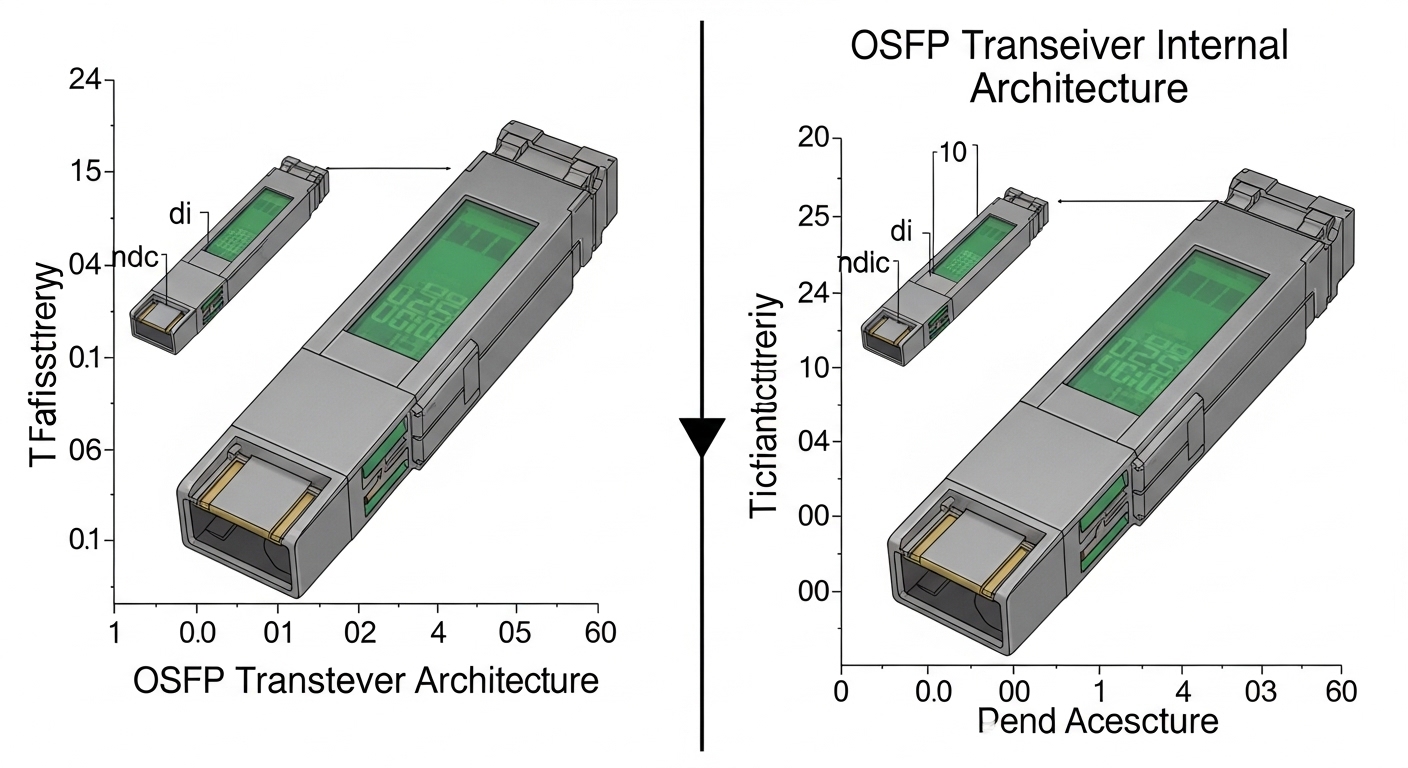
Selection Criteria Checklist for OSFP Transceiver vs QSFP-DD
- Distance Requirements: Both OSFP and QSFP-DD support similar standards for SR, LR, and ER optics. Match based on fiber plant and link budget.
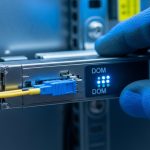
- Switch Compatibility: Verify that your switch vendor supports the chosen form factor with appropriate firmware and DOM (Digital Optical Monitoring) features.
- Thermal Management: OSFP’s larger size offers better heat dissipation for heavy workloads; QSFP-DD may require additional cooling strategies.
- Port Density: QSFP-DD’s smaller footprint allows higher port density per rack unit, valuable for dense deployments.
- Power Budget: Factor in power savings and data center PUE impact; both hover around 12-15W but OSFP can be slightly more efficient under load.
- Vendor Ecosystem & Support: Consider vendor lock-in risk; OSFP is newer with fewer suppliers, while QSFP-DD benefits from a wider vendor ecosystem.
- DOM Support & Diagnostics: Ensure your network management tools support DOM features for real-time monitoring.
Common Mistakes and Troubleshooting Tips
- Hot-Plug Thermal Surprises: Root Cause: Insufficient cooling for OSFP in legacy chassis. Solution: Enable hot-swappable fan trays or upgrade the cooling system to maintain ambient temperatures below 40°C.
- Incompatible Firmware Blocking Initialization: Root Cause: Switch OS not updated for the new transceiver form factor causing port shutdown. Solution: Always verify firmware compatibility and apply vendor patches prior to deployment.
- Incorrect MPO Connector Polarity: Root Cause: Mismatched cable polarity causing link failure despite physical connection. Solution: Use polarity-correct MPO cables referenced by ANSI/TIA-568 standards and perform continuity tests.
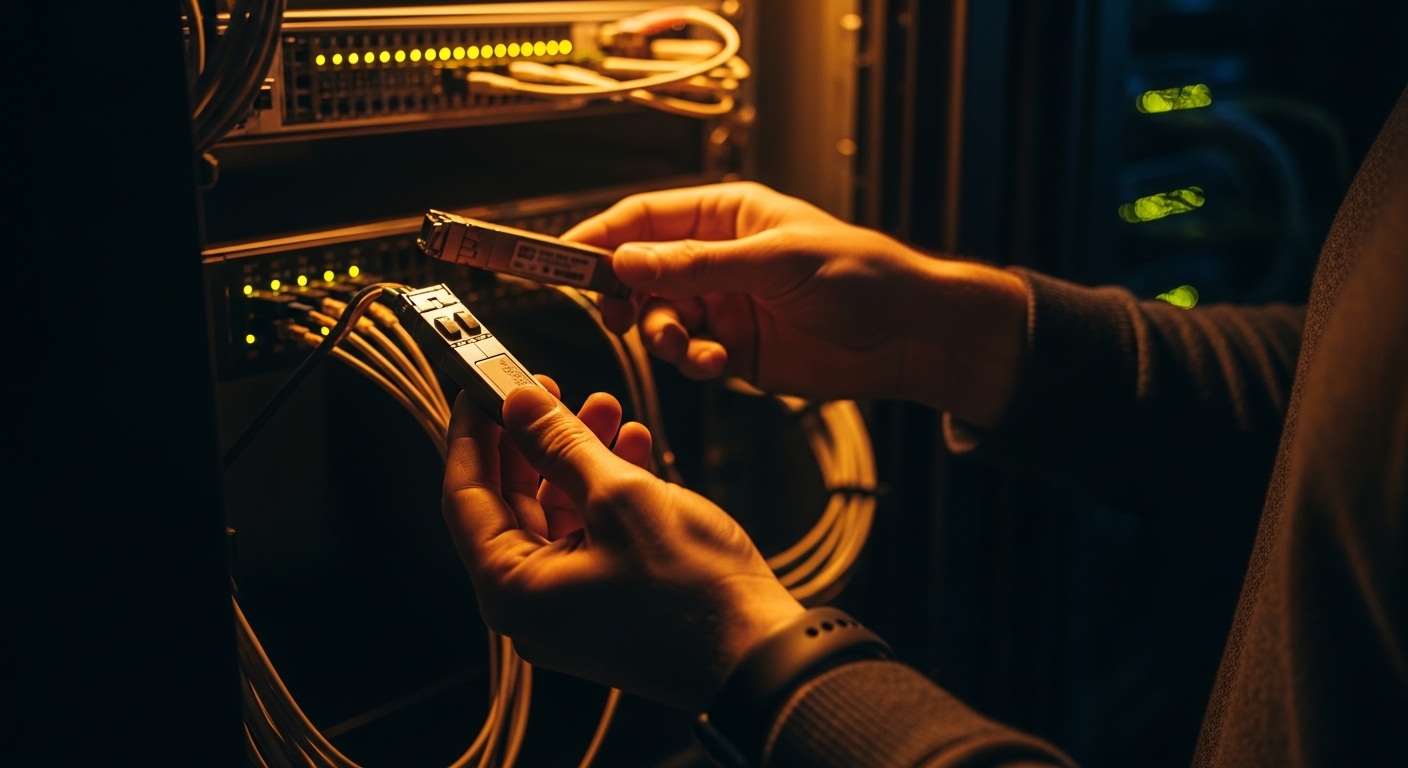
Pro Tip: In multi-tenant data centers, OSFP’s mechanical design simplifies optical alignment due to its robust keying mechanism, reducing accidental damage during transceiver swaps—a subtle but impactful operational advantage.
Cost and ROI Considerations
OEM OSFP transceivers typically retail between $1,200 and $1,800 per unit depending on optical type (SR, LR, ER). QSFP-DD modules generally range from $1,000 to $1,600. Third-party suppliers offer discounted alternatives but may lack official vendor support, impacting warranty and interoperability. OSFP’s slightly higher upfront cost can be offset by reduced cooling expenses and longer lifecycle stability in thermally challenging environments. Total Cost of Ownership (TCO) analysis should incorporate power consumption, failure rates (OSFP’s robust design often yields lower failure in hot racks), and vendor support contracts.
FAQ
- Q: Can OSFP and QSFP-DD transceivers be used interchangeably on the same switch?
- A: No. They require distinct cages and connectors. Switches are designed to support one form factor or the other unless explicitly multi-form factor capable.
- Q: Which has better port density, OSFP or QSFP-DD?
- A: QSFP-DD offers higher port density due to its smaller size, ideal for ultra-dense data center racks.
- Q: How do power consumptions compare between OSFP and QSFP-DD?
- A: Both consume roughly 12-15 Watts per transceiver, with OSFP occasionally offering better thermal efficiency under stress.
- Q: Are there compatibility issues with existing fiber cabling?
- A: Both use standard 16-fiber MPO connectors, so existing multimode or singlemode fiber plants are compatible with proper transceiver optics.
- Q: What about future-proofing?
- A: OSFP’s newer design aims at easier upgrades to 800G and beyond, but QSFP-DD is rapidly evolving with similar roadmap promises.
Choosing between OSFP and QSFP-DD transceivers hinges on your data center environment, cooling infrastructure, and port density needs. Both deliver robust 400G performance, but understanding their subtle differences and deployment nuances enables smarter decisions. For more on high-speed optical transceivers, check out 400G Ethernet deployment best practices.
Author Bio: Alex Morgan is a seasoned network architect with 15 years in hyperscale data center design, specializing in high-speed optical interconnects. He combines hands-on field experience with deep industry standards knowledge to guide engineers through complex hardware choices.