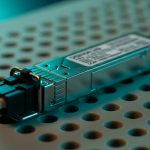
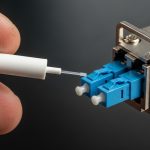
Choosing between single mode SFP and multimode fiber optic transceivers is a critical decision for network engineers aiming to optimize performance, cost, and scalability. This article provides a detailed comparison of single mode and multimode SFP modules, guiding professionals through technical specifications, real-world deployment scenarios, and practical selection criteria. Whether upgrading data center links or designing campus networks, you’ll gain insights into making informed transceiver choices aligned with IEEE 802.3 and ANSI/TIA standards.
Understanding Single Mode SFP and Multimode SFP Fundamentals
Fiber optic transceivers convert electrical signals to optical signals and vice versa, enabling high-speed network communication over fiber cabling. The primary distinction lies in the type of fiber they support:
- Single Mode SFP modules operate on single mode fiber (SMF), which uses a narrow core (~9 µm) allowing light to travel straight with minimal dispersion. This enables long-distance transmission typically from 10 km up to 80 km or more.
- Multimode SFP modules use multimode fiber (MMF) with a wider core (~50 µm or 62.5 µm) that supports multiple light modes. MMF is suitable for short-range communication, usually up to 550 meters at 10 Gbps.
Choosing between single mode and multimode SFPs affects link budget, fiber infrastructure, and overall network reliability.
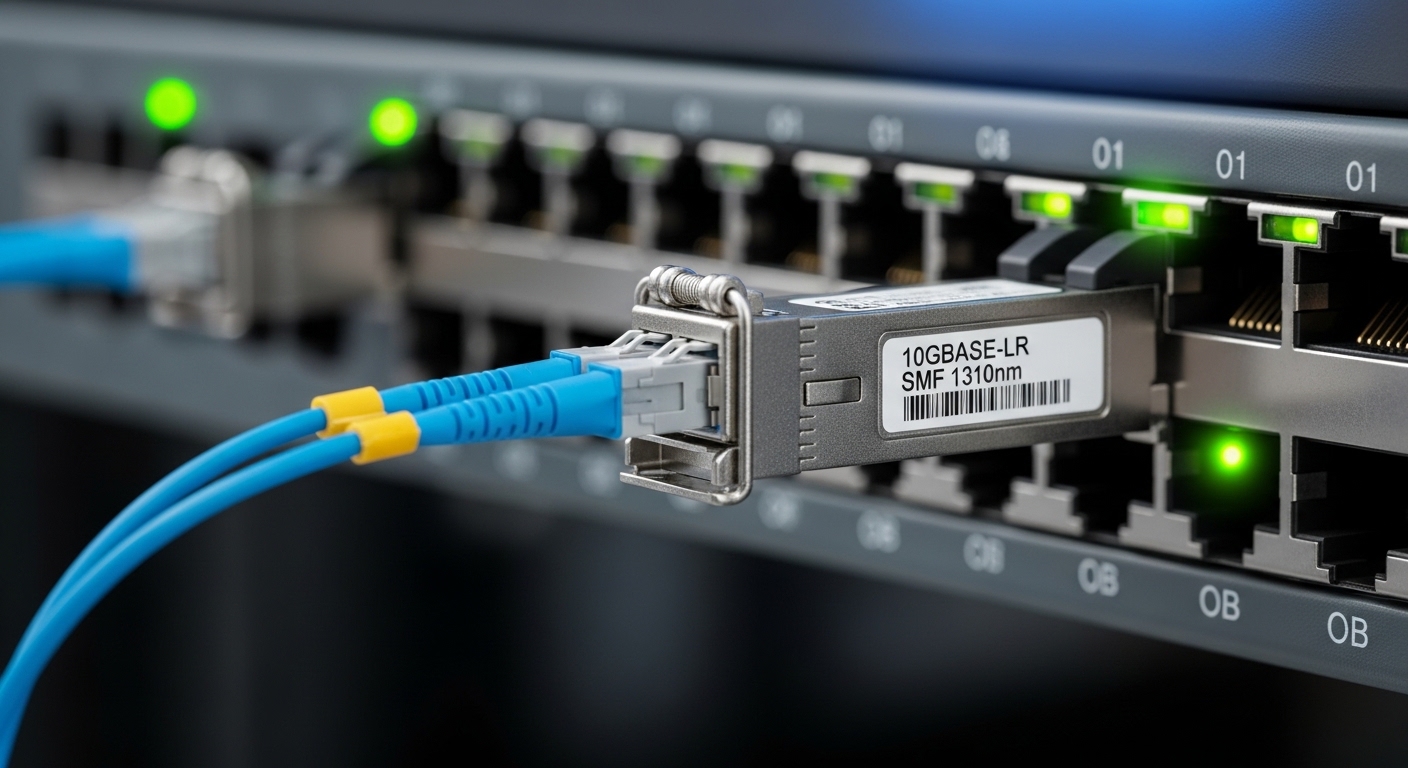
Technical Specifications Comparison of Single Mode vs Multimode SFP
| Specification | Single Mode SFP | Multimode SFP |
|---|---|---|
| Wavelength | 1310 nm or 1550 nm | 850 nm |
| Maximum Reach | 10 km to 80+ km depending on model | 300 m to 550 m maximum at 10 Gbps |
| Fiber Core Diameter | ~9 µm | ~50 or 62.5 µm |
| Connector Type | LC duplex | LC duplex |
| Data Rate | 1 Gbps, 10 Gbps, 25 Gbps+ variants available | 1 Gbps, 10 Gbps common |
| Operating Temperature | 0°C to 70°C (standard), extended ranges available | 0°C to 70°C (standard) |
| Typical Power Consumption | ~1 W | ~0.8 W |
| Standards Compliance | IEEE 802.3z, 802.3ae, ANSI/TIA-568-C.3 | IEEE 802.3z, 802.3ae, ANSI/TIA-568-C.3 |
Models like the Cisco SFP-10GBASE-LR (single mode) and Finisar FTLX8571D3BCL (multimode) illustrate these specs in real products. The single mode SFP’s longer wavelength and smaller core size enable less signal attenuation over kilometers, whereas multimode SFPs specialize in cost-effective short-range connectivity.
Real-World Deployment Scenario: Single Mode SFP in a Data Center Spine-Leaf Network
Consider a 3-tier data center architecture with leaf-spine topology using 48-port 10G ToR switches. The spine switches require uplinks with low latency and high reliability over distances of 5 km between buildings. Single mode SFP modules, such as the FS.com SFP-10GSR-85, operating at 1310 nm wavelength, provide robust 10 Gbps connectivity over existing single mode fiber lines. This setup minimizes signal degradation and future-proofs the network for possible 25 Gbps upgrades. The single mode transceivers’ DOM (Digital Optical Monitoring) feature allows real-time diagnostics, enhancing operational visibility in production environments.

Selection Criteria: How to Choose Between Single Mode and Multimode SFP
- Distance Requirements: Single mode for beyond 300 meters typically; multimode sufficient for short runs within a building.
- Budget Constraints: Multimode transceivers and cables are generally less expensive upfront, but single mode may offer better TCO long-term.
- Switch and Hardware Compatibility: Verify vendor compatibility (OEM vs third-party modules) to avoid link failures and warranty issues.
- Digital Optical Monitoring (DOM): Consider if real-time optical diagnostics are needed; many single mode SFPs support this feature.
- Operating Temperature Range: For outdoor or harsh environments, choose transceivers rated for extended temperature ranges.
- Vendor Lock-in Risk: Assess if your infrastructure requires vendor-certified modules or if third-party options are acceptable.
Pro Tip: Although single mode fiber with single mode SFPs costs more initially, the lower attenuation and higher bandwidth-distance product can significantly reduce fiber upgrades over time, especially in campus or multi-building environments.

Common Mistakes and Troubleshooting Tips with Single Mode SFPs
- Mistake: Using multimode fiber patch cables with single mode transceivers.
Root Cause: Modal mismatch causes high insertion loss and link failure.
Solution: Always pair single mode SFPs with single mode fiber cables (9 µm core) and LC connectors. - Mistake: Ignoring DOM alarms indicating high optical loss.
Root Cause: Dirty connectors, fiber bends, or damaged cable.
Solution: Clean connectors with proper tools, inspect fiber runs, and reduce bend radius below manufacturer limits. - Mistake: Installing incompatible third-party SFPs without verifying switch support.
Root Cause: Firmware or vendor lockout blocks non-certified modules.
Solution: Confirm compatibility lists from switch vendors or use programmable SFPs that support multiple brands.
Cost and ROI Considerations for Single Mode SFP Deployment
Single mode SFP modules typically cost between $100 and $400 per unit depending on data rate and reach capabilities. Multimode SFPs often fall in the $50 to $150 range. While multimode fiber cables and transceivers have lower upfront costs, single mode solutions reduce the need for repeaters or additional hardware in long-distance scenarios.
Operational expenses also factor in: single mode transceivers usually consume slightly more power (~1 W vs 0.8 W), but their superior reach avoids costly fiber replacement projects. Third-party single mode SFPs can offer savings but may risk compatibility and support challenges, potentially increasing downtime costs. Evaluating total cost of ownership (TCO) is crucial when scaling enterprise or carrier networks.
FAQ
- Q: Can I use a single mode SFP on a multimode fiber cable?
A: No, single mode SFPs require single mode fiber to operate correctly. Using them with multimode fiber results in high signal loss and link failure. - Q: How do I verify if my switch supports third-party single mode SFPs?
A: Check the switch vendor’s hardware compatibility list or firmware release notes. Some switches require specific vendor IDs embedded in the SFP. - Q: What is DOM and why is it important?
A: Digital Optical Monitoring provides real-time data on optical power, temperature, and voltage, enabling proactive maintenance and troubleshooting. - Q: Are single mode SFPs backward compatible with older fiber standards?
A: Generally, yes, as long as the fiber’s physical properties and connector types are compatible. Confirm wavelength and standard support per IEEE 802.3 specs. - Q: What environmental conditions affect single mode SFP performance?
A: Extreme temperatures, humidity, and physical stress on cables can degrade performance. Use transceivers with extended temperature ratings for harsh environments.
Choosing the right fiber optic transceiver involves balancing technical specs with deployment realities. Single mode SFPs excel in long-distance, high-speed networks where signal integrity and scalability matter most. For more on fiber optic networking and transceiver technology, explore our detailed guides on fiber optic transceiver types and network cabling standards.
Author Bio: Alex Morgan is a network engineer and global technology blogger specializing in optical communications and data center infrastructures. With over a decade of hands-on experience deploying fiber optic networks, Alex shares authoritative insights to help engineers optimize connectivity solutions worldwide.