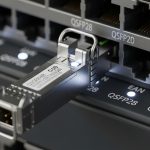
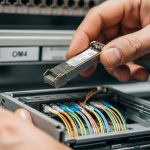
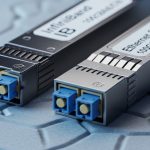
Telecom operators and network engineers tasked with establishing long-distance optical links demand transceiver solutions that combine high reliability, spectral efficiency, and robust performance. This article dives into telecom grade C-band transceivers, focusing on their specifications, deployment scenarios, and operational best practices for long-haul fiber optic communications. Whether you are designing metro or backbone networks, this guide provides the technical insight and selection criteria necessary to optimize your C-band transceiver deployment.
Understanding the Technical Foundations of C-band Transceivers
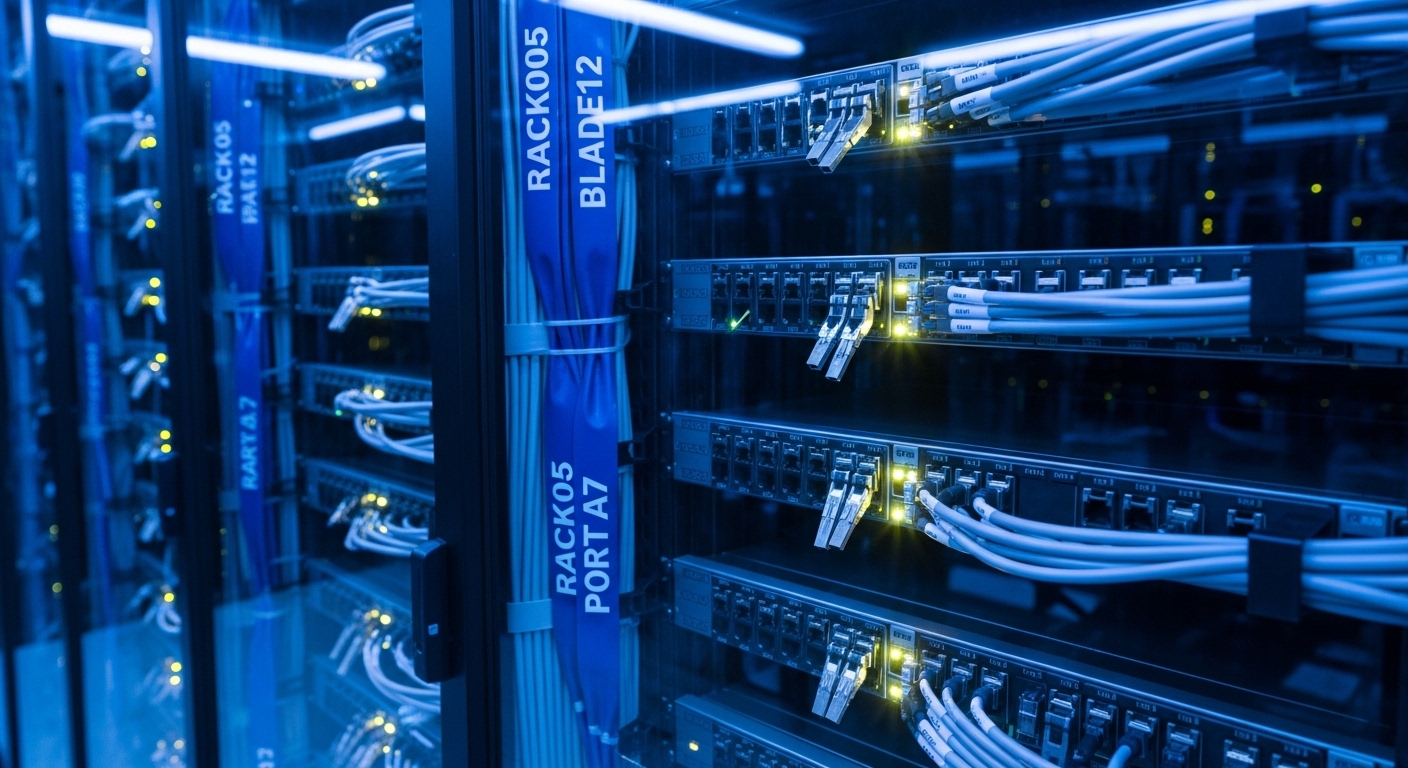
C-band transceivers operate within the 1530 nm to 1565 nm wavelength window, which aligns with the lowest loss region of standard single-mode fiber (SMF-28). This spectral range is critical for long-distance transmission because it supports minimal fiber attenuation (~0.2 dB/km) and enables dense wavelength division multiplexing (DWDM) applications. Telecom grade C-band modules often comply with stringent IEEE 802.3 and ITU-T G.694.1 standards for channel spacing and modulation formats.
These transceivers typically support data rates ranging from 10 Gbps to 400 Gbps, with advanced models employing modulation schemes such as DP-QPSK or coherent detection to extend reach beyond 80 km without regeneration. Key parameters include output optical power, receiver sensitivity, dispersion tolerance, and digital optical monitoring (DOM) capability.
| Model | Wavelength Range (nm) | Max Reach (km) | Data Rate (Gbps) | Output Power (dBm) | Receiver Sensitivity (dBm) | Connector Type | Operating Temp (°C) | Modulation |
|---|---|---|---|---|---|---|---|---|
| Finisar FTLX8571D3BCL | 1530–1565 | 80 | 100 | 0 to +5 | -24 | LC duplex | 0 to 70 | NRZ |
| Cisco CFP2-ACO-100G | 1530–1565 | 120 | 100 | 3 to +7 | -26 | LC duplex | -5 to 85 | Coherent DP-QPSK |
| FS.com ZR+ DWDM QSFP28 | 1530–1565 | 120+ | 100 | 1 to +5 | -23 | LC duplex | 0 to 70 | Coherent DP-QPSK |
Real-World Deployment Scenario: Long-Haul Backbone Network
Consider a telecom operator deploying a 400 km backbone link between two metropolitan areas using a DWDM system with C-band transceivers. The network uses a 3-tier architecture, with multiple ROADMs (Reconfigurable Optical Add-Drop Multiplexers) deployed every 80 km to amplify and add/drop wavelengths. The operator selects Cisco CFP2-ACO-100G transceivers for their coherent detection and ability to handle chromatic dispersion without digital signal processing (DSP) regeneration.
Each C-band transceiver is configured for a 100 Gbps data rate, and optical amplifiers maintain signal power. The operator leverages digital optical monitoring (DOM) to track real-time parameters such as temperature, voltage, bias current, and optical power, ensuring quick detection of degradation. The system achieves a bit error rate (BER) of less than 10^-12, meeting carrier-grade service level agreements (SLAs).
This deployment highlights the significance of selecting transceivers with appropriate wavelength tuning, modulation format, and temperature tolerance to sustain reliable long-distance transmission under realistic environmental conditions.
Selection Criteria for Telecom Grade C-band Transceivers
- Transmission Distance: Confirm the maximum reach required. Coherent C-band transceivers are preferred for distances >80 km due to better dispersion tolerance.
- Data Rate & Modulation: Match the transceiver data rate with network equipment. High-speed applications benefit from DP-QPSK or higher-order modulation for spectral efficiency.
- Switch Compatibility: Verify compatibility with switch/router vendor and firmware to avoid interoperability issues.
- Digital Optical Monitoring (DOM): DOM support allows real-time diagnostics, reducing downtime in telecom environments.
- Operating Temperature Range: Choose modules rated for the environmental conditions, especially for outdoor or unconditioned sites.
- Vendor Lock-In Risk: Consider multi-vendor compatibility and the availability of third-party or OEM modules to manage costs and supply chain risks.
- Connector and Form Factor: Ensure the connector type (usually LC duplex) and form factor (SFP+/QSFP28/CFP2) fit your hardware platform.
Common Mistakes and Troubleshooting Tips with C-band Transceivers
- Failure to Verify Fiber Type and Quality: Using C-band transceivers on older fiber with higher attenuation or improper polishing can cause signal loss. Solution: Perform OTDR testing and use fibers meeting ITU-T G.652.D standards.
- Ignoring Temperature Specifications: Operating transceivers outside their specified temperature can degrade laser performance leading to link failure. Solution: Use extended temperature range modules in outdoor or uncontrolled environments.
- Improper Handling of DOM Data: Overlooking DOM alarms on parameters like high bias current or low optical power delays fault resolution. Solution: Integrate DOM monitoring into network management systems for proactive alerts.
- Compatibility Misalignment: Deploying third-party C-band transceivers without confirming switch compatibility can result in link negotiation failures. Solution: Consult vendor compatibility lists or test modules prior to production rollout.
Cost and ROI Considerations for Telecom Grade C-band Transceivers
Telecom grade C-band transceivers typically range from $800 for standard 10G modules to over $5000 for advanced 100G coherent models. OEM modules usually offer guaranteed vendor support and quality but come at a premium price. Third-party transceivers can reduce upfront capital expenditure by 30-50%, but may carry risks related to warranty, firmware updates, and interoperability.
Operational expenses are influenced by transceiver power consumption (often between 3-7 Watts for coherent modules), which translates to cooling and energy costs in large-scale deployments. Investing in modules with better power efficiency and DOM support can reduce mean time to repair (MTTR) and improve overall network availability, yielding a better total cost of ownership (TCO).
Pro Tip: In field deployments, engineers often discover that leveraging C-band transceivers with tunable lasers reduces inventory complexity and enables rapid wavelength reassignment in DWDM networks, drastically cutting provisioning times from days to hours.
FAQ
- What makes C-band transceivers ideal for long-distance telecom applications?
- The C-band (1530-1565 nm) corresponds to the lowest fiber attenuation window in single-mode fiber, enabling longer reach with less signal degradation. Additionally, it supports DWDM, allowing multiple channels on a single fiber.
- Can C-band transceivers be used for metro networks?
- Yes, C-band transceivers are suitable for metro and long-haul networks. For metro distances (typically <80 km), non-coherent modules may suffice, but for longer distances, coherent detection is preferred.
- How important is digital optical monitoring (DOM) in C-band transceivers?
- DOM provides real-time feedback on critical parameters like optical power and temperature, enabling proactive maintenance and reducing downtime, which is vital in carrier-grade networks.
- Are third-party C-band transceivers reliable for telecom use?
- While third-party transceivers offer cost advantages, reliability depends on vendor quality and compatibility testing. They can be viable if sourced from reputable manufacturers and thoroughly tested in your network environment.
- What are common causes of failure in C-band transceiver links?
- Common causes include fiber attenuation, connector contamination, temperature extremes, and firmware incompatibility. Proper installation and monitoring mitigate most issues.
- How does modulation format impact C-band transceiver performance?
- Advanced modulation formats like DP-QPSK improve spectral efficiency and increase reach by mitigating dispersion effects, essential for high-capacity long-haul deployments.
In summary, selecting the right telecom grade C-band transceiver requires a careful balance of technical specifications, network requirements, and cost considerations. Proper attention to deployment environment, compatibility, and monitoring capabilities ensures reliable long-distance optical transmission. For more on optical networking best practices, explore DWDM system design.
Author Bio: Dr. Alex Morgan is a senior optical network engineer with over 15 years of experience in designing and deploying large-scale DWDM telecom networks. He specializes in optical transceiver technology and standards compliance.