
Choosing the right fiber optic transceiver is critical to network performance and cost-efficiency. This article dives into single mode SFP modules versus multimode options, helping network engineers and IT professionals understand their differences, deployment scenarios, and selection criteria for optimized fiber connectivity.
Understanding Single Mode SFP and Multimode Fiber Optics
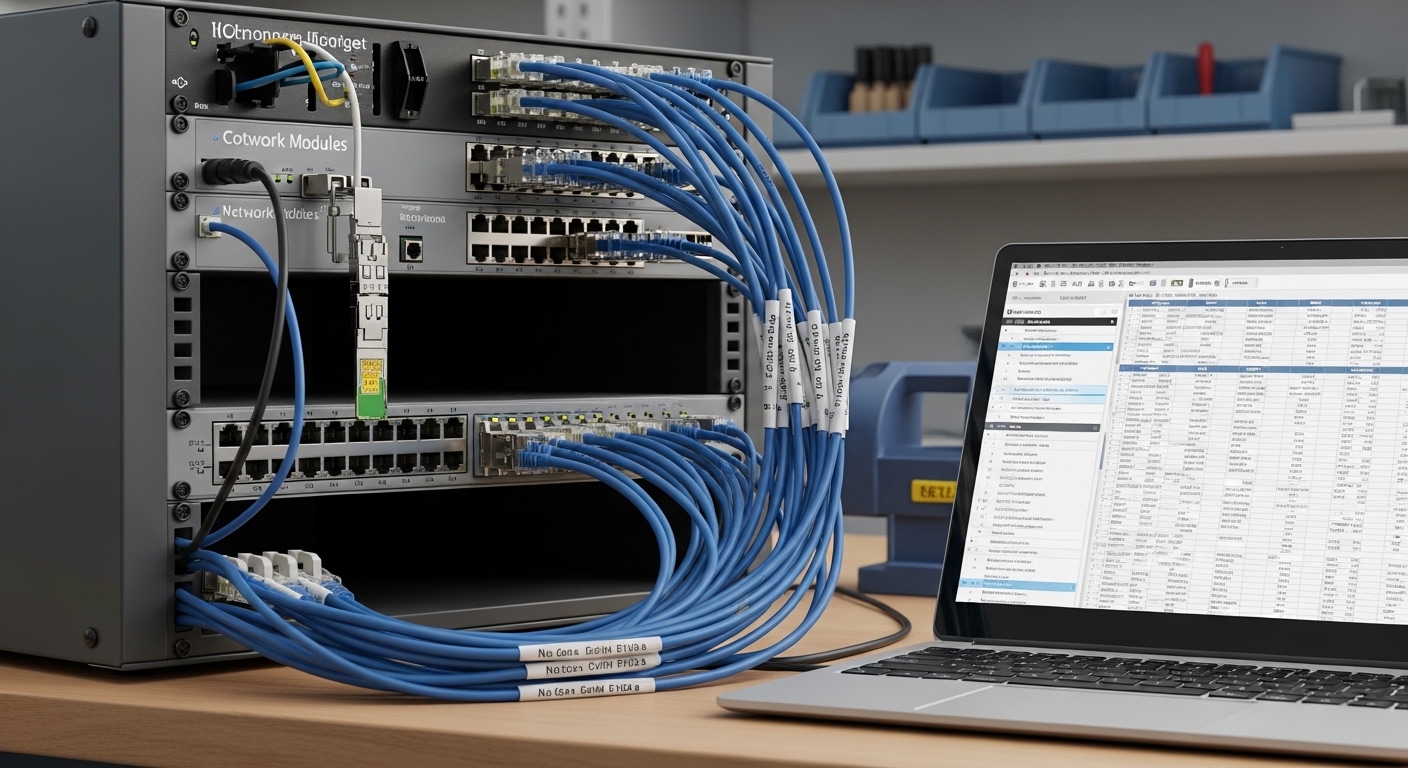
Fiber optic transceivers convert electrical signals into optical signals and vice versa. Their compatibility with fiber type—single mode or multimode—is key. Single mode SFP modules operate over single mode fiber (SMF), which uses a tiny core (~9 µm) allowing laser light to travel long distances with minimal dispersion. Conversely, multimode SFPs pair with multimode fiber (MMF) with a larger core diameter (~50 or 62.5 µm), supporting shorter distances at lower cost.
Single mode SFP modules typically use laser diodes such as Distributed Feedback (DFB) lasers to achieve high precision and long reach, adhering to IEEE 802.3 standards for 1G and 10G Ethernet. Multimode SFPs rely on Vertical-Cavity Surface-Emitting Lasers (VCSELs) optimized for shorter distances due to modal dispersion inherent in MMF.
Technical Specifications Comparison of Single Mode vs Multimode SFP Modules
| Specification | Single Mode SFP | Multimode SFP |
|---|---|---|
| Wavelength | 1310 nm or 1550 nm (e.g., Cisco SFP-10G-LR, Finisar FTLX8571D3BCL) | 850 nm (e.g., Cisco SFP-10G-SR, FS.com SFP-10GSR-85) |
| Maximum Reach | 10 km to 40 km+ depending on module and fiber quality | 300 m to 400 m on OM3/OM4 multimode fiber |
| Core Size Compatibility | ~9 µm core diameter | 50 µm or 62.5 µm core diameter |
| Connector Type | LC duplex | LC duplex |
| Data Rate | 1G to 10G, some support 25G+ | 1G to 10G |
| Operating Temperature | -5°C to 70°C (industrial variants available) | 0°C to 70°C |
| Typical Power Consumption | ~1W per module | ~0.8W per module |
The technical distinctions arise primarily from physics: single mode fibers have much lower attenuation (~0.35 dB/km at 1310 nm) allowing longer distances, while multimode fibers suffer from modal dispersion limiting length but allowing lower-cost optics. Standards such as IEEE 802.3 specify these parameters clearly for interoperability.
Real-World Deployment Scenario: Data Center Leaf-Spine Architecture
Consider a 3-tier data center leaf-spine network deploying 48-port 10G Top-of-Rack (ToR) switches interlinked with 100G spine switches. The ToR switches connect racks in close proximity (within 100 meters), while spines connect across a 2 km campus.
In this scenario, multimode SFP+ modules like Cisco SFP-10G-SR are cost-effective for ToR uplinks using OM4 fiber, supporting 400 m reach—more than sufficient within racks and aisles. However, for spine-to-spine links spanning multiple buildings, single mode SFP+ modules such as Cisco SFP-10G-LR are mandatory to achieve 10 km reach reliably.
Network engineers must verify switch compatibility with specific SFP models (e.g., Finisar or Cisco branded), ensure fiber patch panels have the correct LC connectors, and regularly monitor Digital Optical Monitoring (DOM) parameters like transmit power and temperature for maintenance.
Selection Criteria for Single Mode SFP Modules
- Distance Requirements: Choose single mode SFP for links beyond 300 meters or where future scalability to 10 km+ is needed.
- Budget Constraints: Multimode optics and fibers are cheaper upfront, but single mode’s longer lifespan and lower replacement frequency may offset costs.
- Switch Compatibility: Confirm vendor support for specific single mode SFP models to avoid incompatibility or degraded performance.
- Digital Optical Monitoring (DOM): Select modules with DOM support for real-time diagnostics, critical in enterprise networks.
- Operating Temperature Range: For harsh environments, industrial temperature-rated transceivers ensure reliability.
- Vendor Lock-in Risks: Evaluate third-party certified single mode SFPs to reduce costs without sacrificing quality.
Common Mistakes and Troubleshooting Tips
- Mixing Fiber Types: Connecting a single mode SFP to multimode fiber causes severe attenuation and signal loss. Solution: Always match fiber type and transceiver optics carefully.
- Ignoring DOM Parameters: Overlooking transmit power degradation can lead to link failures. Solution: Regularly monitor DOM data to preemptively replace aging modules.
- Incompatible Transceiver Firmware: Some switches reject third-party single mode SFPs due to firmware mismatches. Solution: Confirm firmware versions and consider vendor-approved optics or carefully tested alternatives.
Cost and Return on Investment Considerations
Single mode SFP modules generally cost between $100 and $300 per unit, depending on reach and manufacturer. Multimode modules are typically cheaper, $50-$150 range. However, single mode fiber infrastructure investments tend to have lower total cost of ownership (TCO) over 10+ years due to lower attenuation, fewer upgrade cycles, and higher scalability.
Power consumption differences are minimal but accumulate in large deployments. Industrial-grade single mode SFPs with extended temperature support cost more upfront but reduce downtime in harsh environments, improving ROI.
Pro Tip: In enterprise networks, deploying single mode fiber with pluggable single mode SFPs future-proofs connectivity—allowing simple optics upgrades to 25G or 100G standards without rewiring fiber plant, saving massive costs long term.
Frequently Asked Questions
- Can I use a single mode SFP on multimode fiber?
No. Single mode SFPs designed for SMF will experience high loss and reflections on MMF, resulting in no link or poor performance. - What is the maximum distance for single mode SFP modules?
Typical single mode SFPs support 10 km, with some extended reach variants reaching 40 km or more depending on fiber quality. - Are third-party single mode SFPs reliable?
Many third-party optics meet IEEE standards and offer cost savings, but compatibility testing is essential to avoid firmware or interoperability issues. - What is Digital Optical Monitoring (DOM) and why is it important?
DOM provides real-time data on optical power, temperature, and voltage, enabling proactive maintenance and reducing downtime risk. - How to identify single mode versus multimode SFP modules?
Single mode optics typically use 1310 nm or 1550 nm lasers and are labeled “LR,” “ER,” or “ZR,” while multimode use 850 nm VCSEL lasers labeled “SR.”
This guide equips network professionals with the knowledge to select the optimal single mode SFP modules for their fiber optic infrastructure. For detailed guidance on multimode transceivers, see multimode SFP selection.
Author Bio: Alex Chen is a network engineer with over 10 years of experience designing and maintaining fiber optic networks in data centers and enterprise environments. He specializes in optical transceiver evaluation and network performance optimization.
