
If you’re navigating the world of optical transceivers, terms like SFP, SFP+, and SFP28 can quickly blur together. This article cuts through the jargon and focuses on the SFP28 transceiver, explaining what sets it apart, its technical details, and how to select the right module for your network needs. Network engineers, data center operators, and IT buyers will find practical insights and deployment tips here.
Understanding SFP, SFP+, and SFP28 Transceivers
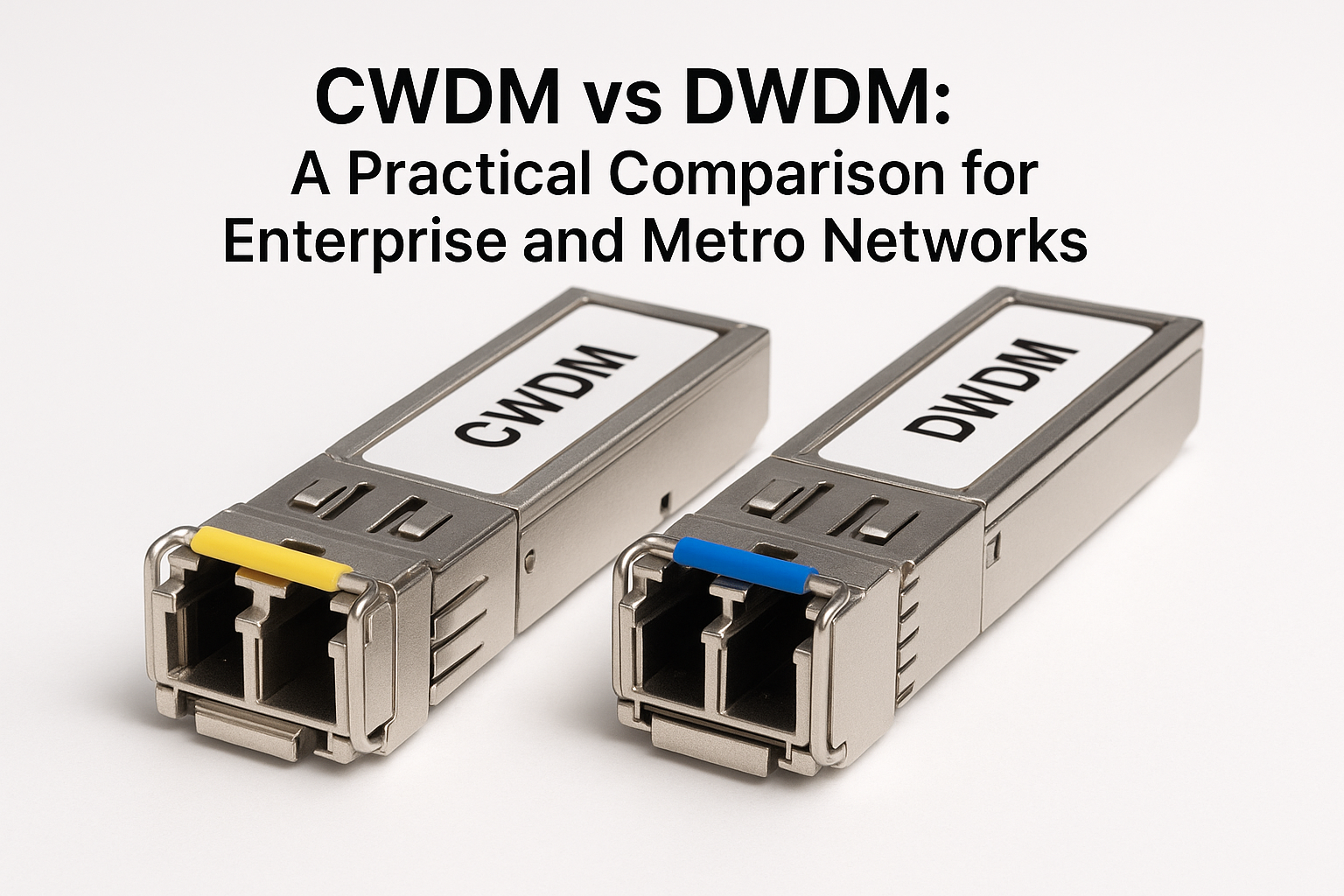
Optical transceivers are the unsung heroes of high-speed data transmission, converting electrical signals to optical signals and vice versa. The acronyms SFP, SFP+, and SFP28 refer to different generations and capabilities of these modules, primarily distinguished by their data rates and compatibility.
- SFP (Small Form-factor Pluggable): Traditionally supports up to 1 Gbps, commonly used in Gigabit Ethernet.
- SFP+: Enhanced version supporting 10 Gbps speeds, widely deployed in 10 Gigabit Ethernet networks.
- SFP28: An evolution of SFP+, designed for 25 Gbps data rates, aligning with the IEEE 802.3by standard for 25 Gigabit Ethernet.
While the physical form factor remains similar across these modules, the internal electronics and firmware differentiate their speed capabilities and signal processing. SFP28 modules maintain backward compatibility with SFP+ ports at 10 Gbps but require compatible switch hardware for 25 Gbps operation.
Technical Specifications and Comparison Table
Let’s examine the technical specs of popular SFP, SFP+, and SFP28 transceivers to understand their operational envelopes.
| Parameter | SFP (e.g., Cisco GLC-LH-SM) | SFP+ (e.g., Finisar FTLX8571D3BCL) | SFP28 (e.g., FS.com SFP-25G-SR-85) |
|---|---|---|---|
| Wavelength | 1310 nm (single-mode) | 850 nm (multi-mode) / 1310 nm (single-mode) | 850 nm (multi-mode) / 1310 nm (single-mode) |
| Data Rate | 1.25 Gbps | 10 Gbps | 25.78 Gbps (IEEE 802.3by) |
| Reach | 10 km (single-mode) | 300 m (multi-mode) / 10 km (single-mode) | 100 m (multi-mode OM4) / 10 km (single-mode) |
| Connector | LC Duplex | LC Duplex | LC Duplex |
| Operating Temperature | 0°C to 70°C | 0°C to 70°C | 0°C to 85°C (Industrial options available) |
| Power Consumption | ~1W | ~1W | 0.8W to 1.2W |
| Compatibility | 1G switches | 10G switches, some 25G ports (backward) | 25G switches, backward with 10G on compatible ports |
Real-World Deployment Scenario: 25G Leaf-Spine Data Center Network
Consider a modern 3-tier data center leaf-spine architecture deploying 48-port 25G SFP28 ToR (Top-of-Rack) switches. Each leaf switch connects to spine switches at 100G using QSFP28 modules, aggregating multiple 25G links. The choice of SFP28 transceivers for server uplinks simplifies cabling and reduces port count compared to 10G SFP+ links.
In this environment, engineers deploy FS.com SFP-25G-SR-85 modules over OM4 fiber to achieve 100 meters reach from rack servers to ToR switches. The higher data rate supports virtualization and containerized workloads requiring steady low latency and minimal packet loss. The power consumption of SFP28 modules is typically around 1W per port, keeping overall thermal density manageable in high-density racks.
Selection Criteria for Choosing an SFP28 Transceiver
- Distance Requirements: Identify if your fiber run is multi-mode or single-mode and the exact distance. For example, OM4 fiber supports up to 100 meters with SFP28 SR modules.
- Switch Compatibility: Verify the switch model supports 25G speeds and SFP28 modules. Some 10G switches accept SFP28 but only run at 10G speed.
- Budget Constraints: SFP28 modules cost more than SFP+ but less than QSFP28. Weigh upfront cost against future-proofing benefits.
- Digital Optical Monitoring (DOM) Support: Modules with DOM enable real-time monitoring of temperature, voltage, and optical power, enhancing troubleshooting.
- Operating Temperature Range: For industrial or outdoor deployments, consider extended-temperature SFP28 transceivers rated up to 85°C or higher.
- Vendor Lock-in Risk: OEM modules offer guaranteed compatibility but at a premium price. Third-party modules offer savings but require careful verification of firmware compatibility.
Common Mistakes and Troubleshooting Tips When Using SFP28 Transceivers
- Mixing Transceiver Generations: Attempting to run SFP28 modules in incompatible older switches can cause link failures. Solution: Always check vendor documentation for supported transceiver types and firmware versions.
- Ignoring Fiber Type and Connector Cleanliness: Using single-mode SFP28 on multimode fiber or dirty connectors leads to signal attenuation and errors. Solution: Confirm fiber type matches transceiver specs and use proper cleaning tools.
- Neglecting DOM Monitoring: Lack of real-time diagnostics makes it harder to identify issues like laser power degradation or temperature spikes. Solution: Deploy transceivers with DOM and integrate monitoring into NMS software.
Cost and ROI Considerations for SFP28 Transceivers
SFP28 transceivers typically range from $150 to $350 per module depending on vendor, type (SR, LR, ER), and certification. OEM modules (e.g., Cisco SFP-25G-SR-S) carry a price premium but offer guaranteed interoperability and support.
Third-party modules, such as FS.com’s SFP-25G-SR-85, can provide cost savings up to 40% but require rigorous testing to avoid firmware incompatibilities. Power consumption improvements over previous generations can reduce cooling costs in large deployments, contributing to total cost of ownership (TCO) benefits.
Pro Tip: Field engineers often discover that mixing SFP28 modules from different vendors on the same switch port group can cause intermittent link flaps due to subtle firmware mismatches. Standardizing on a single vendor and firmware version across all transceivers avoids this headache.
FAQ
- Q: Can I use an SFP28 transceiver in a 10G SFP+ port?
- A: Yes, most SFP28 modules are backward compatible and will operate at 10G when plugged into SFP+ ports, but you won’t get 25G speeds.
- Q: What is the maximum reach of a typical SFP28 SR module?
- A: On OM4 multimode fiber, an SFP28 SR module supports distances up to 100 meters.
- Q: Are SFP28 transceivers hot-swappable?
- A: Yes, like other SFP form factors, SFP28 transceivers support hot swapping without powering down the device.
- Q: How do I verify if my switch supports SFP28 modules?
- Check the switch datasheet or vendor compatibility matrix. Firmware version may also impact support for 25G speeds.
- Q: Do third-party SFP28 modules affect warranty?
- Using non-OEM modules may void switch vendor support or warranty. Evaluate risk carefully based on your deployment.
In summary, the SFP28 transceiver is a critical component for upgrading to 25 Gigabit Ethernet networks, offering a balance of speed, power efficiency, and physical compatibility with existing SFP+ infrastructure. Selecting the right module involves careful assessment of network requirements, vendor compatibility, and budget constraints. For more details on fiber optic transceivers and network hardware, check out our guide on 10G vs 25G Ethernet Switch Selection.
Author: Alex Mercer is a veteran network engineer with over 15 years deploying high-speed fiber optic networks in enterprise and data center environments. He specializes in optical transceiver technologies and network performance optimization.
