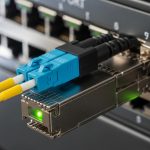
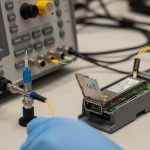
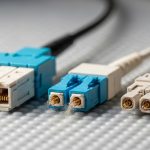
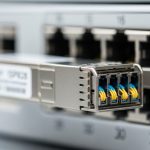
The IEEE 802.3 transceiver standards form the backbone of modern Ethernet optical communication, ensuring interoperability, performance, and reliability across diverse network environments. This article guides network engineers, architects, and data center operators through the technical depths of IEEE 802.3-compliant optical transceivers, from specifications to real-world deployment nuances. We examine key parameters, selection criteria, troubleshooting insights, and cost considerations essential for mastering optical link design in enterprise and carrier-grade networks.
Understanding IEEE 802.3 Transceiver Standards
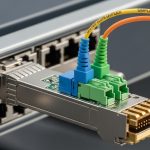
IEEE 802.3 represents the definitive collection of standards for wired Ethernet, encompassing physical layer specifications including optical transceivers. The transceiver standards ensure that small form-factor pluggable (SFP), enhanced SFP+ (SFP28), and quad small form-factor pluggable (QSFP, QSFP28) modules adhere to strict electrical, optical, and management requirements. This guarantees seamless interoperability between equipment from different vendors and predictable performance in production networks.
Optical transceivers under IEEE 802.3 specify parameters such as wavelength, data rate, reach, power levels, and diagnostic monitoring capabilities. For example, the 10 Gigabit Ethernet standard IEEE 802.3ae defines 10GBASE-SR (short reach over multimode fiber) and 10GBASE-LR (long reach over single-mode fiber) transceivers, each with distinct optical characteristics. Subsequent standards like IEEE 802.3bs and 802.3cd extend this to 100G and 50G respectively, with modules like QSFP28 and SFP56.
Key IEEE 802.3 Optical Transceiver Parameters
| Parameter | 10GBASE-SR (IEEE 802.3ae) | 10GBASE-LR (IEEE 802.3ae) | 100GBASE-SR4 (IEEE 802.3ba) | 100GBASE-LR4 (IEEE 802.3ba) |
|---|---|---|---|---|
| Wavelength | 850 nm (MMF) | 1310 nm (SMF) | 850 nm (MMF) | 1310 nm (SMF) |
| Max Reach | 300 m (OM3 fiber) | 10 km | 100 m (OM4 fiber) | 10 km |
| Connector Type | LC Duplex | LC Duplex | MPO (parallel fiber) | LC Duplex |
| Data Rate | 10 Gbps | 10 Gbps | 100 Gbps (4x25G) | 100 Gbps (4x25G) |
| Operating Temp | 0 to 70 °C | 0 to 70 °C | 0 to 70 °C | 0 to 70 °C |
| Transmit Power | -7.5 to -1 dBm | -8.4 to -2.5 dBm | -7.6 to -1.4 dBm | -7.6 to -1.4 dBm |
These specifications are drawn directly from the IEEE Std 802.3-2018 and related amendments [Source: IEEE 802.3ae, IEEE 802.3ba]. Understanding these parameters allows network engineers to choose transceivers suited to their fiber plant and link budget requirements.
Real-World Deployment Scenario: 10GBASE-SR in a Leaf-Spine Data Center Network
Consider a 3-tier data center topology employing a leaf-spine architecture with 48-port 10G ToR (Top of Rack) switches. Each ToR switch interfaces with spine switches using 10GBASE-SR optical transceivers over OM3 multimode fiber. The maximum cable length between leaf and spine is 150 meters. The network operates in a temperature-controlled environment averaging 25 °C.
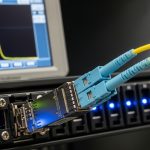
Using Cisco SFP-10G-SR modules, which comply with IEEE 802.3ae 10GBASE-SR, the deployment achieves full 10 Gbps throughput with low latency. The transceivers’ diagnostic monitoring (DOM) features enable continuous monitoring of optical power and temperature via SNMP, facilitating proactive maintenance. The standard LC duplex connectors simplify fiber patching, while the multimode fiber reduces overall cabling costs compared to single-mode options.
Selection Criteria for IEEE 802.3 Transceivers
- Distance and Fiber Type: Evaluate whether the reach requirement fits within short reach (SR) multimode fiber limits or requires long reach (LR) single-mode fiber transceivers.
- Data Rate Compatibility: Confirm transceiver data rates (10G, 25G, 40G, 100G) match the switch port capabilities and network architecture.
- Switch Vendor Compatibility: Select transceivers verified by the switch vendor to avoid interoperability issues or firmware incompatibilities. For example, Cisco OEM modules versus third-party equivalents.
- Digital Optical Monitoring (DOM) Support: Prioritize modules with DOM for real-time diagnostics enhancing operational visibility and troubleshooting.
- Operating Temperature Range: Consider ambient conditions; industrial-grade modules (e.g., -40 to 85 °C) may be required in harsh environments.
- Vendor Lock-in Risk: Balance cost savings of third-party modules against potential warranty or support limitations.
Common Mistakes and Troubleshooting Tips
- Mismatch of Fiber Type and Transceiver: Using single-mode transceivers over multimode fiber or vice versa causes high attenuation and link failures. Always verify fiber core size matches transceiver specifications. Solution: Replace transceiver or fiber cables accordingly.
- Ignoring Connector Cleanliness: Contaminated LC connectors cause signal loss and intermittent errors. Root cause often overlooked during installation. Solution: Use fiber optic inspection scopes and cleaning kits before installation.
- Overlooking DOM Thresholds: Failing to monitor DOM alerts can delay detection of optical power degradation leading to link downtime. Solution: Implement SNMP-based DOM monitoring integrated into network management systems.
Cost & ROI Considerations for IEEE 802.3 Optical Transceivers
Pricing for OEM IEEE 802.3-compliant transceivers ranges from approximately $100 to $300 for 10GBASE-SR modules, while higher data rate modules (40G, 100G) command prices upward of $500 to $1500. Third-party transceivers reduce upfront costs by 30-50% but may vary in reliability and vendor support. Total Cost of Ownership (TCO) includes power consumption, warranty service, and failure rates.
For instance, Cisco SFP-10G-SR modules draw about 1W power each, which impacts data center cooling budgets at scale. Investing in modules with efficient laser drivers and proven longevity can reduce maintenance disruptions and operational expenses. Network operators should weigh cost savings against the risk of link instability when opting for non-OEM transceivers.
Pro Tip: In high-density deployments, choosing IEEE 802.3 transceivers with integrated DOM and compatibility with vendor diagnostic tools significantly shortens mean time to repair (MTTR) by enabling rapid fault localization without physical inspection.
FAQ
- Q: Can I use a 10GBASE-SR transceiver on single-mode fiber?
A: No. 10GBASE-SR transceivers are designed for multimode fiber (OM3 or better) and typically operate at 850 nm wavelength. Using them over single-mode fiber leads to severe signal loss. Use 10GBASE-LR transceivers for single-mode fiber. - Q: What does DOM stand for and why is it important?
A: DOM stands for Digital Optical Monitoring. It enables real-time monitoring of optical parameters such as transmit/receive power and temperature, helping maintain link health and preempt failures. - Q: Are third-party IEEE 802.3 transceivers safe to use?
A: Many third-party transceivers comply with IEEE 802.3 specs and function reliably. However, compatibility issues and lack of vendor support can arise. Testing and vendor certification are recommended before large-scale deployment. - Q: What is the typical operating temperature range for standard IEEE 802.3 transceivers?
A: Most commercial-grade modules operate between 0 to 70 °C. Industrial-grade variants support -40 to 85 °C for harsh environments. - Q: How do I decide between SFP+, QSFP+, and QSFP28 modules?
A: The choice depends on required data rate (10G, 40G, 100G), switch port compatibility, and cabling infrastructure. QSFP28 supports 100G, QSFP+ supports 40G, and SFP+ supports 10G.
In conclusion, IEEE 802.3 transceivers remain the cornerstone of reliable Ethernet optical links. Mastery of their standards, parameters, and real-world implications empowers network professionals to build scalable, high-performance infrastructures. For a deeper dive into fiber optic cabling best practices, consider exploring fiber optic network deployment.
Author: Dr. Adrian Cross, Chief Technology Officer with 15 years in optical networking and data center infrastructure design. Committed to bridging standards with practical engineering challenges.