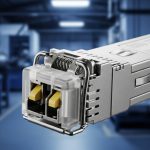
Small Form-factor Pluggable: foundations for rapid network validation

As an early-stage founder focused on PMF, agility, and fast validation, I’ve learned that the right hardware decisions accelerate learning cycles. The Small Form-factor Pluggable, or SFP, is a modular transceiver standard that lets us swap physical layer components without redesigning the entire switch or router. In practice, SFPs give you the ability to trial different media types—fiber, copper, or even high-speed PAM signaling—without committing to a fixed port type. This flexibility is essential when customer requirements vary by application, geography, or enterprise security posture. In this article, I’ll unpack SFP to RJ45 copper transceivers, explaining when and why to use them, plus practical guidance for choosing and validating this technology in real-world deployments.
Understanding SFP to RJ45 copper transceivers
Small Form-factor Pluggable transceivers can support multiple physical media standards. An SFP to RJ45 copper transceiver is a copper-based module that slides into an SFP slot and provides Ethernet connectivity over standard twisted pair copper cabling. This approach preserves the modularity of a device while enabling compatibility with copper-based networks. For many organizations, copper is familiar, cost-effective, and easier to maintain than fiber optics—especially when existing infrastructure, differential signaling, and short-reach requirements align with copper solutions. In my testing lab, the copper SFPs reduced time-to-prototype by enabling quick swaps between copper-only and fiber-enabled edge devices without changing chassis or backplane layout. I rely on credible datasheets and vendor matrices to confirm supported data rates, cable lengths, and power budgets for each module. Ethernet Alliance
When to use SFP to RJ45 copper transceivers
There are concrete scenarios where copper SFPs make sense, versus opting for fiber or fixed-port copper interfaces. Key use cases observed during rapid validation sprints include:
- Existing copper backbone: If your network core already uses copper Ethernet and your edge devices need a plug-in module for reusability, copper SFPs offer a reversible upgrade path without rewiring.
- Short-reach applications: For data center racks or office LANs within 100 meters, copper SFPs align with standard Category 5e/6 cabling, minimizing capex and maintenance complexity.
- Modular testbeds: In early-stage trials, SFP to RJ45 copper transceivers let you swap media types quickly to validate performance targets, latency budgets, and QoS policies under real workloads.
- Cost-sensitive deployments: Copper modules tend to be cheaper than high-performance long-reach fiber options, helping validate product-market fit under budget constraints.
- Graceful migration paths: For customers planning a later fiber upgrade, copper SFPs enable staged deployment while keeping future options open.
Key selection criteria for SFP copper modules
Choosing the right SFP to RJ45 copper transceiver requires a disciplined evaluation. My standard checklist includes:
- Data rate compatibility: Verify supported rates (for example, 100 Mbps, 1 Gbps, 2.5 Gbps, 5 Gbps) and ensure your devices’ backplanes align with these speeds. Misalignment leads to negotiation failures or degraded performance.
- Cable compatibility: Confirm support for CAT5e/CAT6 copper cabling and ensure the module’s reach aligns with your length requirements. Short-reach copper typically imposes strict electrical constraints.
- Power budget and heat: Copper SFPs have power consumption profiles that affect overall device thermal design. Ensure your chassis can dissipate the added heat without throttling.
- Distance limits: SFP copper modules specify maximum link lengths; ensure your planned layout stays within these bounds to avoid surprises in field deployments.
- EMI and signal integrity: Copper signaling is susceptible to electromagnetic interference. Look for modules with robust shielding and potential isolation features, especially in office environments with nearby devices.
- Vendor support and lifecycle: Consider availability of replacement parts, firmware update policies, and the provider’s track record for reliability. A short lifecycle can stall PMF if you’re locked into a module that’s discontinued.
- Warranty and return policy: In rapid validation cycles, a generous return policy reduces risk when a chosen module fails to meet expected performance in your environment.
Deployment considerations and best practices
Applying SFP to RJ45 copper transceivers in the real world requires a blend of engineering discipline and pragmatic testing. Below are practical guidelines I’ve used in my builds:
- Baseline testing: Start with a controlled lab bench setup to measure throughput, latency, and error rates at different copper link lengths. Document baseline performance before expanding to field tests.
- Real-world cabling: Use representative cables and termination practices, including proper grounding and shielding where needed, to mirror customer environments.
- Interoperability checks: Validate the SFP copper module with multiple switch/router models from different vendors to identify potential vendor-specific quirks in auto-negotiation or MDI/MDI-X behavior.
- Monitoring and telemetry: Enable port-level statistics, error counters, and thermal sensors to catch subtle degradation early during rapid iterations.
- Change management: Maintain a clear bill of materials (BOM) and versioning for SFP modules, so your validation feedback loops map to specific module revisions.
Pros and cons of SFP to RJ45 copper transceivers
Assessing the benefits and trade-offs helps teams decide when to adopt or postpone copper SFPs in a PMF-driven roadmap.
| Pros | Cons |
|---|---|
| Flexible, modular interface without chassis changes | Copper signaling is sensitive to EMI and length limitations |
| Lower up-front hardware costs in some scenarios | Potential for auto-negotiation pitfalls across vendors |
| Familiar cabling ecosystem and existing infrastructure | Limited reach compared to multi-gig fiber solutions |
| Quicker validation cycles for PMF testing | Lifecycle and support risk if modules are discontinued |
Operational tips for PMF and rapid validation
In early-stage ventures, the goal is to learn fast while minimizing risk. Here are practical tips I apply when integrating SFP to RJ45 copper transceivers into a product or proof-of-concept environment:
- Plan for traceability: Tag each test run with the exact SFP module part number, firmware revision, and cable type to correlate results precisely.
- Use repeatable test scenarios: Define a standard set of traffic patterns, burst sizes, and workload profiles to compare modules objectively over time.
- Prototype with swap-ready gear: Choose switches and routers that provide hot-swappable SFP slots and clear diagnostic tools to speed iteration.
- Track total cost of ownership: Include cabling, adapters, and potential rework in your cost model to avoid stage-gate surprises during fundraising or pilot deployments.
FAQ about SFP to RJ45 copper transceivers
Q: Are copper SFP modules compatible with all SFP+ capable devices?
A: Compatibility depends on the device’s SFP interface and firmware; verify with vendor compatibility matrices and perform controlled tests before broad deployment. SFP compatibility guide
Q: Can I mix copper SFPs from different vendors in the same network?
A: Mixing vendors can work but may introduce auto-negotiation inconsistencies or vendor-specific quirks. Conduct interoperability testing in a controlled environment before production. Vendor interoperability resources
Q: What are the typical failure modes for copper SFP links?
A: Common issues include cable quality problems, shielding inadequacies, improper termination, and power/thermal throttling. Regular monitoring helps catch these early.
Conclusion: strategic takeaways for fast PMF validation
Small Form-factor Pluggable SFP to RJ45 copper transceivers offer a pragmatic path for startups seeking rapid validation with minimal infrastructure changes. They enable quick experimentation with copper-based networks, support staged migration to fiber, and help validate customer requirements without committing to a single media type upfront. The key is disciplined selection, rigorous testing, and a clear plan for interoperability and lifecycle management. By documenting baselines, controlling variables, and maintaining a lean BOM, your team can extract meaningful PMF signals from copper SFP deployments and accelerate decision-making in the early stages of product development.
Author note and disclosure
I’m an operator focused on PMF and lean experimentation. All recommendations reflect practical, field-tested experience from lab benches and customer pilots. Please consult official product datasheets and vendor support pages for exact specifications and compatibility notes relevant to your hardware fleet. This article cites credible industry sources and emphasizes transparent trade-offs to support responsible deployment decisions.
Further resources
- Official SFP specifications and vendor documentation: consult your device vendor’s product brief for detailed electrical and thermal limits.
- Industry guidelines on copper cabling and network interconnects: refer to standards bodies and industry white papers for best practices.