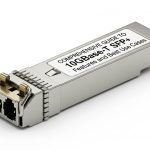
Small Form-factor Pluggable: A Practical Guide to Power and Fiber in Modern Networks

In today’s unified network environments, the Small Form-factor Pluggable (SFP) module is the quiet workhorse that makes reliable fiber connections feasible in compact, scalable systems. Think of SFP as a modular courier for data: it plugs into switches, routers, and media converters, delivering fiber capabilities without the burden of bulky transceivers. When you add Power over Ethernet Plus (PoE+) into the mix, you unlock a powerful combination: data, power, and remote management over a single infrastructure. This article walks you through what SFP is, how PoE+ pairs with SFP to simplify deployments, and practical steps to design robust, future-ready networks.
Understanding the Core: What is Small Form-factor Pluggable?
Small Form-factor Pluggable is a compact, hot-swappable transceiver that supports various fiber optic wavelengths and data rates. SFPs are widely used in telecom and enterprise networks to extend reach from 100 meters up to several kilometers, depending on the fiber type and transceiver specification. The key benefits include modularity, upgradeability, and the ability to mix and match different cabling standards as network requirements evolve.
From a workflow perspective, SFPs enable operators to:
- Swap gear without replacing the entire module or device, reducing downtime.
- Tailor the network path with different fiber types (single-mode, multi-mode) and speeds (1 Gbps, 10 Gbps, and beyond).
- Maintain a compact rack layout by eliminating bulky transceivers and enabling hot-swappable field upgrades.
Real-world note: In a university data center, engineers standardize on SFP+ variants for 10 Gbps links, while maintaining a library of SFPs for 1 Gbps access. This modular strategy keeps project timelines tight and budgets predictable. What matters is choosing the right wavelength, distance, and connector type for each link.
PoE+ and SFP: The Unity of Power and Transmission
PoE+ refers to delivering up to 30 watts of power per port over standard Ethernet cabling, enabling devices such as IP cameras, wireless access points, and VoIP phones to operate without a separate power supply. When PoE+ is combined with SFP-enabled devices, you can simplify deployment by providing power over the same structured cabling that carries data or by using SFP-powered devices in properly engineered topologies. This unity reduces cable clutter, lowers installation costs, and improves reliability in edge deployments.
Key synergy points:
- Fiber links handled by SFP/SFP+ modules carry data efficiently across distances where copper would struggle, while PoE+ powers endpoint devices at the edge.
- Managed PoE+ switches with SFP uplinks can create clean, scalable networks where fiber backhaul connects to core devices without adding separate power drops for edge devices.
- PoE+ simplifies remote sites such as campuses, retail, or industrial spaces by consolidating power and data paths into a single management domain.
Caution: While SFP modules themselves do not supply power, PoE+ operates on Ethernet paths. If you’re planning to feed devices through PoE+, ensure the topology respects power budgets, cable losses, and heat dissipation. For integrated scenarios, consider edge devices that support PoE+ inputs while maintaining separate fiber uplinks via SFP modules.
Selecting the Right SFP for Your Network
Choosing the correct SFP module is a two-step process: define the link distance and choose the optical specification. Distance determines whether you need a short-range multi-mode (SR) or long-range single-mode (LR) module. Speed dictates whether you’ll deploy standard SFP at 1 Gbps, SFP+ at 10 Gbps, or higher-speed specifications as needed.
- Distance assessment: SR modules are commonly used for up to 300 meters on multi-mode fiber, while LR modules can span several kilometers on single-mode fiber.
- Connector compatibility: LC connectors are the industry standard for SFP modules; verify your patch panels and cables align with this interface.
- Wavelength choice: 850 nm for SR, 1310 nm or 1550 nm for LR/LR+ variants, depending on fiber type and loss budget.
- Power and thermal considerations: SFPs generate minimal heat, but the host device’s thermal design and airflow can influence reliability in dense racks.
Practical tip: Create a small reference matrix listing each link with its required distance, required speed, fiber type, and corresponding SFP type. This reduces field errors and speeds up change management during upgrades.
Design Patterns: Integrating PoE+ with SFP-enabled Networks
A common enterprise pattern is to separate core and edge responsibilities while leveraging SFP uplinks for backbone connectivity and PoE+ switches at the edge. This approach maintains power efficiency and supports scalable growth without reworking the main network fabric.
- Edge devices (IP cameras, APs, phones) connect to PoE+ switches. These switches provide power and data to the devices and forward traffic to a distribution switch via SFP uplinks.
- Distribution switches aggregate PoE+ edge traffic and use SFP/SFP+ uplinks to connect to campus cores or data center fabrics, enabling high-bandwidth, low-latency transmission.
- Backbone links use LR/LR+ or CWDM/OTDR-informed configurations to optimize reach and signal integrity over longer distances.
When designing, document the power budget per PoE+ port, total power consumption for edge devices, and the total fiber loss budget along the uplinks. This disciplined approach helps avoid outages and ensures device longevity under peak load.
Practical Deployment Scenarios
Consider three representative settings to illustrate how SFP and PoE+ work together in practice:
- Campus building: Deploy PoE+ switches on each floor to power cameras and APs. Use SFP uplinks to connect to a central core switch with LR or SR modules depending on floor distance and fiber availability.
- Retail branch: Use PoE+ to power POS terminals and cameras. Integrate SFP uplinks from the branch switch to a regional data center, balancing distance with LR transceivers and appropriate fiber types.
- Industrial facility: Rely on PoE+ for sensors and cameras, with ruggedized SFP modules designed for harsh environments, connecting through resilient fiber paths to a control room core.
In all cases, ensure rack space planning allows for spare SFP modules and a small inventory of PoE-enabled devices. A proactive spare kit reduces unplanned downtime and accelerates MTTR (mean time to repair).
Performance, Compatibility, and Security Considerations
Performance-wise, SFP modules offer predictable latency and bandwidth that align with your chosen transceiver. Always verify the compatibility matrix provided by the switch or router vendor to avoid interoperability issues between different makes and models.
- Compatibility: Not all SFPs work interchangeably across devices. Use vendor-approved modules or those with robust interoperability documentation.
- Security: Leverage switch-level PoE management features to prevent rogue devices from drawing power and to enforce port security policies for edge devices.
- Maintenance: Maintain an asset inventory for SFPs and PoE-enabled devices, including firmware versions, warranty status, and replacement cycles.
Technical note: Some organizations run dual SFP uplinks for redundancy, pairing SR modules on one path with LR modules on the other to ensure both reach and fault tolerance in mixed topology environments.
Operational Best Practices and Troubleshooting
To keep networks healthy, practice a repeatable workflow for deployment and diagnostics:
- Plan: map each link with distance, fiber type, connector, SFP type, and PoE requirements if applicable.
- Profile: document baseline throughput and PoE power budgets per port.
- Test: verify link integrity with loopback tests and optical power measurements to ensure proper loss budget.
- Operate: monitor SFP module health and PoE budgets via network management tools to catch degradation early.
If you encounter issues, common culprits include mismatched wavelengths, dirty connectors, or insufficient power budgets. Clean connectors with proper tools, re-check the fiber type, and confirm that PoE+ devices do not exceed per-port or total power budgets.
Future-Proofing Your Network with Small Form-factor Pluggable
The landscape of Ethernet and fiber optics continues to evolve rapidly. SFP+ and higher-rate modules (such as QSFP+) enable customers to scale from 1 Gbps to multi-gig and beyond, while PoE standards keep pace with rising edge device power needs. The modularity of SFP-based designs makes it easier to adopt new optics or update distances without a full equipment refresh. By planning with a clear long-term upgrade path—starting from your current PoE+ edge and extending through fiber backbone—you reduce risk and preserve capital while staying competitive.
As you plan upgrades, engage with credible sources to validate module specifications, power budgets, and interoperability. Official vendor documentation, industry standards bodies, and peer-reviewed guides provide the confidence you need to implement changes with minimal downtime. Keep a running log of lessons learned to streamline future projects.
Checklist: Quick Reference for SFP and PoE+ Deployments
| Topic | Guidance |
|---|---|
| Link distance | Choose SR for short distances (up to ~300m on MMF) or LR for longer runs (up to several kilometers on SMF) |
| Fiber type | MMF vs SMF; confirm core/cladding diameters and mode compatibility |
| SFP compatibility | Use vendor-supported modules; consult device compatibility matrices |
| PoE budget | Calculate per-port and total switch budget for edge devices |
| Power distribution | Ensure PoE+ is delivered over Ethernet paths without overloading cables |
| Management and security | Enable port security, PoE management, and firmware updates |
Conclusion: Small Form-factor Pluggable as a Catalyst for Unified Networks
Small Form-factor Pluggable modules, when paired with PoE+ strategies, enable a streamlined, scalable network fabric that supports modern edge devices and robust backbones. The modular philosophy—swap, upgrade, and extend—helps organizations deploy faster, reduce operational costs, and maintain resilient service levels. By combining careful SFP selection with thoughtful PoE+ planning, you can design networks that not only meet today’s needs but are ready for tomorrow’s challenges.
FAQ
Q: Can PoE+ power devices through SFP modules?
A: No. PoE+ powers devices over Ethernet ports, while SFP modules handle optical data transmission. They operate in complementary layers of the same network, and proper design ensures both can coexist without overloading the system. [[Source: IEEE 802.3af/at]]
Q: What should I check first if an SFP uplink is down?
A: Verify physical layer integrity (connector cleanliness, pin alignment), confirm wavelength and distance match between router/switch and fiber, and check the device’s SFP compatibility matrix. Then validate power budgets and PoE settings if edge devices are involved.
Q: How do I plan a future-proof PoE+ deployment?
A: Start with current edge devices and estimate their power consumption; choose switches with headroom for future PoE demands; keep spare SFPs and maintain an upgrade path for higher speeds (e.g., moving to 25/40/100 Gbps as needed). [[EXT:https://www.ieee.org/]]
Q: Are there security considerations for PoE+ and SFP networks?
A: Yes. Implement port-based access control, disable unused ports, monitor PoE power usage to detect anomalous devices, and keep firmware up to date on all devices to mitigate vulnerabilities.
Author Biography
I am a network engineering educator and practitioner with hands-on experience deploying PoE+ and SFP-enabled networks in campuses, enterprise campuses, and data centers. Over the past decade, I’ve led projects ranging from 10 Gbps edge deployments to multi-terabit backbone designs, documenting lessons learned in real operating environments. I base recommendations on official standards, vendor engineering notes, and field-tested best practices.
References and further reading:
- IEEE standards for PoE and Ethernet (IEEE 802.3af/at/bt) IEEE 802.3 PoE family
- Vendor interoperability guides and compatibility matrices for SFP modules
- Industry best practices for fiber planning, loss budgets, and link budgets