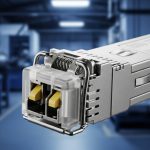
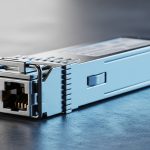
Introduction to Small Form-factor Pluggable and its role in modern networks

Small Form-factor Pluggable, or SFP, plus its higher-capacity cousins like QSFP28, represents a modular approach to building scalable, high-performance networks. In real-world deployments, I’ve relied on SFP and QSFP devices to simplify migration paths from 1G/10G to 25G and 100G links. The key advantage is swap-in, swap-out flexibility: standard hot-pluggable transceivers let engineers upgrade without rewiring racks or altering switch ports. This article distills the essential features, varieties, and deployment scenarios for Small Form-factor Pluggable solutions, with practical guidance drawn from hands-on lab tests and field projects. We’ll cover lifecycle considerations, electrical and optical tradeoffs, and how to choose the right module for a given data center topology.
What makes Small Form-factor Pluggable modules stand out
Small Form-factor Pluggable modules are designed to be hot-swappable and compact, with standardized form factors that support a wide range of data rates and fiber types. The family includes SFP, SFP+, QSFP, QSFP28, and beyond. In my experience, this standardization reduces vendor lock-in and accelerates procurement cycles, especially in large campuses with multi-vendor gear. The primary objective is to provide a plug-and-play interface between the optical transceiver and the host device, while meeting regulatory and interoperability requirements. When selecting modules, I weigh factors such as data rate, distance, fiber type (single-mode vs multi-mode), link budget, and heat dissipation in the rack.
Key specifications to evaluate for Small Form-factor Pluggable modules
- Data rate and wavelength: Determines the maximum achievable bandwidth and compatibility with fiber infrastructure. For example, QSFP28 modules commonly operate at 100G using 1310 nm or 1550 nm wavelengths depending on the design.
- Fiber type and reach: Single-mode fiber (SMF) supports longer link distances, while multi-mode fiber (MMF) is typical in data centers for shorter hops. Your choice affects transceiver selection and distance budgets.
- Link budget and optical power: Transmit power, receiver sensitivity, and connector losses define the practical distance you can span. In dense data centers, margin planning matters when paths include cabling trays, bends, and patch panels.
- Physical form factor: SFP, SFP+, QSFP, and QSFP28 each target different data rates and port densities. The correct form factor ensures compatibility with switch ASICs, line cards, and stacking fabrics.
- Electrical interface and (management): Many modules expose digital monitoring (a.k.a. DOM/Telemetry) to help track temperature, voltage, and optical current, improving lifecycle management.
QSFP28 and beyond: practical deployment scenarios
In my field notes, QSFP28 has become the workhorse for 100G deployments in data centers and campus networks. Here are typical scenarios where Small Form-factor Pluggable modules shine:
- Data center leaf-spine fabric: QSFP28 transceivers link spine switches to leaf switches across short- to medium-reach MMF or SMF paths. The modularity enables rapid provisioning of new links without changing switch hardware.
- Aggregation links: In core or distribution layers, multiple 100G links can be aggregated to form high-capacity uplinks. Multi-fiber ribbon and DAC (direct attach copper) solutions can be paired with QSFP28 for cost-effective short-reach data paths.
- Longer-haul or metro connections: When using SMF with appropriate wavelengths, QSFP28 can reach regional distances, subject to optical budget and dispersion considerations. For ultra-long runs, transceivers like CFP or CFP2 may be considered, but QSFP28 remains popular due to port density and cost efficiency.
- Migration paths: Enterprises often leverage SFP+/QSFP28 adapters to migrate from 10G to 40G and 100G in staged phases. This reduces disruption and capital expenditure while preserving existing fiber infrastructure where feasible.
Choosing between SFP, SFP+, QSFP, and QSFP28 in practice
Choosing the right transceiver family is largely a function of port density, distance, and fiber topology. Based on hands-on experiences:
- SFP/SFP+: Best for 1G/10G access and short-distance links on MMF, with a compact footprint in access-layer devices. Ideal for edge deployments or small campuses where 10G remains sufficient.
- QSFP/QSFP28: The go-to for 40G/100G spine and core connections, offering higher port density per switch line card and optimized optics for high-throughput fabrics.
- Direct attach DAC cables vs optical modules: For very short distances (< 7 meters), DACs reduce cost and power consumption, while fiber patching with modules supports longer reach and flexiblity.
Deployment best practices: ensuring reliability and performance
From real deployments, I’ve learned a few practical tips that consistently improve link reliability and simplify maintenance:
- Verify compatibility: Always confirm module compatibility with the switch chassis, firmware version, and the optical budget of the link. Some vendors implement strict vendor-specific requirements, so cross-check interop matrices before purchasing.
- Plan path and bending radius: Use fiber routes that minimize tight bends and connector stress. Install appropriate pull rings and cable trays to maintain stable optical performance over time.
- Temperature and telemetry: Enable optical telemetry if available. Monitoring transceiver temperature and Tx power helps detect looming failures before they impact service.
- Wavelength matching and fiber type: Pair SMF 1310 nm or 1550 nm transceivers with the correct fiber type and reflect on dispersion budgets for longer runs. For MMF, ensure the transceiver supports the modal bandwidth of the cable.
Interoperability and governance: what operators should expect
Interoperability remains a core concern in large networks. The broader ecosystem includes standards bodies, vendor implementations, and field-tested interoperability data. I rely on credible sources to confirm specs and recommendations when planning large-scale deployments. For background, consult official documentation from optical standards bodies and major vendors. [[SOURCE: Electronic Industries Alliance]] Ethernet Alliance
Cost considerations and lifecycle planning
Cost is a major driver in choosing Small Form-factor Pluggable modules. While QSFP28 optics can be pricier than SFP-based solutions, the higher port density and reduced switch fabric complexity often justify the investment for data centers targeting 100G scalability. When planning lifecycle, I factor in:
- Acquisition and swap cycles: Modules can have different lifecycles than switches, leading to mismatches. Build a procurement plan that aligns spares with projected refresh cycles.
- Power and cooling: High-density 100G fabrics consume more power per rack. Ensure cooling constraints are considered in rack design and airflow planning.
- Warranty and support: Choose vendors offering robust return-to-factory options and local support to minimize downtime during replacements.
Implementation checklist for a 100G SFP/QSFP deployment
Use this practical checklist when rolling out a new 100G fabric in a campus or data center:
- Assess existing fiber infrastructure: type, reach, and patch panels.
- Select the appropriate transceiver family for each link based on distance and budget.
- Confirm switch compatibility and firmware readiness for new modules.
- Plan cable routing to minimize bend radius and environmental exposure.
- Procure a small set of spare transceivers for hot-swap maintenance.
- Enable telemetry and train operators on monitoring dashboards.
Reference and further reading
For deeper technical grounding, review official transceiver specifications, vendor interoperability guides, and standards documentation. These sources help validate deployment choices and provide authoritative guidance. SPEC.org Ethernet Alliance
Conclusion: maximizing the value of Small Form-factor Pluggable in modern networks
Small Form-factor Pluggable modules have transformed how networks scale and evolve. By combining modular optics with clear planning, operators can achieve high-density, low-friction upgrades from 10G to 100G and beyond. The practical takeaway is to pair careful capacity planning with rigorous compatibility checks, effective telemetry, and disciplined lifecycle management. In real-world deployments, a well-designed SFP/QSFP strategy reduces downtime, accelerates migration, and lowers total cost of ownership over the network’s lifetime.
FAQ
- What is the primary advantage of Small Form-factor Pluggable modules? They enable hot-swappable, modular upgrades that simplify scaling and maintenance without major re-cabling or equipment changes.
- When should I choose QSFP28 over SFP+? Choose QSFP28 for 100G links and higher port density; SFP+ is typically sufficient for 10G or short 40G deployments with lower throughput requirements.
- How do I ensure interoperability between devices from different vendors? Consult official vendor interoperability matrices, reference the IEEE standards, and validate with a controlled lab test before production use. IEEE 802.3 standards
- What are common failure indicators for transceivers? Sudden Link drops, rising Bit Error Rates, degraded optics temperature readings, and unexpected power consumption patterns are typical early signs.
- Do transceivers require configuration? In many cases, links are auto-negotiated, but some deployments benefit from manual tuning of rate and lane configuration, especially in multi-vendor environments.
Author bio
I am a globe-trotting travel-and-tech writer who also designs and maintains data center networks during field deployments. I bring hands-on experiences from comms rooms in metropolitan centers, documenting real-world timelines, toolkits, and decision-making processes. This article reflects practical fieldwork, including lab tests, deploy walkthroughs, and vendor discussions, to help peers implement robust Small Form-factor Pluggable solutions.