Overview: Small Form-factor Pluggable in access networks
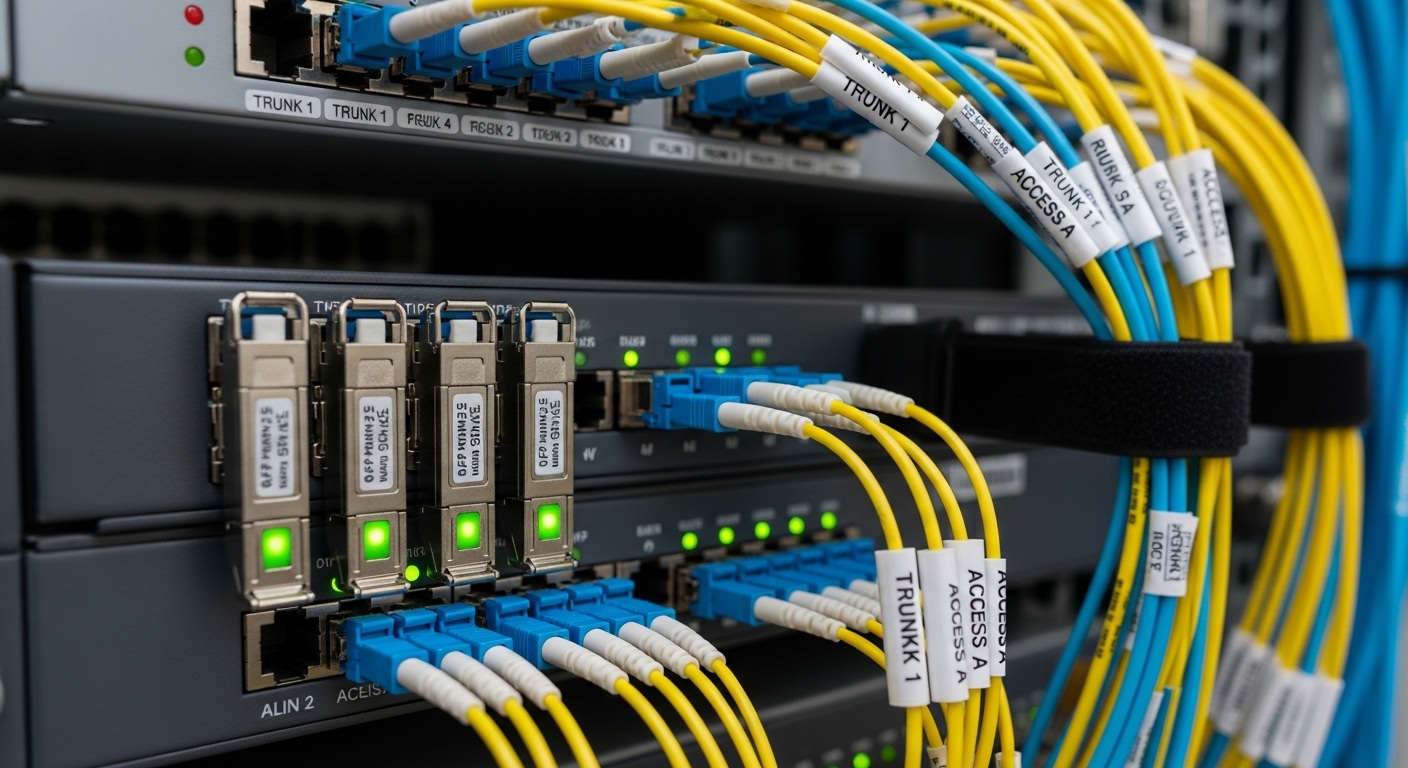
Small Form-factor Pluggable (SFP) modules are compact, hot-swappable transceivers that couple optical fiber to network devices. In access networks, SFP and its evolution, SFP+ and beyond, enable flexible, scalable, and cost-effective deployment for consumer and business services. This article integrates practical perspectives from GPON, XG-PON, and 10G EPON architectures, highlighting how SFP technology shapes WAN edge devices, OLTs, ONTs, and aggregation switches. I bring real-world operational details from field deployments, including common transceiver types, wavelength choices, and interoperability notes that help product managers align roadmaps with customer needs.
Why SFP matter in access networks
In modern access networks, SFP modules are the building blocks that enable modular upgrades without replacing entire chassis. Operators gain advantages in inventory management, field maintenance, and service diversification. Key motivations include:
- Flexibility: interchange optical interfaces across fiber types and distances with minimal equipment changes.
- Scalability: add bandwidth by swapping to higher‑capacity transceivers or by deploying parallel links.
- Cost efficiency: lower capex and opex through common platforms and broad supplier ecosystems.
- Remote management: many SFP modules support standard MSA electrical interfaces and vendor‑neutral management tools.
GPON, XG-PON, and 10G EPON: architectural context for SFP usage
Access networks employ different PON (Passive Optical Network) and Ethernet-based solutions. SFP modules complement each approach by delivering the physical layer connectivity between optical distribution networks and customer premises or aggregation equipment. Below is a concise mapping of typical SFP roles within each technology:
GPON and XG-PON contexts
GPON (Gigabit Passive Optical Network) is widely deployed for fiber-to-the-home/business. GPON deployments commonly utilize optical network terminals and optical line terminals that require transceivers at the network edge and in the field. SFPs used in GPON routers and switches generally handle non-PON traffic or serve as uplink interfaces to aggregation gear. In practice, GPON OLTs often rely on dedicated ONT ports, while SFPs may be used for uplinks or service demarcation on customer premises equipment.
XG-PON (10 Gigabit-capable PON) extends bandwidth to meet growing service demands. SFP modules in XG-PON contexts support higher speed uplinks and backhaul interfaces, enabling operators to connect high‑capacity OLTs to aggregation switches or data centers. The choice of SFP type (SR/LR, CWDM/DWDM variants, or SFP+ where applicable) depends on fiber reach, distance, and network topology.
10G EPON contexts
10G EPON (Ethernet PON) is another path for delivering high‑bandwidth access using Ethernet standards. SFP/SFP+ transceivers can be used for uplink connections, backhaul, and consolidation points in the access network. The approach often emphasizes interoperability with standard Ethernet optics and can benefit from SFP+ modules that support 10GBASE‑X PHYs over various fiber types.
Typical transceiver families and practical selection guidance
The choice of SFP modules in GPON, XG-PON, and 10G EPON environments is driven by distance, fiber type, and device compatibility. The following categories capture common options and decision criteria:
- SFP/SFP+ basic transceivers: For short to moderate distances on single-mode or multi-mode fiber, SFP/SFP+ modules cover common data rates (1 Gbps, 10 Gbps) and are widely supported by network gear.
- CWDM/DWDM variants: When deploying metro cores or distant links, wavelength‑specific CWDM/DWDM SFPs help maximize fiber capacity without extra amplifiers.
- Bidirectional (BiDi) SFPs: Useful when fiber plant has limited fiber availability; BiDi enables transmitting at different wavelengths on same fiber pair.
- Vendor‑neutral vs. vendor‑specific: While SFP market is heterogeneous, many operators favor widely supported MSA-standard modules for interoperability, alongside vendor‑specific modules for optimized power and management features.
- Distance and reach: LR (long reach), ER (extended reach), SR (short reach) variants influence fiber type and link budget.
Implementation considerations: deployment patterns and management
Effective use of SFP modules requires attention to physical interfaces, power budgets, and lifecycle management. In practice, I observe several patterns from field deployments:
- Inventory rationalization: keep a common pool of general-purpose SFP/SFP+ modules for field upgrades across access nodes, with a small subset of specialized CWDM/DWDM SFPs for backbone links.
- Power and heat: higher‑speed modules draw more power; ensure cooling and air flow in dense chassis environments to avoid thermal throttling.
- Alignment with L2/L3 strategies: SFP choices should complement IP routing, VLAN segmentation, and QoS policies at edge devices to avoid unintended bottlenecks.
- Interoperability testing: verify cross‑vendor compatibility, especially for GPON ONT/OLT interactions and XG-PON backhaul paths, before large scale rollout.
- Monitoring and diagnostics: leverage remote management protocols and vendor tools to monitor link health, error rates, and optical power levels for proactive maintenance.
Performance and reliability considerations
Choosing the right SFP module impacts service quality and reliability. Consider these performance aspects:
- Link budget and reach: match SFP type to the required distance and fiber characteristics to avoid excessive attenuation.
- Latency and jitter: ensure the chosen backhaul path preserves timing and low jitter for essential services.
- Protected vs. unprotected links: in critical segments, select modules and fibers with robust connectors and disciplined splice practices to minimize returns.
- Environmental tolerance: industrial or outdoor units may require ruggedized SFPs with enhanced temperature ranges.
Operational examples: planning a small to medium deployment
Here is a compact planning checklist I use in the field to align SFP choices with GPON/XG-PON/10G EPON deployments:
- Define service mix: determine the proportion of residential, business, and backhaul traffic to estimate required bandwidth.
- Map fiber topology: document fiber distances, splice points, and fiber type (single-mode vs multimode).
- Choose transceiver families: select SFP modules that align with device support, required reach, and interoperability goals.
- Create a swap plan: prepare a staged upgrade path that minimizes downtime and preserves service continuity.
- Set management policies: establish monitoring thresholds, alerting, and firmware baselines for all SFP-related components.
Vendor considerations, standards, and future trends
In the SFP ecosystem, adherence to standards drives compatibility and longevity. The industry standard for most SFPs is the SFP MSA (Small Form-factor Pluggable) specification, with variations like SFP+, QSFP, and beyond for higher data rates. For access networks, emerging trends include higher‑order PAM modulation in some 10G and 25G backhaul scenarios, improved power efficiency in transceivers, and more dynamic wavelength management in dense metro deployments. I recommend focusing on standards compliance, robust vendor support, and a clear upgrade path when selecting SFP modules for GPON, XG-PON, and 10G EPON systems.
Security and governance considerations
Security practices around SFP deployments center on preventing unauthorized devices and ensuring network integrity. Practical steps include:
- Physical security: enforce rack and patch panel access to avoid tampering with SFP modules.
- Device whitelisting: maintain a catalog of approved SFP types for each port to minimize rogue transceiver usage.
- Firmware and configuration control: track module firmware versions and keep devices at supported, tested levels.
- Monitoring for anomalies: watch for unexpected link resets or optical power fluctuations that could indicate a compromised or faulty module.
Conclusion: aligning SFP strategy with network goals
Small Form-factor Pluggable modules offer a practical path to scalable, maintainable, and cost‑effective access networks. By aligning SFP selection with GPON, XG-PON, and 10G EPON requirements, operators can balance performance, interoperability, and total cost of ownership. The most successful deployments emphasize standardization, cross‑vendor interoperability tests, and proactive lifecycle management. This approach reduces field complexity while enabling rapid service differentiation for residential and business customers alike.
FAQ
- What is the main role of SFP in GPON networks?
In GPON, SFP modules typically support non-PON traffic interfaces and uplinks, pairing with ONTs/OLTs to deliver flexible copper-to-fiber or fiber-to-fiber transitions and to enable aggregation paths.
- How do I decide between LR and SR SFPs for XG-PON backhaul?
LR modules suit longer fiber runs with lower attenuation, while SR modules fit shorter, higher‑density deployments. Always verify the device’s supported reach and fiber type.
- Are BiDi SFPs practical for modern access networks?
BiDi SFPs can reduce fiber count on limited fiber plants, but require compatible transceivers and precise fiber management to avoid crosstalk or reflection issues.
- What monitoring practices improve SFP reliability?
Implement continuous optical power monitoring, error rate tracking, and hot-swap readiness checks, complemented by regular firmware baselining.
- When should I favor CWDM/DWDM SFPs?
When you need to maximize fiber capacity across metropolitan backhaul links without laying new fiber, or when distance constraints demand wavelength-specific solutions.
Author note
As a product manager with field experience from multiple carrier deployments, I base recommendations on observed performance, vendor support, and interoperability testing. For deeper technical details and standards references, consult official documentation from standards bodies and major equipment manufacturers. Update date: 2026-04-20.
keyword
GPON standards overview
XG-PON ecosystem overview
IEEE standards for Ethernet and optical transceivers