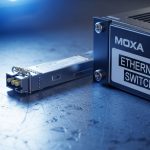
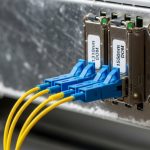
In industrial plants, an Ethernet/IP link can look healthy in the switch logs while the real failure hides in the optics: a power margin too thin, a connector polished wrong, or a module mismatched to the switch’s DOM expectations. This article helps automation engineers, field techs, and network owners choose Allen-Bradley fiber Ethernet/IP SFP optics that keep PLC traffic deterministic under heat, vibration, and frequent maintenance. You will get practical selection criteria, a comparison table of common transceiver classes, and troubleshooting steps grounded in how optics actually fail in the field. We also close with a cost and ROI view so procurement can plan for spares and lifecycle risk.
Top 7 Allen-Bradley fiber Ethernet/IP SFP picks by use case

When teams say “Allen-Bradley fiber,” they usually mean Ethernet/IP over fiber using SFP transceivers that connect Rockwell Automation switches or compatible third-party media converters to PLC, IO, and HMI networks. The “best” choice depends on reach, wavelength, connector type, and the plant’s temperature and cleaning discipline. Below are the top options engineers commonly deploy, each with a field-ready fit and honest limitations.
10GBASE-SR over OM3 multimode for short plant backbones
Key idea: Use multimode when the fiber run is short and the plant wants lower cost per port. Typical Ethernet/IP deployments with industrial switches and aggregation layers can run 300 m to 400 m depending on link budget, patch cord quality, and modal conditions. Most engineers choose 850 nm optics with LC connectors for fast field work, because multimode fibers are forgiving against minor attenuation.
Specs to look for: 10G data rate, 850 nm wavelength, LC duplex, and an operating temperature that matches the cabinet location (often -10 C to +70 C for industrial-grade variants). For vendor alignment, many teams pair with known-good switch optics and validate DOM output in commissioning.
Best-fit scenario: A single control building with two floors of cable trays where runs are 120 m and patching changes are frequent. In this environment, multimode SR keeps cost low while still delivering 10G headroom for video, historian bursts, and PLC updates.
Pros: Lower optics cost, easier splicing/termination in many shops, quick replacement. Cons: Limited reach vs singlemode, higher sensitivity to dirty connectors and excessive bend radius.
Operational note: If you are using IEEE 802.3 Ethernet optics, confirm the transceiver is compliant with the relevant 10GBASE-SR class and that the switch supports that media type. For baseline Ethernet behavior and optical classes, consult the standard reference. IEEE 802.3 Ethernet Standard
10GBASE-LR over singlemode for longer Ethernet/IP segments
Key idea: Singlemode LR optics trade higher optics cost for longer reach and better long-term stability, especially in sprawling facilities. At 1310 nm, LR modules are often the “plant backbone default” when cable pathways exceed multimode reach or when future expansions are likely.
Specs to look for: 10G data rate, 1310 nm, LC duplex, and a reach target like 10 km (actual achievable distance depends on fiber attenuation and splice/connector losses). Ensure the module’s transmit power and receiver sensitivity provide enough margin for your measured loss.
Best-fit scenario: A campus layout where a Rockwell Automation line controller cluster sits 2.8 km from the central data aggregation rack. With singlemode LR, the team can maintain stable links through seasonal temperature swings and reduce rework during future expansions.
Pros: Long reach, more tolerant to aging and distance changes, cleaner lifecycle. Cons: Higher initial module cost, singlemode handling discipline matters (endface quality and insertion loss measurement).
25GBASE-SR for high-density control floors
Key idea: As plants densify, you may need more bandwidth per rack without moving to 100G. 25GBASE-SR at 850 nm can be a practical bridge for aggregated traffic while keeping optics compact and power moderate.
Specs to look for: 25G data rate, 850 nm, SFP28 form factor, LC duplex, and DOM support. Confirm the switch supports SFP28 optics and that the plant’s fiber plant is OM3/OM4 capable for the targeted reach.
Best-fit scenario: A control floor with 16 cabinets feeding a top-of-rack industrial switch, where each cabinet has multiple PLC and IO segments plus machine vision streams. 25G reduces the number of uplink channels required while keeping deterministic traffic patterns predictable.
Pros: Higher bandwidth without extreme optics cost tiers. Cons: Multimode requirements are stricter than older 10G SR in some cabling plants; verify OM grade and link budget.
1000BASE-LX over singlemode for legacy Ethernet/IP segments
Key idea: Not every Ethernet/IP link needs ten gigabits; some lines remain at 1G due to device constraints and installed cabling. 1000BASE-LX at 1310 nm is a reliable upgrade path when you need singlemode stability but must keep costs aligned.
Specs to look for: 1G data rate, 1310 nm, LC duplex, and compatibility with your switch’s link negotiation behavior. Because LX optics can interoperate across many Ethernet stacks, teams often use them as “safe replacements” for aging multimode runs.
Best-fit scenario: A legacy line where PLC traffic is steady at 100 Mbps average, but the plant wants lower maintenance and better long-term reliability. Engineers use LX optics to reduce connector cleaning frequency by improving link margin.
Pros: Mature ecosystem, stable singlemode performance. Cons: Limited future bandwidth; ensure you are not creating a bottleneck for new vision or analytics traffic.
Copper-to-fiber boundary media converters with Allen-Bradley fiber uplinks
Key idea: In brownfield retrofits, you might not replace every copper segment. Fiber SFPs can anchor uplinks while media converters handle short copper drops to IO and controller racks.
Specs to look for: Confirm the converter supports the same Ethernet/IP transport behavior and that the fiber uplink optics are correct for the distance and wavelength. Many converters also require careful attention to VLAN tagging, QoS markings, and link state behavior during failover.
Best-fit scenario: A retrofit where 24 control nodes are within 20 m of a cabinet but run through noisy industrial conduits. You keep those copper links local and move the uplink to fiber SFP for noise immunity and longer reach.
Pros: Faster retrofit path, less cabling disruption. Cons: Adds a hop; verify latency and monitoring visibility for deterministic needs.
Industrial-grade SFPs with extended temperature and hardened housings
Key idea: The optics must survive the cabinet reality: heat from nearby power electronics, airflow restrictions, and vibration during maintenance shutdowns. Industrial-grade SFPs are designed to operate across wider temperature bands and often include tighter internal quality control.
Specs to look for: Operating temperature such as -40 C to +85 C where required, robust latch mechanisms, and a DOM implementation that your switch can read without spurious alarms. Validate with your actual switch and optics firmware pairing during commissioning.
Best-fit scenario: A hot enclosure near a motor drive where ambient can reach 60 C during peak production. You choose optics rated beyond the measured cabinet temperature plus margin to avoid link degradation.
Pros: Lower field failure rate, fewer “mystery” link drops. Cons: Higher cost than standard commercial modules; verify DOM compatibility.
DOM-aware, vendor-validated optics to reduce alarm noise
Key idea: Many Rockwell-connected environments rely on transceiver monitoring for maintenance workflows. DOM can generate alerts when thresholds are crossed, but mismatched or poorly implemented DOM can create nuisance alarms that hide the real faults.
Specs to look for: DOM support for temperature, supply voltage, bias current, and optical power; and compatibility with your switch’s expected transceiver type. In practice, you want deterministic behavior: stable alarm thresholds and consistent readings over time.
Best-fit scenario: A facility with a centralized network monitoring platform where engineers triage alerts daily. DOM-aware optics reduce time wasted on false positives.
Pros: Better operational visibility, easier spares strategy. Cons: Vendor validation may increase procurement lead time.
Allen-Bradley EtherNet/IP networking basics
Optics comparison table: wavelength, reach, power, and connector
Engineers choose optics by link budget and operational constraints, not by brand names alone. The table below compares common SFP classes used for Ethernet/IP fiber uplinks and PLC-to-switch segments. Use it as a first filter, then validate the exact module datasheet values for transmit power, receiver sensitivity, and maximum link length.
| Optics class | Typical wavelength | Reach class (typ.) | Connector | Form factor | Data rate | Operating temperature (typ.) | Where it fits best |
|---|---|---|---|---|---|---|---|
| 10GBASE-SR | 850 nm | 300 m to 400 m (OM3/OM4, link budget dependent) | LC duplex | SFP+ | 10 Gbps | -10 C to +70 C (or industrial extended) | Short plant runs on multimode |
| 10GBASE-LR | 1310 nm | Up to 10 km | LC duplex | SFP+ | 10 Gbps | -10 C to +70 C (or industrial extended) | Long plant backbones on singlemode |
| 25GBASE-SR | 850 nm | ~70 m to 100 m (OM3/OM4, exact depends) | LC duplex | SFP28 | 25 Gbps | -10 C to +70 C (or industrial extended) | High density uplinks on multimode |
| 1000BASE-LX | 1310 nm | Up to 5 km (varies) | LC duplex | SFP | 1 Gbps | -10 C to +70 C | Legacy segments needing singlemode stability |
In real procurement, you will often see specific part families such as Cisco SFP-10G-SR for 10GBASE-SR, Finisar FTLX8571D3BCL for 10GBASE-SR style deployments, or FS.com SFP-10GSR-85 for cost-optimized multimode options. Those examples are not endorsements; the real test is measured loss and your switch’s transceiver support matrix.
For deterministic Ethernet behavior and optical class framing, engineers also cross-check how Ethernet physical layers interact with higher-layer automation traffic. A helpful reference for broader fiber and optical considerations is available through Fiber Optic Association resources. Fiber Optic Association
How to choose Allen-Bradley fiber SFPs: a decision checklist
Selection is a chain of constraints. If you satisfy only reach and forget monitoring, you can end up with link flaps or noisy alarms. If you pick optics that match wavelength but ignore connector cleanliness and DOM behavior, you can still lose uptime.
- Distance and link budget: Start with measured attenuation (dB/km), splice loss, connector insertion loss, and patch cord quality. Add margin for aging and future re-termination.
- Fiber type and grading: Confirm OM3 vs OM4 for SR optics and core diameter specs for multimode. Verify singlemode fiber is appropriate for LR/LX.
- Switch compatibility: Validate the exact switch model and SFP cage type. Some industrial switches enforce transceiver vendor constraints or require matching optics speed ratings.
- DOM support and thresholds: Ensure DOM fields are read correctly by the switch and monitoring system. Look for stable optical power readings and no persistent “DOM mismatch” alarms.
- Connector standards and polarity: LC duplex polarity and patch cord wiring matter. Confirm your patching convention and label fibers before swapping.
- Operating temperature and thermal design: Measure cabinet ambient near the SFP cage. Choose modules with temperature range that covers worst-case conditions with margin.
- Operating mode and speed: Confirm whether your switch negotiates or hard-sets speed. If the port is configured for 10G but the optics are 1G, the link may not come up.
- Vendor lock-in risk: Consider spares and lifecycle costs. If you rely on OEM-only optics, plan spares and lead times for planned shutdowns and emergency swaps.
In the field, the best commissioning practice is to validate optical power and error counters after every change. For a practical overview of fiber performance metrics and test approaches, many teams reference industry guidance and test workflows; for broader telecom and optical alignment concepts, ITU materials can also be useful. ITU
Pro Tip: In many industrial networks, the most expensive failure is not the dead link but the “half-alive” link: it negotiates, forwards frames, and then intermittently drops under temperature. If your monitoring shows rising FEC/CRC-like errors or unstable optical receive power, treat it as a link budget problem first and a fiber cleanliness problem second—DOM lets you prove which side of the margin is collapsing.
Common pitfalls and troubleshooting for Allen-Bradley fiber links
Fiber failures often share the same poetry: silent until they suddenly are not. The good news is that most root causes are repeatable and fixable with disciplined diagnostics and clean handling.
Pitfall 1: “The connector looks clean” but the link budget collapses
Root cause: Microscopic contamination on LC endfaces increases insertion loss, especially with short-reach multimode where margin is smaller. Even a small smear can reduce received power below the transceiver sensitivity threshold.
Solution: Clean endfaces with lint-free wipes and approved cleaning tools, then inspect with a microscope or inspection scope. Re-seat adapters and verify optical power via DOM after each cleaning step.
Pitfall 2: Mismatched wavelength class (SR vs LR) or wrong fiber type
Root cause: Installing 850 nm SR optics into a singlemode run, or connecting 1310 nm LR optics to multimode cabling. The link may attempt to come up but often fails, or it may come up with errors depending on transceiver behavior.
Solution: Verify fiber type in the cable record, then confirm wavelength label on each transceiver and patch cord. Use OTDR or certified attenuation tests when records are unclear.
Pitfall 3: Polarity and duplex patch cord reversal
Root cause: LC duplex polarity errors can prevent transmit/receive alignment. The switch port may show “link up” while data fails, or it may never reach full link stability.
Solution: Label fibers at both ends, follow the duplex polarity convention used by your plant, and re-check TX-to-RX mapping. After correction, observe error counters and DOM receive power stability.
Pitfall 4: DOM mismatch alarms and monitoring blind spots
Root cause: Some third-party optics provide DOM fields that do not match expected formats or thresholds, causing persistent alarms. Engineers then ignore the warnings, missing the real drift that precedes failure.
Solution: Validate DOM behavior during commissioning. If the switch flags transceiver mismatch, test with a verified compatible module class and confirm monitoring platform parsing.
Fiber optic transceiver troubleshooting
For field teams, the fastest path is always evidence: optical power from DOM, link error counters, and physical inspection. Avoid “swap everything” until you have isolated whether the fault is physical, optical, or monitoring-related.
Cost and ROI: planning spares for Allen-Bradley fiber SFPs
Cost is not just the per-module price; it is the downtime cost, the spares inventory burden, and the probability of a repeat incident. OEM optics can cost more but often arrive with tighter compatibility validation and predictable DOM behavior. Third-party optics can reduce upfront spend, yet you must budget for validation time and the risk of monitoring noise or intermittent compatibility edge cases.
- Typical module price ranges: In many markets, 10GBASE-SR SFP+ modules may cost roughly tens to low hundreds per unit depending on temperature grade and brand; 10GBASE-LR singlemode modules often cost more than SR. Industrial temperature-rated modules can add a meaningful premium.
- TCO drivers: Power draw differences are usually small compared to downtime risk, but higher failure rates or poor compatibility can raise total cost through additional truck rolls and troubleshooting time.
- Spares strategy: For critical PLC uplinks, keep at least 1 spare per critical link type (SR vs LR vs speed class) so you can restore service during planned or emergency maintenance.
ROI becomes clear when you compare the cost of optics validation against the cost of a single unplanned outage. If a line controller network drives a production cell, even short downtime can dwarf the optics price difference within a single incident cycle.
Industrial network spares strategy
Summary ranking: which Allen-Bradley fiber SFP to buy first
The list below ranks the top picks by how commonly they solve real Ethernet/IP link problems in industrial environments. Use it as a procurement shortlist, then confirm the exact module class in your switch compatibility matrix.
| Rank | Fiber SFP class | Primary advantage | Primary limitation | Best-first scenario |
|---|---|---|---|---|
| 1 | 10GBASE-SR (850 nm, SFP+) | Lower cost, quick plant deployment | Shorter reach; multimode sensitivity | Runs under a few hundred meters on OM3/OM4 |
| 2 | 10GBASE-LR (1310 nm, SFP+) | Long reach and stable margins | Higher module cost | Backbones beyond multimode reach |
| 3 | 25GBASE-SR (850 nm, SFP28) | Higher density uplinks | Stricter multimode requirements | High bandwidth aggregation on OM3/OM4 |
| 4 | 1000BASE-LX (1310 nm, SFP) | Safe legacy singlemode upgrade | Bandwidth ceiling | 1G PLC segments needing stability |
| 5 | Industrial extended-temp SFPs | Resilience in hot cabinets | Premium cost | Enclosures near drives and power electronics |
| 6 | DOM-aware vendor-validated optics | Clean monitoring, fewer alarm traps | Procurement lead time | Teams with strict monitoring workflows |
| 7 | Copper-to-fiber boundary converters | Retrofit acceleration | Extra hop; validate latency | Brownfield plants with mixed cabling |
Allen-Bradley fiber vs copper
FAQ: Allen-Bradley fiber SFPs for EtherNet/IP
Which Allen-Bradley fiber SFP class should I choose for a 150 m run?
For about 150 m, 10GBASE-SR (850 nm) is often the first option if your plant has OM3 or OM4 multimode. Confirm with your switch compatibility list and then validate link budget using measured insertion loss for patch cords and connectors.
Can I mix OEM and third-party Allen-Bradley fiber optics in the same switch?
Sometimes yes, but you must validate DOM behavior and alarm thresholds. Commission each transceiver type and watch error counters for a full production cycle, not just link-up time.
What is the fastest way to troubleshoot a fiber link that flaps?
Start with DOM: observe received optical power stability and any temperature readings that drift. Then inspect and clean endfaces, verify polarity and patch cord mapping, and confirm fiber type and wavelength class match the transceiver.
Do I need special configuration for EtherNet/IP when using fiber?
EtherNet/IP typically rides on standard Ethernet framing, so the main requirements are correct VLAN/QoS settings (if used) and stable physical layer connectivity. Verify your switch port settings match the transceiver speed and that monitoring systems interpret DOM correctly.
How many spares should I keep for Allen-Bradley fiber uplinks?
A common practice is at least one spare per critical link type (for example, one SR and one LR per switch or per cabinet group). If you have high availability requirements, align spares with your maintenance windows and the lead time of your chosen vendor.
What temperature rating matters most for industrial cabinets?
Choose optics whose rated operating temperature covers the measured cabinet ambient at the SFP cage under worst-case production heat. If the cabinet runs near the upper end of a module’s range, you should expect drift and more frequent cleaning or replacement cycles.
Field engineers live at the boundary between physics and uptime: the best Allen-Bradley fiber selection is the one that survives measured loss, measured temperature, and measured handling discipline. Next step: validate your distances and fiber types, then shortlist optics classes using the checklist above and commission with DOM and error counters.
Author bio: I have deployed Ethernet/IP fiber links in multi-building industrial networks, validating SFP DOM telemetry, connector cleanliness, and link budgets during cutover windows. I write from the perspective of the maintenance tech who needs repeatable diagnostics, not just spec-sheet promises.