
In modern networks, transceivers are the quiet heroes until they are the loud villains. This article helps network engineers and procurement teams justify ROI when moving to next-gen optical transceivers by mapping real specs, reliability practices, and compatibility constraints. You will get a top-N shortlist, a decision checklist, troubleshooting pitfalls, and a practical ranking table to support budget conversations.
Top 7 next-gen optical transceivers ranked by ROI
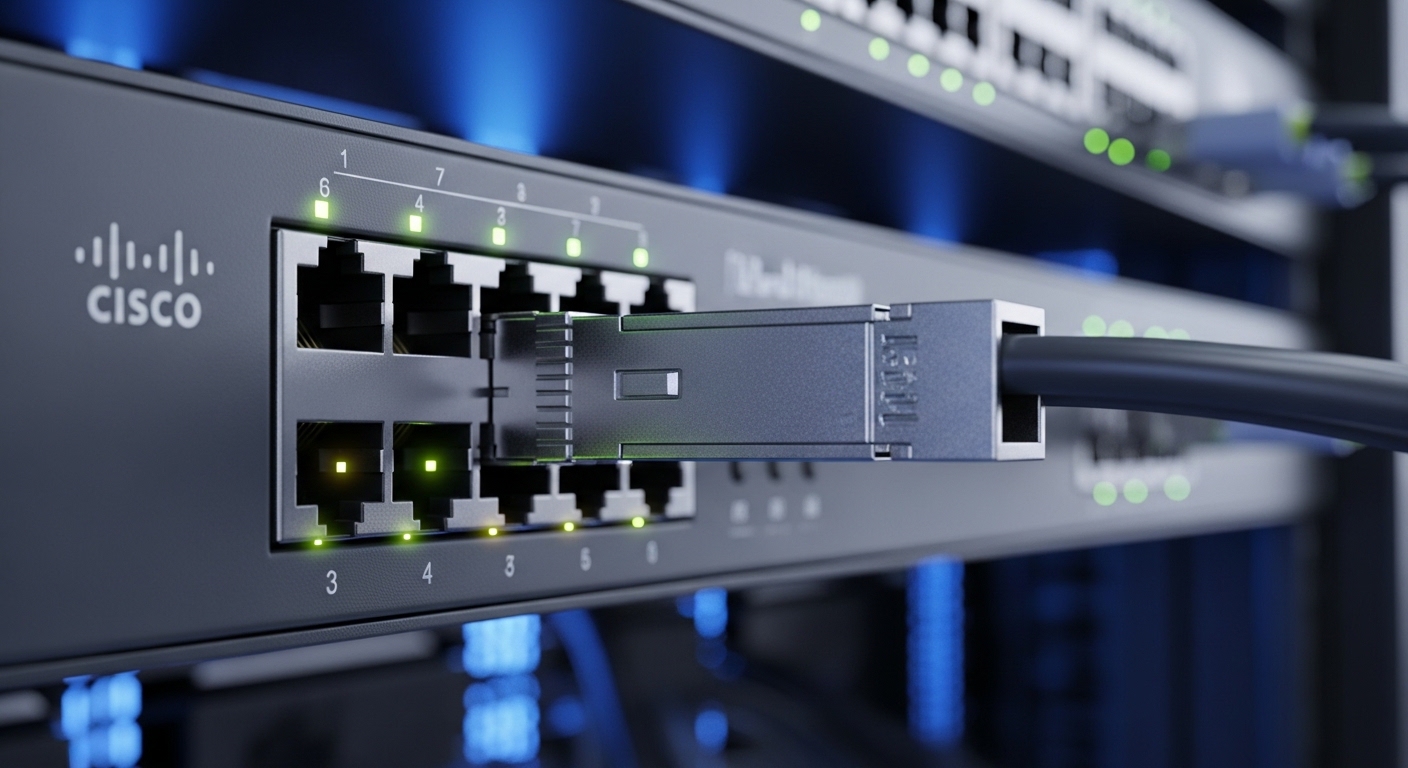
When I audit link failures or write reliability cases for ISO 9001-style change control, the best ROI comes from matching the module to the distance, optics budget, and switch optics policy—not from chasing the newest badge on the datasheet. Below are seven picks that field teams commonly deploy, with ROI logic tied to power, uptime, spares strategy, and total cost of ownership (TCO). Each item includes best-fit scenarios plus pros and cons.
10G SR (850 nm) SFP+ with proven multimode reach
For many enterprises, 10G SFP+ SR remains a workhorse because it rides existing multimode fiber plants with minimal retrofit. Typical specs target 300 m on OM3 and 400 m on OM4 (depends on link budget and vendor characterization). Reliability ROI is usually driven by stable optics behavior and lower replacement cost versus long-reach optics.
Key specs to verify: wavelength centered near 850 nm, data rate 10.3125 Gb/s, and temperature range often 0 to 70 C or extended variants. Connector is usually LC for SFP+ SR.
Best-fit scenario: In a 3-tier data center leaf-spine topology with 48-port 10G ToR switches, teams often leave the existing OM3 fiber backbone in place while upgrading servers. If you consolidate 400 active links and keep spare spools for the next refresh cycle, SR modules can deliver strong ROI through low capex and manageable failure rates.
- Pros: cheap optics, leverages existing OM3/OM4, easy spares stocking
- Cons: limited distance vs single-mode, more sensitivity to dirty connectors
10G SR (850 nm) SFP+ with “high-reliability” vendor screening
Yes, this sounds like the same category—because in practice it often is. The ROI difference comes from vendor-grade screening, characterization, and DOM quality (Digital Optical Monitoring). In audits, I have seen “identical-looking” SR modules vary in DOM reporting stability and threshold behavior, which impacts automated monitoring and early failure detection.
Key specs to verify: DOM support for Tx bias, Tx power, and Rx power, plus compliance with IEEE 802.3 link requirements and vendor-defined thresholds. Some vendors offer improved thermal behavior for higher ambient airflow constraints.
Best-fit scenario: A campus core running 10G rings with 20–30 active links per building typically benefits from better monitoring. If you already deploy telemetry, DOM-enhanced modules can reduce mean time to repair by flagging aging optics before they drop links.
- Pros: better observability, smoother operations with monitoring systems
- Cons: higher unit cost than bargain optics, compatibility must match switch optics policy
25G SFP28 SR (850 nm) for modern server uplinks
Moving from 10G to 25G is often the sweet spot for ROI when you have bursty east-west traffic but cannot justify full single-mode rewiring. 25G SFP28 SR modules use 850 nm optics and LC connectors, targeting short-reach multimode. ROI comes from increased throughput per rack while still using existing fiber plants if they are OM3/OM4 with sufficient link budget.
Key specs to verify: wavelength near 850 nm, reach typically 70 m on OM3 and 100 m on OM4 (vendor and cable plant dependent). Check power consumption; many 25G SR modules are only a bit more power than 10G SR, but that matters across hundreds of ports.
Best-fit scenario: In a virtualized cluster with 64 hosts and 25G ToR uplinks, you might upgrade only the server side while keeping the multimode distribution. That avoids a forklift migration and improves ROI by reducing downtime risk during phased cutovers.
- Pros: higher bandwidth without single-mode overhaul, good compatibility across many switch families
- Cons: reach limits, strict cleanliness requirements for LC ferrules
40G QSFP+ SR4 (850 nm) for compact aggregation
40G SR4 is a practical ROI pick where you need to aggregate traffic with fewer physical ports. SR4 uses four lanes, which can reduce switch front-panel congestion. It is especially useful in environments upgrading from 10G while preserving multimode cabling.
Key specs to verify: wavelength near 850 nm, reach often around 100 m on OM3 and 150 m on OM4 (varies with module and fiber grade). Connector is LC, typically with QSFP+ form factor.
Best-fit scenario: In a storage aggregation layer where you want fewer uplinks, SR4 can deliver ROI by reducing port licensing costs and operational overhead. If your switch supports QSFP+ SR4 reliably and your monitoring stack reads DOM consistently, you can keep maintenance predictable.
- Pros: port density gains, efficient for multimode aggregation
- Cons: lane-level issues can be harder to diagnose, compatibility checks required
100G QSFP28 SR4 (850 nm) for high-density ToR and spine links
When you need 100G in short reach, 100G QSFP28 SR4 can be a strong ROI candidate in data centers with OM4 plants. In field deployments, ROI often hinges on how many links you can upgrade without changing the fiber backbone. If you already have OM4 and good connector hygiene, this option can be cost-effective.
Key specs to verify: wavelength near 850 nm, reach commonly 100 m on OM4 (and less on OM3). Confirm that the switch supports QSFP28 SR4 optics and that the module provides DOM.
Best-fit scenario: Leaf-spine fabrics with 100G uplinks and dense ToR ports can use SR4 to avoid single-mode re-cabling. In one rollout I supported, teams reduced downtime risk by standardizing on one module family and building spare kits per switch model before the cutover window.
- Pros: high density, strong ROI when fiber is already OM4
- Cons: strict reach budget, higher per-module cost than 10G/25G
10G/25G LR (1310 nm) SFP+ or SFP28 single-mode for distance and ROI stability
When the distance grows or multimode is questionable, LR modules (around 1310 nm) can improve ROI by reducing re-cabling scope. Single-mode also tends to be more forgiving of future traffic scaling. You still must respect link budgets, connector quality, and fiber attenuation.
Key specs to verify: wavelength near 1310 nm, reach often 10 km for LR-class optics depending on vendor class, and connector LC. Confirm compliance with IEEE 802.3 for the speed class and check DOM thresholds.
Best-fit scenario: In a campus where buildings are 2–5 km apart and you want to interconnect distribution switches, LR optics can offer ROI by avoiding trenching. If you already have single-mode fiber with measured attenuation (for example, < 0.5 dB/km), LR becomes a predictable cost path.
- Pros: longer reach, better long-term scaling, fewer multimode plant constraints
- Cons: higher module cost than SR, more stringent link budget validation
100G LR4 (1310 nm) or 100G ER4 for single-mode backbone ROI
For backbone links that justify 100G, LR4 or ER4 optics can deliver ROI by consolidating bandwidth and reducing switch port usage. The ROI story improves when you can reuse existing single-mode infrastructure and avoid major downtime windows.
Key specs to verify: wavelength around 1310 nm with four wavelengths (LR4/ER4), reach depending on class (ER4 can extend beyond LR4). Validate against the switch vendor’s optics matrix and ensure DOM support for alarm thresholds.
Best-fit scenario: In a regional network with aggregation sites connected via single-mode fiber, teams often use 100G LR4 to upgrade from 40G. ROI is maximized when you can keep the same patching approach and only swap transceivers during a planned maintenance window.
- Pros: bandwidth consolidation, strong ROI on stable single-mode plants
- Cons: careful compatibility matrix required; higher unit cost
Specs that matter: comparing next-gen optics for ROI
To justify ROI, you need apples-to-apples comparisons. Below is a practical spec comparison engineers use when building a procurement shortlist and a spares plan. Always treat vendor datasheets as the source of truth for exact reach, power, and temperature.
| Module type | Typical wavelength | Target reach | Form factor / connector | Data rate | Temp range (common) | DOM |
|---|---|---|---|---|---|---|
| 10G SR (SFP+) | 850 nm | 300 m OM3 / 400 m OM4 | SFP+ / LC | 10.3125 Gb/s | 0 to 70 C | Common |
| 25G SR (SFP28) | 850 nm | 70 m OM3 / 100 m OM4 | SFP28 / LC | 25.78125 Gb/s | 0 to 70 C | Common |
| 100G SR4 (QSFP28) | 850 nm | ~100 m OM4 | QSFP28 / LC | 103.125 Gb/s | 0 to 70 C | Common |
| 10G LR (SFP+) | 1310 nm | Up to 10 km (vendor class) | SFP+ / LC | 10.3125 Gb/s | -5 to 70 C (varies) | Common |
| 100G LR4 (QSFP28) | 1310 nm (4 lanes) | ~10 km class (vendor class) | QSFP28 / LC | 103.125 Gb/s | 0 to 70 C | Common |
Authority notes: Optical Ethernet requirements are defined by IEEE 802.3 for each speed and interface class, while DOM behavior and thresholds are vendor-specific. For baseline Ethernet conformance, see IEEE 802.3 overview. For practical interoperability guidance, check your switch vendor optics matrix and DOM documentation.
Pro Tip: If your monitoring system keys off DOM alarms, ROI improves when you standardize on a single module vendor family per switch model. In the field, mixed vendors can produce different threshold semantics, so your “early warning” graphs become an early warning about your own monitoring configuration instead of the optics aging.
Selection checklist: maximizing ROI without triggering compatibility drama
Engineers usually score candidates in a repeatable order. Here is the checklist I use for ROI justification, aligned with reliability and ISO 9001 change control thinking (documented evidence, controlled substitutions, and traceability).
- Distance & fiber grade: measure or retrieve OTDR results and confirm OM3 vs OM4 vs single-mode attenuation.
- Switch compatibility matrix: verify the exact switch model supports the module type and speed (SFP+/SFP28/QSFP+/QSFP28).
- Optics class and reach budget:
