
When multi-cloud traffic grows, the bottleneck is often not compute or storage, but the optical links that move east-west data between sites and providers. This article helps network and infrastructure teams evaluate ROI for fiber and transceiver upgrades using real-world numbers, compatibility constraints, and measurable failure modes. If you are planning a leaf-spine refresh, expanding to additional cloud regions, or tightening latency and packet loss targets, you will get a practical decision framework.
Why optical upgrades move the ROI needle in multi-cloud
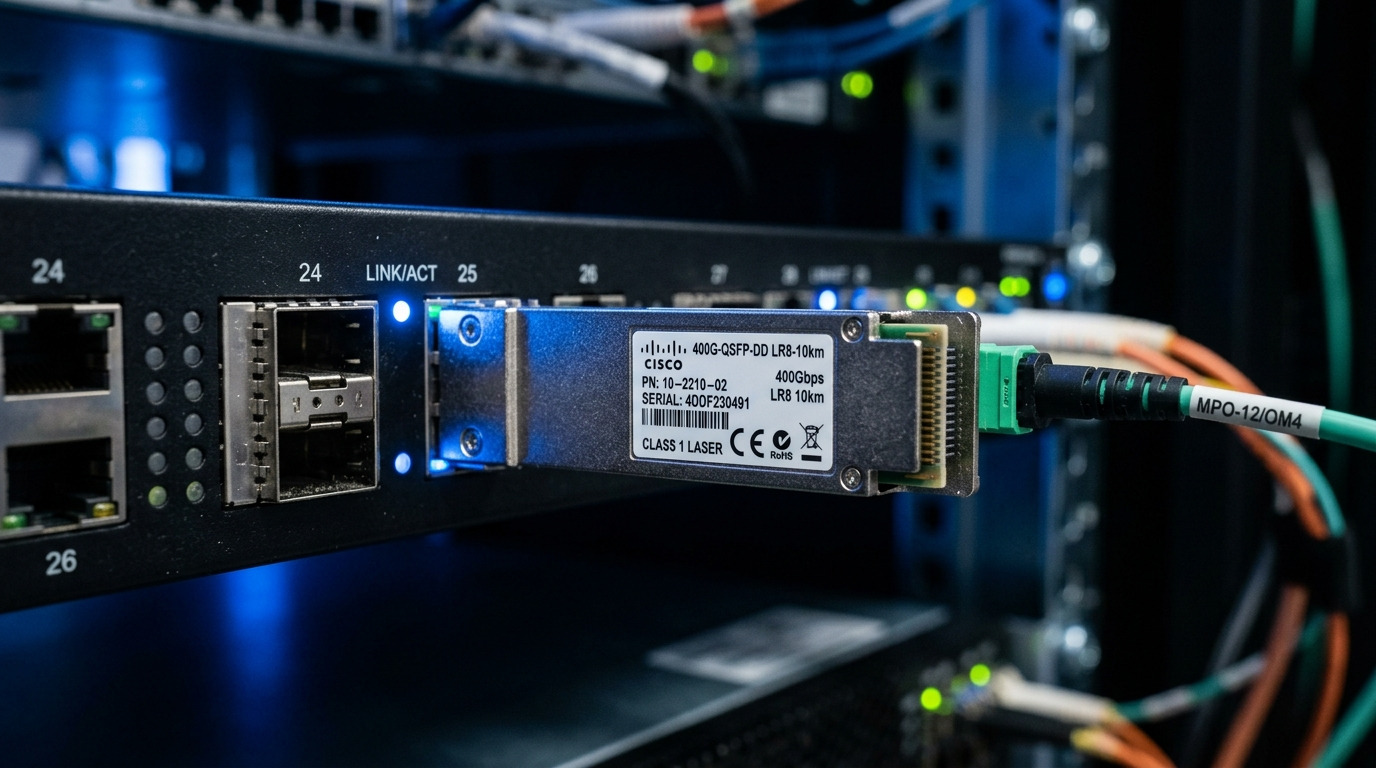
In multi-cloud architectures, traffic patterns shift from predictable north-south flows to bursty east-west replication, backup windows, and streaming ingestion. Optical capacity upgrades typically reduce congestion, retransmissions, and queuing delay, which shows up as better application performance and fewer incidents. The ROI case is strongest when the current links are oversubscribed or when you are hitting thermal or power constraints that force shutdowns or throttling.
From a field perspective, the most common ROI drivers are: (1) lowering packet loss rates that trigger TCP backoff; (2) improving utilization headroom so routing changes do not cascade into congestion; and (3) reducing truck-rolls by standardizing transceiver types and diagnostics. IEEE 802.3 defines the physical-layer behavior for Ethernet over fiber, including optical power and safety considerations that vendors validate in their datasheets. For protocol expectations and link training behavior, engineers often start with [Source: IEEE 802.3] and then confirm vendor specifics in module documentation.
Pro Tip: Before you buy more optics, measure link utilization and error counters for at least two busy cycles. If CRC errors or FEC correction counts are trending up, “capacity upgrades” may mask a physical-layer issue that will keep biting you after the upgrade.
Specs that matter for ROI: transceiver reach, power, and temperature
ROI math fails if optics are mismatched to the switch platform or fiber plant. For multi-cloud upgrades, you usually select between short-reach and extended-reach Ethernet transceivers based on link distance, budget, and connector type. The key is to map your actual fiber reach and loss budget to the transmitter optical power, receiver sensitivity, and safety margins stated by the vendor.
Below is a practical comparison for common 10G and 25G fiber module classes used in multi-cloud data centers. Values vary by vendor and revision, so treat them as starting points and verify against the exact part number datasheet.
| Module class (typical) | Wavelength | Target reach | Connector | Data rate | Typical optical power / sensitivity (range) | Operating temp | Common use in multi-cloud |
|---|---|---|---|---|---|---|---|
| 10G SR (SFP+) | 850 nm | Up to 300 m (OM3/OM4) | LC | 10.3125 Gb/s | Transmitter power about -7 to -1 dBm; receiver sensitivity about -14 to -8 dBm (vendor-dependent) | 0 to 70 C (commercial) or -40 to 85 C (extended) | Leaf-spine within and across pods |
| 10G SR (SFP+) | 850 nm | Up to 400 m (OM4 with margin) | LC | 10.3125 Gb/s | Transmitter power about -7 to -1 dBm; receiver sensitivity about -14 to -8 dBm (vendor-dependent) | 0 to 70 C or -40 to 85 C | Extra patching in multi-cloud expansions |
| 25G SR (SFP28) | 850 nm | Up to 100 m (OM3) or 150 m (OM4, depending on budget) | LC | 25.78125 Gb/s | Transmitter power about -5 to 0 dBm; receiver sensitivity about -20 to -12 dBm (vendor-dependent) | 0 to 70 C or -40 to 85 C | Higher east-west density for multi-cloud clusters |
| 10G LR (SFP+) | 1310 nm | Up to 10 km (single-mode) | LC | 10.3125 Gb/s | Transmitter power about -8 to 0 dBm; receiver sensitivity about -22 to -14 dBm (vendor-dependent) | 0 to 70 C or -40 to 85 C | Inter-building or metro multi-cloud connectivity |
In practice, engineers also validate DOM support (Digital Optical Monitoring), since it affects how quickly you can detect aging optics. Many platforms can read transceiver telemetry via the standard serial interface, but compatibility varies for third-party modules. For example, Cisco-branded transceivers like Cisco SFP-10G-SR and Cisco SFP-10G-LR are often validated with Cisco platforms, while third-party options such as Finisar FTLX8571D3BCL or FS.com SFP-10GSR-85 may work reliably if DOM and firmware behavior match your hardware’s expectations. Always confirm with your switch vendor’s transceiver compatibility matrix and ROM/firmware release notes.
ROI model for multi-cloud optical upgrades: from utilization to downtime
To evaluate ROI, start with measurable baselines: utilization, latency, and error counters before changes. Then estimate (a) performance gains from reduced congestion and (b) avoided costs from fewer outages and faster troubleshooting. For example, if a pair of ToR switches in a leaf-spine design is running at 85% average utilization during backup windows, upgrading uplinks from 10G to 25G or 40G can reduce queue depth and retransmissions. You can quantify this by comparing observed interface drops and retransmit counts, then correlating with application SLOs.
Next, estimate downtime cost. Optical failures are usually not catastrophic, but they can trigger failover churn, causing transient packet loss and operational overhead. In a multi-cloud environment with automated orchestration, even short instability can cause workload rescheduling. If each incident costs your team 2 to 4 labor-hours plus customer-impact risk, reducing optics-related events can be a major ROI lever. Vendors and analysts emphasize that standardized optics with DOM telemetry shorten mean time to repair, which is a direct operational savings line item rather than a pure bandwidth gain [Source: ANSI/TIA-568 and vendor optical safety and diagnostics guidance].
Finally, include power and cooling. High-density optics can increase local thermal load and airflow demands. In real deployments, engineers have seen that replacing older transceivers with newer power-efficient designs can lower fan ramp events, especially in constrained racks. However, do not assume power savings without checking the exact module datasheet power consumption and your chassis thermal profile.
Selection criteria checklist: choosing optics that will pass the multi-cloud test
Use this ordered checklist when selecting optics for multi-cloud upgrades, especially when you are mixing vendors across regions or cloud providers.
- Distance and fiber type: Confirm OM3/OM4 versus single-mode, then validate link loss with your as-built fiber plant. Include patch cords, splitters, and connector loss.
- Switch compatibility: Check the exact switch model and firmware release. Validate DOM behavior and whether the platform enforces vendor-specific diagnostics.
- Data rate and lane mapping: Ensure the module matches the port speed mode (for example, 25G optics on 25G-capable ports). Avoid silent down-negotiation surprises.
- Reach and power margin: Compare transmitter power and receiver sensitivity against your link budget. Keep a safety margin for aging and dust.
- Operating temperature: Use extended-temperature modules for cold aisles, outdoor huts, or high-heat cabinets. Verify chassis airflow assumptions.
- DOM and monitoring strategy: Prefer modules that expose accurate temperature, bias current, and received optical power so you can alert early.
- Vendor lock-in risk: Evaluate OEM versus third-party TCO. Run a pilot with your exact transceiver models, not just “same class” optics.
- Spare strategy: Plan stocking quantities based on lead times and failure rates, including at least one spare per critical link group.
Common pitfalls and troubleshooting tips during optical ROI rollouts
Field issues usually appear after installation, when teams are busy and time windows are tight. Here are concrete failure modes engineers commonly see in multi-cloud optical upgrades, with root causes and fixes.
Pitfall 1: Passes link up, then intermittently drops under load
Root cause: Marginal optical power budget, often due to extra patching, dirty connectors, or slightly higher-than-expected fiber attenuation. The link may train successfully but error counters rise during peak traffic. Solution: Clean connectors using lint-free methods and inspect with an optical microscope. Recalculate the link loss budget and compare expected received power to module sensitivity.
Pitfall 2: “Not supported” or flapping transceivers on certain switch firmware
Root cause: DOM or EEPROM parameter mismatch, sometimes triggered by firmware enforcement or incorrect vendor identification fields. Solution: Use the switch vendor’s compatibility list, update switch firmware to the tested baseline, and validate with a pilot pair of modules in the exact port type and speed mode.
Pitfall 3: Elevated temperature leading to premature aging and higher error rates
Root cause: Insufficient airflow around dense transceiver banks or incorrect module temperature class selection. Commercial-temperature optics in hotter cabinets can drift faster. Solution: Verify chassis thermal profiles, measure local inlet temperatures, and switch to extended-temperature optics where needed. Also check whether fan curves changed after rack expansion.
Pitfall 4: Wrong wavelength class assumptions during multi-cloud interconnect
Root cause: Confusing 850 nm SR optics with 1310 nm LR when planning inter-building or metro segments, especially when labels were copied from older builds. Solution: Confirm wavelength on the module label and test with an optical power meter and light source. Validate fiber type (OM3/OM4 vs single-mode) before ordering.
Cost and ROI note: OEM versus third-party optics over a multi-year horizon
Pricing varies by data rate, reach, and certification, but realistic ranges in many enterprise and service-provider deals are roughly: SR transceivers for 10G and 25G often land in the tens to low hundreds of dollars per module, while LR and metro-capable optics typically cost more. OEM optics may carry a premium (commonly 1.2x to 2.0x versus third-party), but they can reduce validation cycles and compatibility risk. In an ROI model, the “cheaper per module” approach can lose if you spend more engineering time on compatibility testing or if you see higher incident rates due to marginal performance.
TCO should include: spares inventory carrying costs, labor for cleaning and rework, and the cost of downtime events. If your monitoring setup relies on DOM telemetry for early warning, prioritize modules with reliable diagnostics even if the unit price is higher. For multi-cloud deployments with multiple sites, the operational savings from standardized telemetry and consistent optics behavior often outweigh small purchase-price differences.
FAQ
How do I estimate ROI for optical upgrades in multi-cloud?
Start with baseline utilization and error counters, then quantify avoided incidents and improved SLOs. Include labor cost for troubleshooting and the business impact of transient packet loss during failover.
Can I mix OEM and third-party optics in the same multi-cloud environment?
Often yes, but compatibility depends on switch firmware and DOM behavior. Run a pilot in the exact port type and speed mode, then confirm telemetry accuracy and link stability under load.
What fiber plant checks matter most before ordering SR or LR modules?
Verify fiber type (OM3/OM4 vs single-mode), confirm end-to-end loss with as-built records, and account for patch cords and connectors. Also inspect connectors for contamination; many “mystery” link issues trace back to dirty LC ends.
Does DOM monitoring actually help reduce outages?
Yes when you integrate transceiver telemetry into alerting. Engineers use temperature and received optical power trends to predict failures before they cause link drops.
What operating temperature should I plan for in multi-cloud data centers?
Match the module temperature class to your chassis and rack airflow conditions. If you operate in cold aisles, high-density pods, or near hotspots, extended-temperature optics reduce aging-related error rate growth.
Where should I begin if I am unsure whether to upgrade 10G or 25G?
Measure oversubscription and queueing during peak multi-cloud windows. If you are consistently near high utilization with rising retransmissions, higher data rate uplinks are usually the fastest ROI lever.
Optical ROI in multi-cloud environments comes down to link budget discipline, compatibility validation, and measurable reductions in congestion and incident rate. If you want the next step, review fiber link budget and transceiver selection to turn real measurements into a purchase-ready plan.
Author bio: Field-focused electronics and network hardware writer with hands-on experience validating SFP and QSFP optics, DOM telemetry, and fiber loss budgets across multi-vendor switch stacks. I document measured behaviors from installation through troubleshooting, emphasizing compatibility and operational risk.
