
Offshore platforms are unforgiving: salt spray, vibration, and rapid temperature swings turn a “working” link into a recurring outage if the optics are mismatched. This guide helps network and field engineers choose the right marine fiber module SFP for extreme environments, with practical selection steps, a spec comparison table, and troubleshooting patterns seen during commissioning. Use it when you are replacing optics on a leaf-spine core, restoring uplinks from a subsea gateway, or qualifying spares for a maintenance cycle.
Why offshore SFP optics demand a marine fiber module mindset
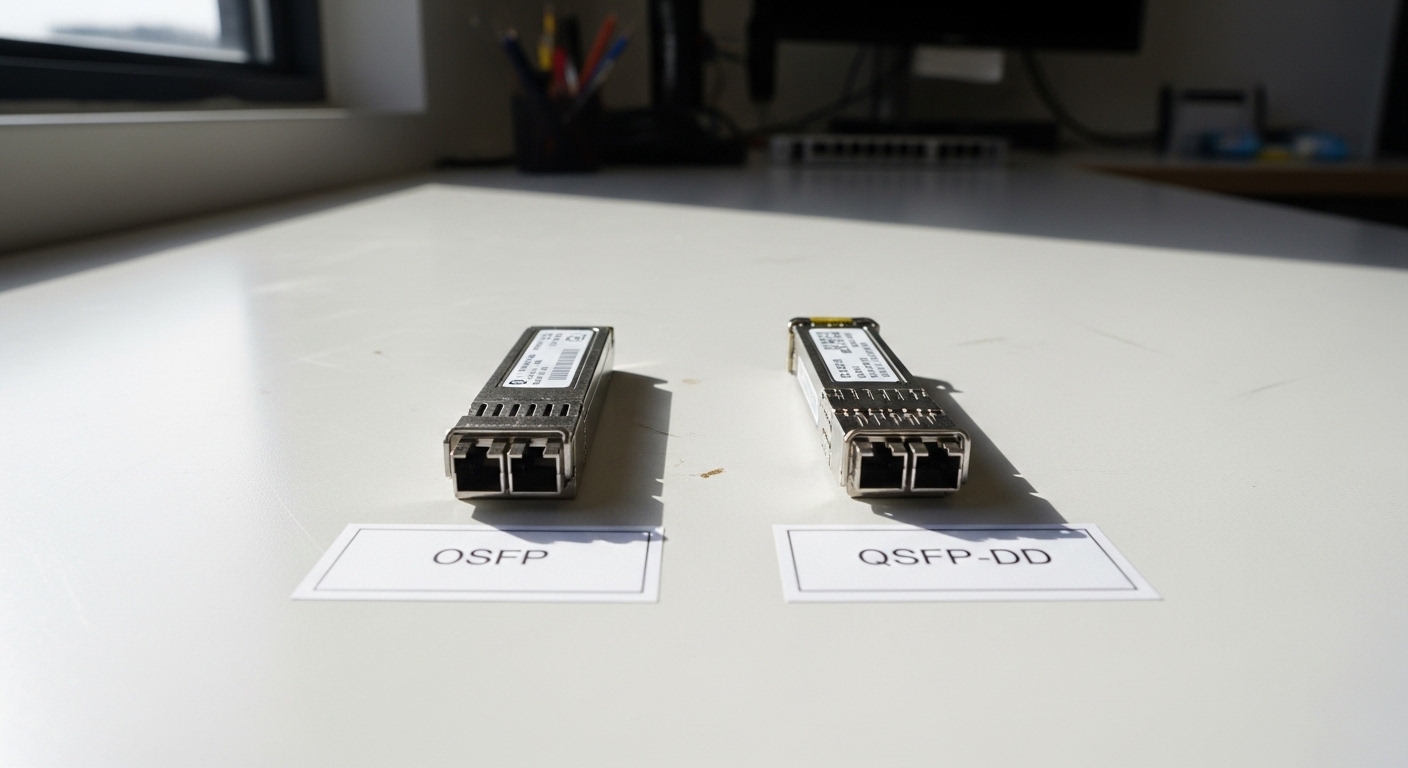
In offshore platform fiber networks, the SFP must survive more than link budget math. Mechanical stress from deck vibration can loosen latch tolerances, while salt-laden humidity accelerates corrosion on exposed metal surfaces. Temperature extremes also shift transmitter bias current and receiver sensitivity, so you need modules that explicitly support the operating range and meet optical safety requirements.
Most engineers start with distance and wavelength, but the real gating items are DOM support (Digital Optical Monitoring), compatibility with the switch’s firmware thresholds, and how the vendor defines operating temperature versus storage temperature. If you are using standard IEEE 802.3 media types, confirm the SFP is compliant for the chosen lane speed and connector style.
For authority on optical networking and Ethernet link behavior, see IEEE standards portal and vendor datasheets for specific SFP families such as Cisco and third-party optics.
Marine fiber module SFP selection: the specs that actually move uptime
Start with the transport standard (10G, 25G, etc.), then match optics type (SR for multimode, LR for single-mode) and connector. In offshore builds, multimode is often avoided for long runs and for harsh environmental routing; single-mode is common for backbone and riser links.
Core spec comparison (what to check before you order spares)
| Module type (examples) | Wavelength | Typical reach | Data rate | Connector | DOM | Operating temp | Notes for offshore |
|---|---|---|---|---|---|---|---|
| SFP-10G-SR class (multimode) | 850 nm | ~300 m (OM3) | 10G | LC | Often supported | Varies by vendor (commonly -5 to 70 C) | More sensitive to patch quality and modal bandwidth; salt exposure still matters |
| SFP-10G-LR class (single-mode) | 1310 nm | ~10 km | 10G | LC | Common | Commonly -40 to 85 C (varies) | Better for risers/backbone; verify link budget and fiber attenuation |
| 25G SFP28 LR class (single-mode) | 1310 nm | ~10 km | 25G | LC | Usually supported | Often -40 to 85 C | Higher margin needs clean optics and stable power budget |
Example part numbers you may encounter during qualification: Cisco SFP-10G-SR, Finisar/II-VI optics like FTLX8571D3BCL, and third-party options such as FS.com SFP-10GSR-85. Always validate against your specific switch transceiver compatibility list and the module’s datasheet operating temperature claims.
For optical and safety characteristics, rely on vendor datasheets and the broader Ethernet physical layer requirements referenced by IEEE 802.3. [Source: IEEE 802.3 working group documentation] [Source: Cisco and vendor SFP datasheets]
Real deployment scenario: SFP replacement during offshore commissioning
On a 3-tier offshore platform network, a commissioning team replaced failing 10G uplink optics between a deck-level aggregation switch and a substation gateway. The run was 6.5 km of single-mode fiber with measured attenuation of 0.28 dB/km, plus patch and connector loss totaling 2.1 dB. They chose a 1310 nm LR-capable marine fiber module SFP with DOM enabled and an operating temperature spec covering -20 C to 70 C to match deck-to-cabinet thermal gradients.
After reseating, the link came up cleanly, but only after the switch thresholds were aligned with the optics’ DOM values. During the first night, one port flapped due to a slightly contaminated LC ferrule; cleaning restored stability. Field lessons from this job: pre-clean, verify DOM readouts match expected ranges, and log optical power at commissioning so future swaps can be compared.
Decision checklist for choosing the right marine fiber module
- Distance and attenuation budget: compute worst-case loss (fiber attenuation + connectors + splices + margin). For offshore, assume additional margin for aging and handling.
- Optics type and wavelength: choose SR (850 nm) for short multimode runs; choose LR (1310 nm) for single-mode backbone and risers.
- Switch compatibility: confirm the SFP family is supported by the exact switch model and firmware version; verify DOM threshold compatibility.
- DOM support and telemetry: prefer modules with readouts for Tx power and Rx power; record baselines during commissioning.
- Operating temperature and thermal cycling: match the module’s guaranteed operating range to cabinet conditions, not just room temperature.
- Connector and field serviceability: LC is common; ensure you have correct dust caps, cleaning tools, and spare patch cords.
- Vendor lock-in risk: OEM modules may reduce compatibility surprises; third-party can lower cost but may require validation and tighter spares control.
Pro Tip: In offshore cabinets, the first symptom of a marginal marine fiber module is often not total link loss; it is a slow drift in DOM Tx/Rx power that crosses the switch’s alarm threshold during temperature swings. Capture DOM telemetry at two temperatures (day and night) so you can distinguish “optics aging” from “environmental detuning.”
Common mistakes and troubleshooting patterns
“It links up once” but flaps during thermal cycles
Root cause: DOM thresholds mismatch or optics operating outside guaranteed temperature range. Sometimes the module is technically compatible but not within the switch’s alarm handling thresholds.
Solution: validate the module’s operating temperature per datasheet, then check DOM alarm settings and compare Tx power and Rx power to baseline values.
Contaminated LC ferrules after maintenance
Root cause: Salt-laden airflow and handling dust leave microfilms on the connector face; multimode and high-sensitivity receivers reveal this quickly.
Solution: clean with approved optical wipes and solvent method, inspect with a fiber microscope, and always use dust caps during swaps.
Wrong fiber type assumption (OM3 vs OS2, or mixed patching)
Root cause: A patch panel may be labeled “MM” while the actual run is different, or a technician may connect the wrong patch cord during a deck changeout.
Solution: verify fiber type end-to-end (OTDR where possible), confirm wavelength plan (850 vs 1310 nm), and test with a controlled known-good module.
Under-budgeted link margin
Root cause: Engineers compute with typical loss, then ignore connector aging and additional splice loss introduced by offshore repairs.
Solution: add conservative margin (commonly several dB beyond nominal) and confirm with measured fiber attenuation rather than relying on nameplate estimates.
Cost and ROI note for offshore spares and TCO
Typical pricing for 10G SFP optics varies widely by vendor, reach, and certification. OEM modules can cost roughly $80 to $250 per unit depending on brand and temperature grade, while third-party alternatives often land around $30 to $120 for common SR/LR types, subject to compatibility validation.
ROI comes from reduced mean time to repair: DOM-capable optics with known baselines speed troubleshooting, and temperature-rated modules reduce repeat failures. TCO should include cleaning consumables, spares inventory holding costs, and the labor cost of repeated deck access. If you cannot validate third-party optics on your switch models, the “cheaper” module can become the most expensive one during an outage.
FAQ
What is a marine fiber module, practically speaking?
In practice, it is an SFP transceiver qualified for harsh conditions: extended temperature range, corrosion-resistant handling expectations, and field-proven compatibility with your switch and optics monitoring. Always use the vendor datasheet and your switch vendor compatibility list as the real proof.
Can I use standard SFP modules on an offshore platform?
Sometimes, but you must validate operating temperature, DOM behavior, and switch compatibility under your firmware. If the module’s guaranteed range does not cover cabinet conditions, flaps during thermal cycling are common.
Which is better for offshore: SR or LR optics?
For backbone and risers over kilometers, LR at 1310 nm on single-mode fiber is usually the safer choice. SR can work for short runs, but it is more sensitive to patch quality and multimode path changes.
Do I need DOM for offshore links?
DOM is strongly recommended because it gives you actionable telemetry for Tx and Rx power drift. During offshore maintenance windows, DOM baselines reduce guesswork and help you spot a failing optic before total link loss.
What should I log during commissioning?
Capture link status, DOM Tx power, DOM Rx power, and any port alarm counters. Record the fiber type, patch panel mapping, and measured attenuation if you have OTDR results.
How do I troubleshoot after a module swap?
First, verify connector cleanliness with inspection and cleaning. Then compare DOM values to the baseline from the original module and confirm the switch port thresholds match the optics behavior.
If you want the next step
