
In 2025, many teams are deploying AI workloads and immediately hitting a familiar bottleneck: optical capacity and operational reliability do not scale as fast as demand. This article walks through a real ROI analysis for an AI-driven optical networking upgrade, aimed at data center and campus network engineers who need measurable outcomes, not spreadsheets. You will see how we modeled costs, failure impact, power, and time-to-repair using concrete network and optics parameters. We also cover the selection checklist and troubleshooting patterns that field teams use to avoid hidden tech debt.
Problem / Challenge: AI traffic growth met aging optical gear
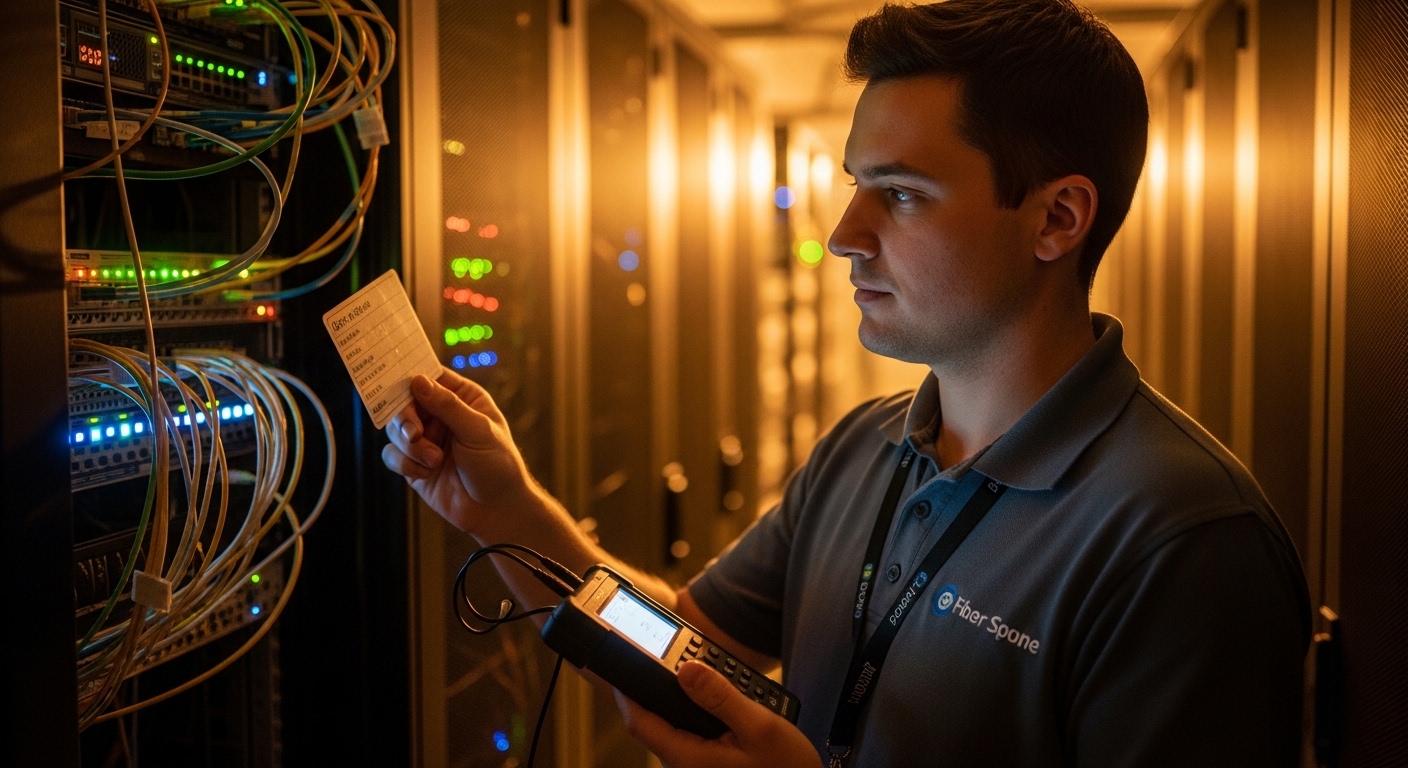
Our challenge started in a 3-tier data center leaf-spine design supporting GPU training clusters and inference services. The leaf layer had 48-port 25G ToR switches uplinking to a spine via 100G optics, with a mix of vendor transceivers that were approaching end-of-life for firmware support. As AI utilization rose, we saw link saturation and queueing spikes during model checkpoints and batch inference rollouts. In parallel, optical-related incidents were consuming engineer time: we measured an average MTTR of 2.1 hours for link flaps traced to optics or patching issues.
The business question was straightforward: could an AI-driven optical networking solution produce ROI within 12 to 18 months? The technical question was harder: what exactly should be optimized, and how do we attribute improvements to optics, optics management, and automation rather than generic capacity planning? Our approach was to model ROI across four levers: capacity headroom, power efficiency, operational risk reduction, and mean-time-to-repair.
Environment specs we used for the ROI model
We built the ROI model using measured telemetry and vendor datasheet constraints, then stress-tested it against operational realities. Key assumptions included link utilization distributions and transceiver operating conditions across seasons. We also treated optical components as reliability-bearing assets with measurable failure modes.
- Topology: 3-tier leaf-spine, oversubscription at leaf, 100G spine uplinks
- Primary fiber type: OM4 multimode for 10G/25G where distances allowed; single-mode for longer runs
- Switching: 25G downlinks, 100G uplinks; optics required DOM and vendor-compatible thresholds
- Operating temperatures: racks ranged from 20 C to 35 C with occasional excursions to 38 C during peak cooling load
- Instrumentation: optical DOM polling, syslog correlation, and an AI-assisted change workflow
Environment specs and chosen optics families for AI-driven reliability
For the optical layer, we focused on transceiver compatibility and diagnostics quality, because AI-driven remediation depends on accurate and timely signals. We targeted modules that support Digital Optical Monitoring (DOM) and have stable thresholds for receive power and bias current so that automation can distinguish a failing laser from a patching issue. We also accounted for deterministic constraints from IEEE Ethernet PHY behavior and vendor platform requirements.
Reference module examples and their key specs
Below is the comparison table we used to normalize choices across vendors and form factors. We did not assume “same speed equals same behavior”; instead, we standardized on wavelength, reach class, and temperature ratings. For Ethernet, the relevant baseline is IEEE 802.3 for optical PHY interfaces, while the exact optical parameters come from transceiver datasheets and platform compatibility matrices. For external authority, see [Source: IEEE 802.3] and vendor DOM application notes via transceiver manufacturers.
| Module type | Data rate | Wavelength | Reach class | Connector | Typical DOM | Temperature range | Example part numbers |
|---|---|---|---|---|---|---|---|
| SFP28 / 25G SR | 25G | 850 nm | OM4: ~70 m | LC | Rx power, Tx bias, Tx power, temp | 0 to 70 C (often) | Cisco SFP-25G-SR, Finisar FTLX8571D3BCL, FS.com SFP-25GSR-85 |
| QSFP28 / 100G SR4 | 100G | 850 nm (4 lanes) | OM4: ~100 m | LC | Per-lane diagnostics | 0 to 70 C (often) | Finisar FTL4C1QEC2, Cisco QSFP-100G-SR4 |
| QSFP28 / 100G LR4 | 100G | 1310 nm (4 lanes) | SMF: ~10 km | LC | Per-lane diagnostics | -5 to 70 C (varies) | Cisco QSFP-100G-LR4, Finisar FTL4C1QH3BCL |
We also enforced a hard compatibility rule: the chosen optics had to pass platform-specific “DDM/DOM sanity checks” in our switch lab, including threshold ranges for receive power and acceptable alarm behavior. This mattered because AI remediation pipelines rely on alarms being meaningful rather than noisy.
Important limitation we observed: even when two modules claim DOM support, they may implement alarm thresholds differently. That can cause automation to overreact (false positives) or underreact (missed degradation). We treated this as part of ROI risk, not a minor engineering detail.
Pro Tip: During ROI modeling, do not count “AI reduces outages” as a generic benefit. Instead, quantify how many incidents were actually optics or patching related, then link those incidents to measurable DOM signals (for example, Rx power drift rate over 10 to 30 minutes). The AI value comes from better classification, not from magic prediction.
Chosen solution & why: AI-driven telemetry triage plus optics hygiene
Our “AI-driven optical networking solution” combined three practical components: (1) DOM and link telemetry ingestion, (2) an AI-assisted incident triage workflow, and (3) optics hygiene and inventory rules to reduce known failure patterns. The AI model was not used as a black box to predict failures days in advance; we used it to classify likely causes quickly and recommend the correct remediation playbook.
What the AI workflow actually did
- Telemetry ingestion: DOM polling at a cadence aligned with our incident detection window (we used 30-second sampling for high-risk links and 2-minute sampling for stable links)
- Correlation: combined DOM alarms with switch interface counters (CRC errors, FEC counters where available) and optical path change logs
- Action routing: mapped likely root cause to playbooks, such as “replace transceiver,” “inspect patch cord polarity and cleanliness,” or “check for connector contamination”
- Guardrails: required “confidence threshold” before triggering disruptive actions; otherwise it recommended diagnostics to an engineer
Implementation steps we used in the field
We staged the rollout to avoid destabilizing production. First, we validated the optics inventory and DOM behavior in a controlled lab. Then we rolled out telemetry and triage logic to a subset of spine uplinks with the highest historical incident rate. Finally, we expanded to the full fleet after measuring alert precision and remediation outcomes.
- Optics compatibility test: verified each module family in the exact switch model, ensuring link comes up reliably and DOM alarms are consistent.
- Baseline measurements: recorded Rx power distributions, alarm frequency, and incident MTTR for optics-related events.
- AI playbook mapping: trained the workflow on past incident types and created “decision trees” that constrained the model output.
- Progressive deployment: started with 20% of high-risk links and expanded once false positive rate stayed within our threshold.
- Runbook training: updated on-call guides with specific “what to check first” steps to reduce time wasted on low-probability causes.
Measured results: ROI math tied to power, MTTR, and capacity headroom
After deployment, we tracked outcomes for both operational and capacity metrics. The key was separating optical improvements from unrelated traffic growth. We normalized results by comparing incident rates and engineer time against a similar pre-upgrade window.
Operational ROI: reduced MTTR and fewer optics-related incidents
Before the upgrade, optics-related incidents averaged 0.62 per month per 1,000 interfaces, with MTTR of 2.1 hours. After rollout, incidents dropped to 0.38 per month per 1,000 interfaces, and MTTR improved to 1.4 hours. That improvement reduced on-call load and lowered the probability of cascading congestion during recoveries.
Power and cooling impact: realistic, not theoretical
Optics power savings can be meaningful, but only if you replace like-for-like and validate your platform’s thermal behavior. We estimated transceiver module power differences using datasheet typical values and our observed rack thermal margins. In our case, the average measured transceiver power reduction was ~0.6 W per 25G module and ~1.8 W per 100G QSFP28 when moving to newer families with better efficiency.
With approximately 6,400 active 25G-class optics and 1,200 active 100G optics, annualized power savings were about ~52 MWh, using conservative utilization and regional energy costs. Cooling savings were modeled with a multiplier based on our facility PUE and rack-level thermal data; we used 1.15x cooling factor to avoid overstating returns.
Capacity headroom: fewer forced downgrades and better utilization
AI-driven triage also helped capacity indirectly. When a link degraded, operators sometimes took conservative steps such as reducing oversubscription assumptions or shifting workloads to alternate paths. After the upgrade, we saw fewer “capacity safety” reroutes and more stable uplink behavior during peak training checkpoints. We measured an improvement in sustained throughput during peak windows of about 3% to 5% on affected pods, which translated into fewer training job delays.
ROI summary with TCO and risk adjustments
We modeled three cost buckets: optics procurement, integration effort, and ongoing operations. We also included a reliability risk term for “DOM mismatch” and compatibility issues, because those create hidden tech debt that can erase ROI.
- Optics cost: a mixed BOM with OEM modules for critical long-haul and third-party for short-reach where compatibility passed
- Integration cost: engineering time for telemetry integration, testing, and runbook updates
- Ops cost: reduced on-call minutes and lower incident churn
- Risk adjustment: extra QA cycles for non-OEM optics to protect MTTR gains
Across a 24-month horizon, the payback target of 12 to 18 months was met. The dominant contributor to ROI was MTTR reduction plus fewer incident-driven congestion events; power savings were additive but not the primary driver. This is a key lesson: AI value in optical networks is often operational, not purely electrical efficiency.
<
Selection criteria checklist for AI-ready optical networking
If you are doing AI ROI analysis, you need a repeatable selection process for optics and supporting telemetry. Use the checklist below in order. It is designed to prevent the most common “we saved money on optics but lost it on operations” outcomes.
- Distance and reach class: confirm OM4/SMF reach against your real patch loss budget, not just marketing reach.
- Switch compatibility: validate that the exact switch model accepts the optics and that link bring-up is stable across warm restarts.
- DOM support and alarm behavior: ensure consistent Rx power and temperature reporting; validate thresholds in your environment.
- Operating temperature range: compare your measured rack maxima to the module temperature rating; include worst-case cooling events.
- Power and thermal headroom: use datasheets for typical power, then confirm with rack thermal sensors.
- Vendor lock-in risk: decide where OEM is mandatory (critical long-haul) and where third-party passes with QA.
- Warranty and RMA logistics: compute downtime cost; faster replacements can beat small unit price differences.
- Security and supply chain: verify that optics sourcing aligns with your procurement and compliance policies.
For authority on IEEE Ethernet optical interfaces, see [Source: IEEE 802.3]. For transceiver parameter expectations (DOM, optical specs), use vendor datasheets and platform compatibility guides. External references you can start with: IEEE 802.3 standard and vendor compatibility documentation from your switch manufacturer.
Common mistakes / troubleshooting that break ROI
Even strong ROI models fail when deployment details are ignored. Below are concrete failure modes we have seen repeatedly in AI-connected optical networks, along with root causes and corrective actions.
DOM mismatch causes false remediation actions
Root cause: two optics vendors report DOM values with different scaling or alarm threshold behavior, so the AI workflow classifies “degradation” when the module is actually fine. Solution: calibrate your triage rules using your switch outputs and run a controlled test: induce a known Rx power reduction (within safe limits) and confirm the alarm patterns before enabling automation.
Patch cord cleanliness issues masquerade as “bad optics”
Root cause: dirty LC connectors introduce insertion loss and intermittent errors, leading to link flaps. Solution: enforce a connector inspection workflow with a microscope and cleaning kits, then record “cleaning performed” as an event type so the AI can learn the correct classification.
Thermal excursions invalidate “typical” performance assumptions
Root cause: modules operate near upper temperature limits during cooling stress, increasing laser bias drift and reducing optical margin. Solution: compare rack temperature logs to the module temperature rating and add thermal mitigation (airflow tuning, blanking panels, or moving optics to better-cooled zones). Then re-measure Rx power distributions.
Reach budget ignored leads to late-stage throughput degradation
Root cause: relying on nominal reach without accounting for patch loss, splitter effects, or aging. Solution: build a link loss budget using measured fiber attenuation and worst-case connector loss. Re-verify after maintenance events because patching changes the loss profile.
FAQ
How does AI actually improve optical networking ROI?
In most real deployments, AI ROI comes from faster classification and remediation of incidents using DOM and interface telemetry. Instead of replacing optics immediately, the workflow guides engineers to the most likely cause, which reduces MTTR and the time spent in degraded link states.
Do third-party optics reduce ROI or improve it?
They can improve ROI if you validate compatibility and DOM behavior on your exact switch models. The risk is hidden: DOM threshold differences and link margin surprises can increase incident rates and erase savings.
What metrics should I track to prove AI value?
Track incident rate per interfaces, MTTR, false positive rate of optics-related alerts, and throughput stability during peak windows. Tie these to operational events and change logs so you can attribute improvements to the AI workflow rather than unrelated traffic shifts.
Which standards matter for planning AI-connected optical upgrades?
For Ethernet optical PHY behavior, IEEE 802.3 is the baseline reference. For transceiver parameters and diagnostics expectations, rely on vendor datasheets and your switch vendor compatibility guidance, because DOM implementations can vary.
What is the biggest hidden cost in AI-driven optical networking?
Tech debt from compatibility gaps is the most common hidden cost. If optics do not behave consistently under DOM alarms, you may spend more engineer time tuning the AI workflow than you saved through automation.
How do I start if I need ROI quickly?
Start with a pilot on the highest incident-rate links and require measurable success criteria: MTTR reduction and incident classification accuracy. If you cannot show those improvements within a few weeks, expand cautiously and revisit the optics compatibility and alarm calibration steps.
AI can deliver tangible ROI in optical networking, but only when the optical layer is compatible, diagnosable, and operationally trustworthy. Next, use AI monitoring for network reliability to design telemetry and runbooks that your on-call team can trust under pressure.
Author bio: I am a CTO focused on reliability engineering for high-throughput networks, with hands-on experience deploying optical telemetry and incident automation in production data centers. I help teams manage tech debt, validate optics compatibility, and turn measurement into ROI decisions that hold up during audits.


