
Smart city networks move traffic control, public safety video, and IoT telemetry across shared fiber with strict uptime goals. This guide helps network engineers and field technicians select and troubleshoot SFP modules for city-scale backhaul and access links, using real deployment constraints like link budget, temperature, and switch DOM behavior.
Where SFP modules fit in smart city architectures
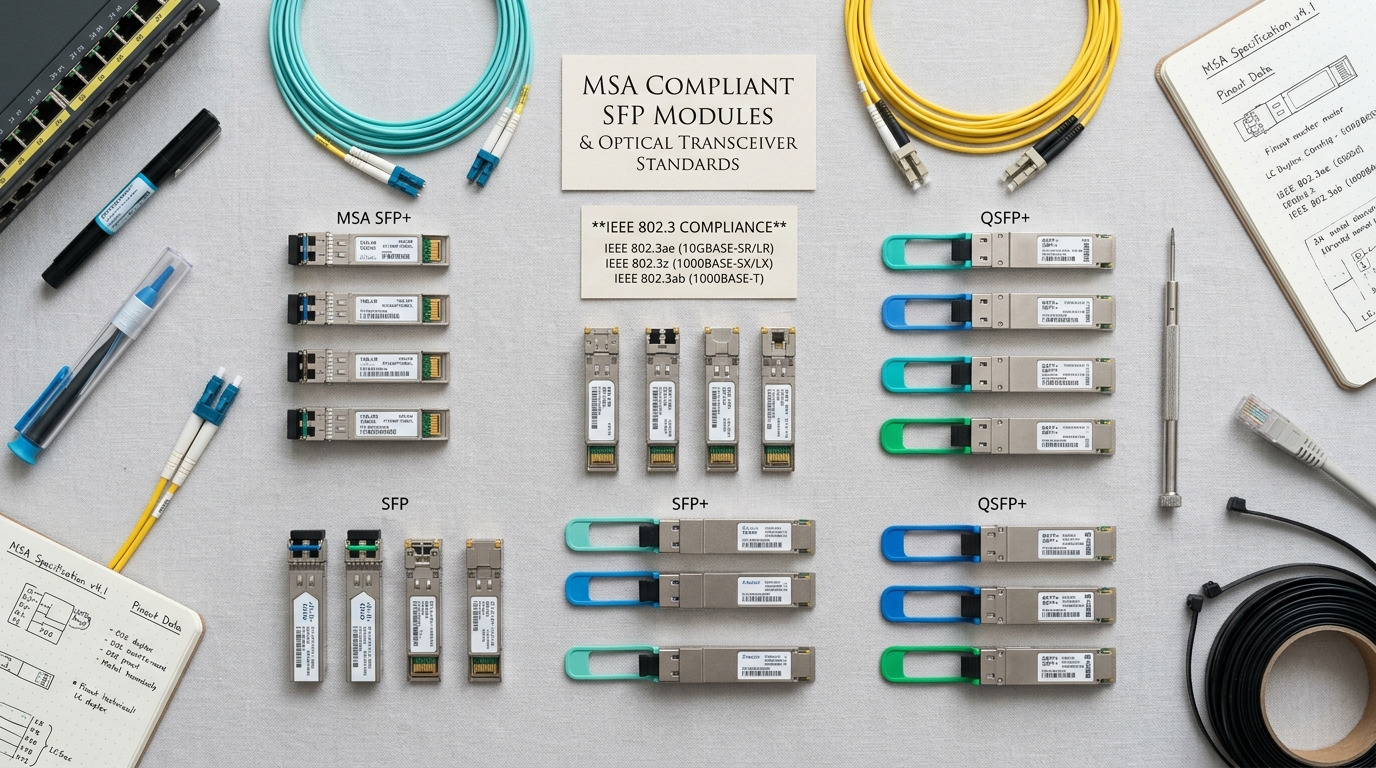
In most smart city builds, fiber runs from roadside cabinets, traffic signal controllers, and surveillance hubs back to aggregation points. SFP modules commonly provide 1G and 10G connectivity for switch uplinks, media conversion at edge cabinets, and short-reach segments inside hardened enclosures. Typical environments include street-level cabinets rated for condensation control, outdoor splice closures, and indoor aggregation rooms with airflow limits.
Engineers usually standardize on IEEE-compliant optical interfaces (Ethernet over fiber) and match them to the switch vendor’s transceiver requirements. When you align the module type, fiber type, and distance to the planned attenuation, you avoid the most common failure mode: links that train intermittently or drop under temperature swings.
Use cases that stress optics differently
- Traffic intersections: low-latency control plus occasional firmware downloads; optics must tolerate vibration and wide ambient range.
- Video analytics: sustained throughput; optics must maintain margin for aging multimode links and connector contamination.
- Smart metering and IoT: many endpoints; standardized optics simplify spares and reduce truck rolls.
- Public safety radios and Wi-Fi backhaul: redundancy often uses dual homing; optics must support deterministic failover.
Key SFP module specs you must match to the fiber plan
Smart city designs often mix multimode and single-mode fiber. Your job is to choose a module with the correct wavelength, reach class, connector type, and operating temperature—then confirm it is supported by the switch’s transceiver firmware.
Start with the Ethernet data rate and optical standard. For example, 10GBASE-SR typically uses 850 nm over multimode fiber, while 10GBASE-LR uses 1310 nm over single-mode fiber. Then validate the link budget using measured loss for the actual route, including splices, patch cords, and connector cleanliness.
| Module type (common) | Wavelength | Typical reach class | Fiber type | Connector | Data rate | Operating temperature | Power class (typical) |
|---|---|---|---|---|---|---|---|
| 10GBASE-SR (SFP+) | 850 nm | Up to 300 m (OM3) / 400 m (OM4) | Multimode | LC | 10G | -5 C to 70 C (varies by vendor) | ~0.8 to 1.5 W |
| 10GBASE-LR (SFP+) | 1310 nm | Up to 10 km | Single-mode | LC | 10G | 0 C to 70 C (varies) or -40 C to 85 C (extended) | ~1.0 to 2.0 W |
| 1GBASE-SX (SFP) | 850 nm | Up to 550 m (OM2) / 850 m (OM3) | Multimode | LC | 1G | -5 C to 70 C (varies) | ~0.5 to 1.0 W |
For real-world procurement, teams often reference specific models and their datasheets. Examples include Cisco SFP-10G-SR, Finisar FTLX8571D3BCL, and FS.com SFP-10GSR-85. Always confirm they match your switch’s DOM and transceiver compatibility policy.
Pro Tip: In smart city cabinets, intermittent link drops are frequently caused by fiber end-face contamination, not by the optics themselves. If you see increasing CRC errors and “link up/down” during hot-cold cycles, clean and re-terminate the LC connectors before swapping modules; a dirty end-face can still pass a power reading yet fail under higher modulation margin.
Selection criteria checklist for city-grade deployments
Use this ordered checklist when choosing SFP modules for smart city backhaul. It is optimized for field success, not just lab specs.
- Distance and fiber type: confirm route length and whether you have OM3/OM4 or single-mode. Use OTDR or measured splice/patch loss, not just cable marking.
- Data rate and Ethernet variant: match 1G vs 10G and SR vs LR. Don’t assume “SFP” means the same electrical profile across switches.
- Connector and polarity: LC vs SC, and whether you are using standard polarity or polarity-reversed patching.
- Switch compatibility and DOM: verify the platform supports the module type and that DOM reporting (temperature, bias current, optical power) is accepted.
- Operating temperature and derating: choose extended-temperature optics for outdoor cabinets (commonly -40 C to 85 C) if your enclosure lacks stable HVAC.
- Link budget margin: ensure you have headroom for aging connectors and future patch additions.
- Vendor lock-in risk: test third-party modules in a pilot site and track failure rates and DOM behavior before scaling.
- Spare strategy: stock by type and wavelength; avoid mixing SR and LR “because they look similar.”
Common mistakes and troubleshooting in the field
Smart city optics failures are usually predictable if you follow systematic checks. Below are common pitfalls with root causes and fixes.
Link comes up, then flaps under heat
Root cause: module temperature operating outside spec, or marginal link budget. Outdoor cabinets can exceed planned ambient during summer sun exposure.
Solution: measure cabinet temperature at the switch cage inlet; select extended-temperature SFP modules; improve link margin by reducing patch loss or correcting fiber type mismatch.
Persistent CRC errors after connector work
Root cause: LC end-face contamination or micro-scratches after patching. This often shows up as rising CRC/ER counters without obvious “no light” events.
Solution: clean with lint-free wipes and approved fiber cleaning tools; inspect with a microscope/inspection probe; re-seat connectors; verify TX/RX polarity.
“Module not supported” or no DOM alarms
Root cause: transceiver vendor mismatch, DOM format differences, or switch firmware that rejects certain SFP identifiers.
Solution: confirm switch transceiver compatibility list; test the exact module SKU in a staging rack; update switch firmware if the vendor supports it; ensure you are using the correct interface standard (SFP vs SFP+).
Wrong fiber type for the optics
Root cause: installing 10GBASE-SR on single-mode fiber or using multimode optics on a single-mode route with unexpected attenuation and dispersion behavior.
Solution: verify fiber type at the splice point; label and cross-check with OTDR traces; standardize patching conventions across the build.
Cost and ROI reality for SFP modules
Pricing varies by brand, temperature grade, and whether you buy OEM or third-party. In many deployments, OEM 10G SFP+ optics can cost roughly $200 to $600 per module, while reputable third-party equivalents may land around $80 to $250 depending on DOM support and testing.
TCO is driven by truck rolls, repair turnaround time, and failure rate under outdoor conditions. If extended-temperature modules reduce repeat failures by even a small margin, the ROI often beats the upfront savings. Track metrics per site: time-to-repair, mean time between failures, and optical power drift trends from DOM logs.
For budgeting, plan spares for each critical link type (SR vs LR, 1G vs 10G, single-mode vs multimode), and include cleaning supplies and inspection tools as part of the optics program.
FAQ for choosing SFP modules in smart city networks
Which SFP module type is best for roadside cabinet backhaul?
Most teams choose 10GBASE-SR for short distances over OM3/OM4 multimode and 10GBASE-LR for longer single-mode runs. If your cabinet ambient temperature swings widely, prioritize extended-temperature optics and validate DOM behavior on your specific switch model.
Can I mix OEM and third-party SFP modules in the same switch?
Often yes, but it depends on the switch firmware’s transceiver policy and DOM acceptance. Run a pilot with the exact third-party SKU, monitor link stability and DOM readings for at least a few days, and only then scale.
How do I calculate whether my link budget will work?
Use measured attenuation from OTDR or field loss estimates: cable loss per kilometer plus splice loss plus connector and patch cord loss. Add margin for future maintenance and aging, then compare against the module’s datasheet receive power range.
Why do I see “link up” but lots of CRC errors?
CRC errors with link up commonly indicate optical signal issues like contaminated connectors, polarity mistakes, or a marginal link budget. Clean and inspect fiber ends first, then verify TX/RX polarity and re-check the distance and fiber type assumptions.
What temperature rating should I plan for outdoor smart city equipment?
If the cabinet lacks HVAC and sees direct sun, choose optics with extended ranges (commonly -40 C to 85 C). Also ensure the switch itself and fan filters can maintain airflow; optics can only compensate so much.
Do SFP modules support monitoring for remote operations?
Many support DOM, exposing temperature, bias current, and optical power via the switch. Export those readings to your monitoring system so you can detect drift trends and schedule preventive maintenance.
If you standardize on the right SR/LR type, verify compatibility and DOM behavior, and treat connector cleanliness as first-class work, your smart city fiber links become far more predictable. Next, review fiber optic transceiver monitoring and DOM to design an operational monitoring plan that catches problems before outages.
Author bio: I have deployed and troubleshot field fiber backhaul using SFP and SFP+ optics across hardened edge enclosures, including DOM-driven alerting and link budget validation. I focus on practical compatibility testing, measurable margins, and fast restoration workflows for network reliability.
