
Open RAN compatibility: field checks for fronthaul and timing
Open RAN rollouts fail most often at the edges: fronthaul optics, timing distribution, and mismatched transceiver or switch behavior. This article helps network and RAN field engineers verify compatibility across compute, transport, and radio units before you cut over. You will get a step-by-step implementation plan, a spec comparison table, and troubleshooting for the top failure points.
Prerequisites for compatibility verification in Open RAN
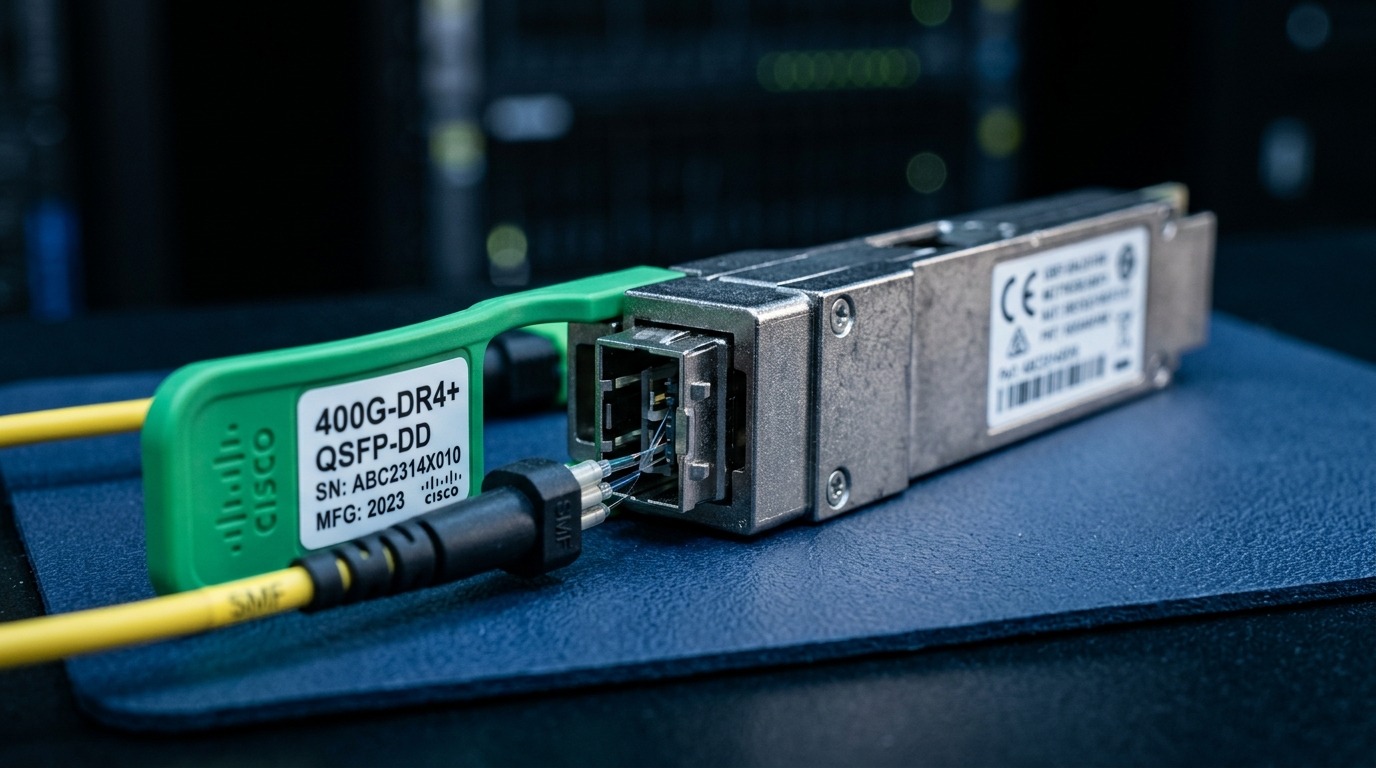
Before you touch configuration, collect the items that determine whether the system will train, lock, and pass traffic. You need the exact vendor model numbers for DU, RU, timing source, and transport switches, plus the optical module part numbers and serials. Also confirm the fiber type, connector style, and link budget assumptions used in your design.
For timing, identify whether you are using IEEE 1588v2 PTP, GNSS-disciplined clocks, or an external reference into the DU. For transport, confirm whether you are using VLAN segmentation for fronthaul and whether your switches support the required QoS and buffering behavior. Finally, ensure your optical modules support the expected DOM interface and are listed in the switch vendor compatibility matrix when available.
Step-by-step implementation guide for Open RAN compatibility
Map interfaces to standards and link types
Start by enumerating every physical and logical interface in the fronthaul and midhaul paths. For fronthaul, verify whether the DU-to-RU interface is Ethernet-based with a specific functional split, or if you are using an alternative transport profile. Record the expected line rate (for example, 10G, 25G, 100G) and whether the RU expects a particular encapsulation behavior.
Then map the timing requirements: RU and DU must converge on the same time domain. If you are using PTP, confirm the profile (commonly IEEE 1588v2) and whether boundary clocks or transparent clocks are used. If you cannot align timing semantics, your optics may link up but the RU may refuse to start radio functions.
Expected outcome: A per-link inventory that includes data rate, wavelength, connector type, and timing mode (PTP profile and clock role).
Validate optical module compatibility at the module and switch level
Compatibility is not only about wavelength and reach; it also includes DOM behavior, vendor EEPROM expectations, and switch optics tolerance. Use the exact module SKU you plan to deploy, not a “similar” alternative. Confirm that the module supports the required data rate and that its receiver sensitivity matches your link budget.
In field terms, you should verify that the switch reports DOM values (temperature, bias current, optical power) within expected ranges and does not log “unsupported module” alarms. If your switch uses strict vendor ID checks, third-party modules may still work electrically but fail the platform’s acceptance logic.
Expected outcome: Each interface has an approved module SKU that the switch accepts cleanly, with DOM telemetry visible.
Run a fronthaul link bring-up test with realistic traffic and QoS
Bring up each link in isolation first, then under load. Configure VLANs, QoS, and any required scheduling policies consistently across DU, transport switches, and RU. For Ethernet fronthaul, confirm that your switch supports the required queueing and that buffer settings do not introduce excessive latency variation.
Use traffic patterns that resemble your deployment: small-packet bursts for control plane and sustained throughput for user plane. Measure end-to-end latency and jitter, and confirm that packet loss stays at 0.01% or better during tests (tune thresholds based on your vendor guidance). If you see microbursts causing queue drops, you may need DSCP mapping or different shaping policies.
Expected outcome: Links pass traffic with stable latency/jitter and no CRC or FEC-related error spikes.
Verify timing lock and PTP convergence before RU activation
Timing is where many Open RAN deployments get stuck. Confirm PTP master selection, clock roles, and that boundary clocks are configured consistently. Then validate convergence time and offset stability using the switch or clock telemetry.
In practice, you should observe stable time offset after convergence and no frequent servo resets. If the DU and RU have different assumptions about clock role, the RU may not transition to a ready state even when the Ethernet link is “up.”
Expected outcome: PTP converges with stable offset; RU can transition to ready state without repeated resync events.
Key transceiver parameters that drive compatibility
For Open RAN, optics compatibility often determines whether the link trains and whether the system stays stable under temperature changes. Use the table below as a practical baseline when comparing common module options for data center fronthaul.
| Parameter | 10G SR (850 nm) | 10G LR (1310 nm) | 25G SR (850 nm) | 100G SR4 (850 nm) |
|---|---|---|---|---|
| Wavelength | 850 nm | 1310 nm | 850 nm | 850 nm (4 lanes) |
| Typical reach over OM3 | 300 m | ~10 km on SMF | 100 m (varies by OM) | 100 m (varies by OM) |
| Connector | LC | LC | LC | LC |
| Data rate | 10.3125 Gb/s | 10.3125 Gb/s | 25.78125 Gb/s | 103.125 Gb/s |
| Transceiver type | SFP+ | SFP+ | SFP28 | QSFP28 |
| Temperature range | Commonly 0 to 70 C or extended | Commonly 0 to 70 C or extended | Commonly 0 to 70 C or extended | Commonly 0 to 70 C or extended |
| DOM support | Usually supported; verify switch acceptance | Usually supported; verify switch acceptance | Usually supported; verify switch acceptance | Usually supported; verify switch acceptance |
Selection should be anchored in vendor datasheets and the platform’s optics compatibility list. Examples of modules engineers commonly deploy include Cisco-branded optics (for example, Cisco SFP-10G-SR) and third-party equivalents such as Finisar FTLX8571D3BCL or FS.com SFP-10GSR-85, but your switch may still enforce vendor IDs or power class constraints. For standards context, Ethernet optics and transceiver behavior align with IEEE Ethernet PHY requirements documented under IEEE 802.3, and optics management aligns with SFF specifications that define DOM interfaces.
Sources: [Source: IEEE 802.3], [Source: SFF Committee transceiver specifications], [Source: Cisco transceiver datasheets], [Source: Finisar and FS.com module datasheets].
Pro Tip: In the field, the fastest compatibility win is to validate DOM telemetry ranges under real ambient conditions. If temperature and bias drift push optical power near the receiver’s sensitivity edge, the link can appear stable during bench tests but flap after hours in a hot rack.
Selection criteria checklist for Open RAN compatibility
Use this ordered list like an engineer’s pre-flight checklist. It reduces rework when swapping optics, tuning switches, or replacing a DU/RU component.
- Distance and fiber type: confirm OM3/OM4 vs SMF and ensure the module’s reach matches your link budget.
- Data rate and interface profile: ensure the module and switch port speed match the Open RAN fronthaul profile.
- Switch compatibility matrix: verify the exact module SKU is accepted by the switch model.
- DOM support and telemetry: confirm DOM is readable and alarms are not triggered by DOM ID mismatches.
- Operating temperature and thermal design: use extended temperature optics if your rack exceeds expected ambient.
- Timing compatibility: validate PTP clock roles and convergence behavior before RU activation.
- Budget vs TCO: price the full lifecycle, not just the optic purchase cost.
- Vendor lock-in risk: plan a fallback module family that the platform accepts (or add optics that your vendor supports).
Common mistakes and troubleshooting for compatibility failures
Below are the top failure modes engineers see, with root causes and direct fixes.
Link comes up, but RU stays offline
Root cause: timing mismatch (PTP profile, clock role, or boundary clock behavior), not an optical problem. Sometimes the Ethernet PHY negotiates successfully, but the RU cannot synchronize its radio timing.
Solution: confirm PTP master selection, ensure boundary clocks are configured consistently, and validate time offset stability. Only after convergence should you enable RU start procedures.
Frequent link flaps or CRC errors after thermal soak
Root cause: optical power margin is too tight for real ambient and aging, or fiber cleanliness issues create intermittent attenuation. DOM telemetry may show optical power near threshold only after hours.
Solution: clean connectors with approved methods, re-check link budget, and consider modules with higher transmit power or better sensitivity margins. Confirm switch port error counters and correlate with temperature readings.
Switch rejects third-party optics with “unsupported module” alarms
Root cause: strict vendor ID or EEPROM field checks, or the module does not fully conform to the expected management behavior.
Solution: deploy optics from the switch vendor’s validated list where available, or test the exact module SKU in a staging rack. Ensure the module form factor matches exactly (SFP+ vs SFP28 vs QSFP28) and the expected lane configuration is correct.
Cost and ROI note for compatibility-driven module choices
Typical module pricing varies by vendor and temperature grade. As a realistic range, OEM optics often cost 1.5x to 3x more than third-party equivalents for common SR and LR types, though exact pricing depends on volume and licensing. TCO should include failure rate, downtime cost, and labor time for swaps and revalidation.
Third-party modules can reduce initial capex, but compatibility risk can increase time-to-restore and validation effort. If you are operating at high rack density with strict acceptance logic, the ROI often favors optics that are explicitly validated for your switch model, even if unit cost is higher. Plan for spares and validate them in staging with the same fiber and timing conditions used in production.
FAQ: Open RAN compatibility questions from engineers
How do I prove compatibility before RU cutover?
Run staged link bring-up per interface, then validate PTP convergence and stability before enabling RU activation. Monitor switch counters (CRC, FEC where applicable) and DOM telemetry during a thermal window similar to your installation conditions.
Can I mix optics brands and still maintain compatibility?
Sometimes yes, but you must match the exact electrical and management expectations of your switch and transceiver platform. Validate the exact module SKU in a staging environment; do not rely on wavelength and reach alone.
What matters more for compatibility: wavelength or timing?
Both matter, but timing often determines whether the RU can start radio functions even if the Ethernet link is up. Wavelength and reach determine whether the link stays stable; timing determines whether the system behaves correctly.
Do I need DOM support for Open RAN?
DOM is strongly recommended because it enables operational monitoring and faster fault isolation. Even if the link works without DOM, missing telemetry can delay root-cause analysis when error rates rise.
What is the safest way to handle vendor lock-in risk?
Maintain an approved optics inventory and test a limited set of alternative SKUs that your switches accept. Use staging racks that mirror your production switch models, and document acceptance outcomes and DOM readings.
