
In transport and Open RAN deployments, the fastest way to break a rollout is to pick the wrong optics for your distance, power budget, and switch compatibility. This article helps telecom and network engineers make repeatable decisions for transceivers in 2026-era network evolution projects, including fronthaul, midhaul, and aggregation. You will get a practical spec comparison, an engineer-grade selection checklist, and troubleshooting patterns seen in the field.
Where network evolution stresses transceiver selection in Telecom and Open RAN
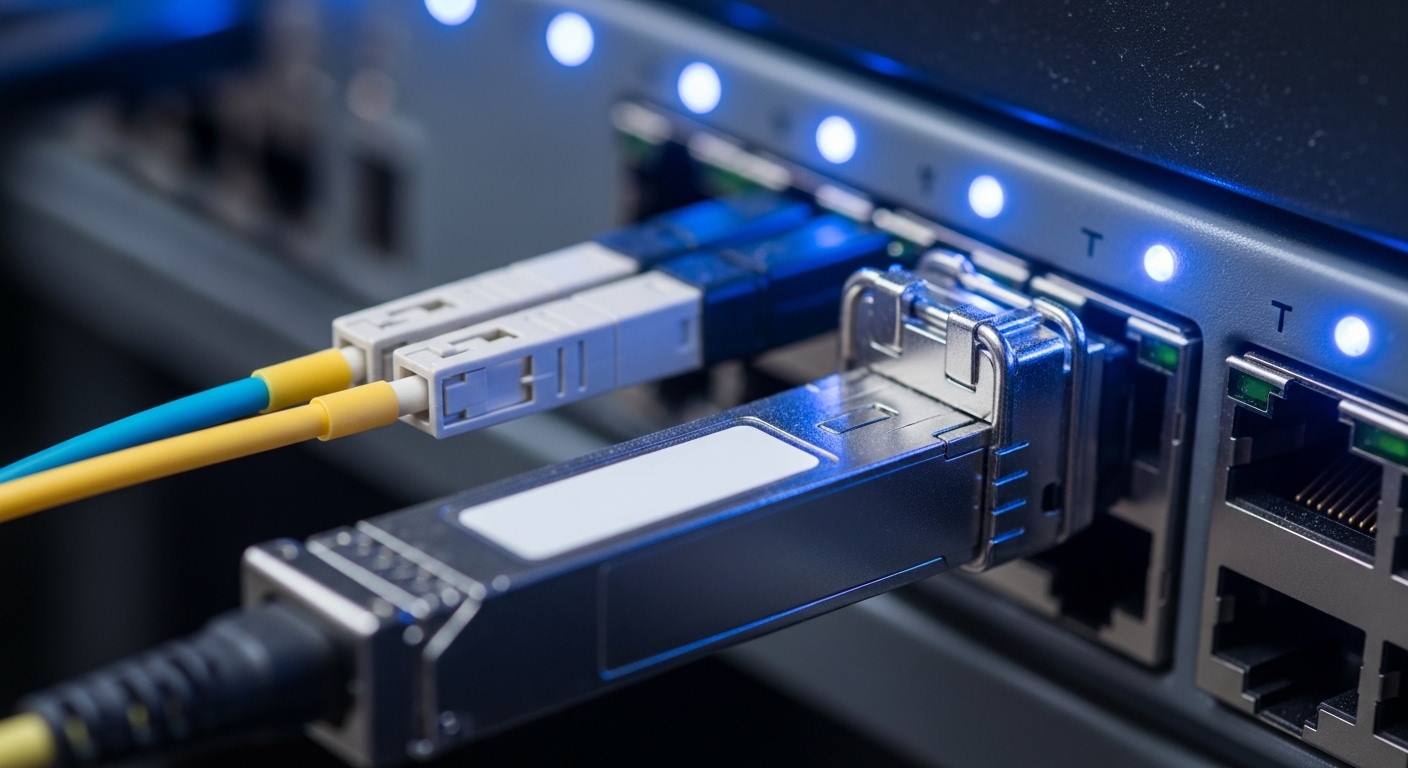
Open RAN architectures shift traffic patterns and tighten latency and availability targets across distributed units, radios, and aggregation. In practice, you often migrate from legacy 10G/25G islands to higher-density 25G/50G/100G fabrics, while keeping fiber plant constraints from prior buildouts. That combination increases the risk of mismatched optics, insufficient link budget, and transceiver interoperability issues with vendor-specific EEPROM and vendor diagnostic implementations. The result is avoidable truck rolls, especially when you standardize across multiple sites and multiple O-RAN vendors.
Typical 2026 optical roles: fronthaul, midhaul, and aggregation
For fronthaul and time-sensitive segments, teams usually target short-reach optics over OM3/OM4 multimode or reach-optimized single-mode options depending on the fiber run length and connector losses. For midhaul and aggregation, link budgets are dominated by splitter loss, patch panel cleanliness, and aging of fiber and connectors over time. Many operators also run into thermal constraints when moving from lower-density line cards to higher-density platforms with constrained airflow. Therefore, selection must be driven by measured plant loss and the switch or O-RAN transport equipment’s transceiver qualification list.
Pro Tip: Before you buy, extract the exact vendor-qualified transceiver part numbers from the switch line card documentation and cross-check whether the platform requires a specific DOM interpretation mode (for example, threshold behavior for temperature and optical power). Field failures often come from “electrically compatible” optics that still violate platform-specific diagnostic or alarm handling, causing ports to flap under thermal cycling.
Core transceiver options for network evolution: optics and standards that matter
Most telecom and Open RAN transport networks converge on pluggable optics defined by IEEE and common industry form factors, but the practical differences are in wavelength, reach class, coding, and power consumption. Engineers typically choose between SFP/SFP+/SFP28, QSFP+/QSFP28, and higher-density coherent or PAM4-capable modules depending on speed targets. For Open RAN, you frequently see 25G and 100G transport in aggregation; fronthaul can be 10G/25G depending on vendor radio and split option.
Common electrical and optical parameters you must verify
Key parameters include data rate, optical wavelength, reach, connector type (LC most often), and fiber type (OM3/OM4 multimode or OS2 single-mode). Also confirm receiver sensitivity, transmit power, and the vendor’s specified link budget or “maximum attenuation” guidance. Finally, validate temperature range (commercial vs industrial vs extended) because remote radio sites can exceed spec during summer peaks.
| Transceiver (example models) | Form factor / Data rate | Wavelength | Target fiber / Reach class | Connector | Power (typical) | Operating temperature |
|---|---|---|---|---|---|---|
| Cisco SFP-10G-SR, Finisar FTLX8571D3BCL | SFP+ / 10G | 850 nm | OM3/OM4 MMF, SR (short reach) | LC | ~1 to 1.5 W | 0 to 70 C (varies by vendor) |
| FS.com SFP-10GSR-85 | SFP+ / 10G | 850 nm | OM3/OM4 MMF, up to ~300 m class | LC | ~1 to 1.5 W | Commercial or extended (verify SKU) |
| Finisar FTLX8574D3BCL (10G SR variant) or QSFP28 SR options | QSFP28 / 25G | 850 nm | OM4 MMF, short reach | LC | ~2 to 4 W | 0 to 70 C (typical) |
| Common 100G SR4 / 100G LR4 examples (vendor-qualified) | QSFP28 or CFP2 class / 100G | ~850 nm (SR4) or ~1310 nm (LR4) | SR4: MMF, LR4: SMF | LC (typical) | ~6 to 12 W | Varies by module grade |
Note: exact reach depends on link budget, fiber attenuation, patch panel loss, and connector quality. Always treat vendor “maximum distance” as a design target only if your plant matches the test conditions. For standards context, IEEE optical link performance is aligned with Ethernet PHY needs rather than dictating a single module SKU; see IEEE 802.3 for Ethernet requirements across speeds. anchor: IEEE 802.3 standard
Selection criteria checklist for transceivers in network evolution projects
Engineers succeed when selection is a repeatable workflow rather than a one-off procurement decision. Use the checklist below in order, and document your results per site and per equipment model. This reduces rework during cutovers and makes compliance audits easier when multiple vendors are involved.
- Distance and link budget: compute worst-case attenuation including splice loss, patch panel loss, and connector reflectance risk; confirm it meets the module vendor’s specified budget for the exact speed and coding.
- Speed and PHY compatibility: verify the switch or O-RAN transport device supports the transceiver type at the intended line rate (for example, 25G vs 10G breakout behavior on the same port).
- Fiber type and grade: confirm OM3 vs OM4 vs OS2; confirm modal bandwidth assumptions for multimode plant.
- Connectorization: ensure LC/APC vs LC/UPC practices match your field standards; check polarity conventions (especially for MPO-to-LC harnesses on multi-lane optics).
- DOM and diagnostics behavior: confirm your monitoring stack interprets DOM thresholds correctly; some platforms have strict alarm handling that can trigger port disablement.
- Operating temperature and airflow: validate module grade for site extremes; ensure line card airflow matches vendor thermal design.
- DOM support and vendor interoperability: reduce lock-in risk by ensuring third-party optics are explicitly qualified for the platform, including revision-specific compatibility notes.
- Procurement and lifecycle risk: check availability lead times and last-time-buy policies; standardize SKUs across sites where feasible.
Decision shortcuts that still hold up in audits
If you are stuck choosing between two modules, select the one with a documented link budget margin under worst-case measured attenuation, and confirm it appears in the equipment vendor’s transceiver qualification list. If the qualification list is unavailable, require a lab validation with your exact switch model, patch panel type, and fiber harness. In Open RAN, also validate that alarms and performance monitoring map cleanly into your NMS and that optics do not trigger threshold-based events under normal thermal cycling.
Common pitfalls and troubleshooting patterns in the field
Most optic failures are not “random defects”; they are predictable mismatches between plant conditions and module assumptions. Below are frequent mistakes with root cause and actionable fixes that telecom engineers can apply immediately.
Pitfall 1: Port flaps or link-down events under heat
Root cause: module thermal margin is exceeded or airflow is insufficient, causing receiver power or laser bias drift. Some platforms also enforce strict DOM alarms that lead to port disablement when thresholds are crossed.
Solution: validate module grade for the site temperature range, confirm line card airflow direction and fan speed, and compare DOM temperature and optical power readings during the failure window. If possible, replace with a module explicitly qualified for the platform and ensure the vendor’s recommended airflow conditions are met.
Pitfall 2: Works in the lab but fails in the field after connectorization
Root cause: patch panel and connector losses exceed the assumptions used when selecting reach; dirty connectors or incorrect polishing practices create high insertion loss and sometimes elevated return loss. For multimode, differential mode delay and modal filling issues can worsen performance when the fiber plant is not as characterized.
Solution: clean connectors using field-approved procedures, verify with an OTDR/OLTS workflow, and measure end-to-end attenuation on the installed path. Re-terminate if connector inspection shows contamination or damage, and re-check polarity for multi-lane optics (including MPO harnesses).
Pitfall 3: “Compatible” third-party optics trigger monitoring alarms or degraded performance
Root cause: DOM interpretation differences, vendor-specific threshold defaults, or incomplete support for the platform’s diagnostic expectations. Even if the link comes up, monitoring may flag errors that drive automated actions (such as port resets or circuit re-routing).
Solution: confirm the optics are listed as compatible for the specific equipment and software revision. Align NMS thresholds with the module DOM output characteristics and validate error counters (for example, lane or symbol error rates) during steady-state traffic.
Pitfall 4: Wrong fiber type assumptions during procurement
Root cause: purchasing SR optics for an OS2 or legacy plant, or mixing OM3 and OM4 without verifying link budgets. This is common when documentation is outdated after site expansions.
Solution: verify fiber type on arrival using test records and field labeling, then measure attenuation at the relevant wavelengths. Require a pre-install acceptance test that includes link establishment and sustained throughput validation.
Cost and ROI considerations for network evolution optics
Optics pricing varies by speed class, reach, and qualification status. As a realistic planning range, many enterprises and telecom integrators see 10G SR modules in the tens of dollars to low-hundreds per unit, while 25G/100G modules and qualified telecom-grade variants can move into hundreds to over a thousand USD depending on vendor and DOM/qualification requirements. OEM optics often cost more but reduce integration risk when the platform enforces strict compatibility or alarm thresholds.
TCO should include labor for troubleshooting and the probability of rework. If a mismatch causes even a small number of port disruptions during critical maintenance windows, the operational cost can exceed the unit price delta. For ROI, prioritize transceivers that (1) have a demonstrated qualification path for your exact equipment, (2) meet a link budget with measurable margin, and (3) support stable DOM telemetry for NMS integration. When using third-party optics, require evidence of compatibility for the specific switch software revision and validate error counters under representative traffic loads.
For standards and interoperability context, consult IEEE 802.3 for Ethernet PHY behavior and vendor datasheets for module performance. anchor: SNIA resources can also help with storage and network measurement practices that influence operational testing, though it is not specific to optics.
FAQ: choosing transceivers for network evolution in 2026
Which transceiver types are most common for Open RAN transport in 2026?
Most deployments standardize on 10G and 25G for short-reach segments and move to 100G at aggregation, depending on switch architecture and traffic growth. The exact choice depends on fronthaul split requirements, distance, and whether you are using multimode MMF or single-mode OS2.
How do I calculate whether my fiber can support the selected optics?
Use installed measurements: end-to-end attenuation via OLTS, plus connector and splice loss budgets for the exact route. Then verify it stays within the module vendor’s specified link budget for the speed and wavelength. Include worst-case margins for patch panel loss and aging where possible.
Are third-party transceivers safe to use in telecom-grade network evolution?
They can be safe, but only when explicitly qualified for your equipment model and software revision. The field risk is not only link establishment; it is also DOM alarm semantics and monitoring integration that can cause automated disruptions.
What temperature range matters for remote radio sites?
Remote sites can exceed 30 to 40 C ambient during summer, and internal enclosure temperatures can be higher depending on airflow and dust loading. Use an optics module grade that matches the site environment and validate with DOM temperature readings during sustained traffic, not just at link-up time.
What are the fastest troubleshooting steps when a link will not come up?
First, verify fiber type, polarity, and connector cleanliness; then check DOM presence and reported optical power levels. If the link still fails, compare the installed attenuation measurement against the module link budget and swap optics with a known-good pair on the same port.
How can I reduce vendor lock-in risk without increasing outage risk?
Standardize on platforms with published qualification processes, keep a compatibility matrix per equipment model, and perform lab validation for any new optics SKU. Require consistent DOM telemetry integration and document acceptance test results for each site archetype.
Network evolution for Open RAN in 2026 succeeds when transceiver selection is tied to measured fiber loss, platform qualification, and operational telemetry behavior. Next, align your transceiver plan with your broader transport design by reviewing related topic: Open RAN fronthaul and midhaul transport planning.
Author bio: I have deployed and troubleshot optical transceivers across telecom transport and Open RAN rollouts, validating link budgets with OLTS and monitoring DOM telemetry under thermal cycling. I write from field-tested methodology using vendor datasheets, IEEE 802.3 behavior, and equipment qualification constraints.
