
If you run a Peplink Balance router with dual WAN fiber and expect deterministic failover plus predictable throughput, the optics you choose matter as much as the routing policy. This article helps network engineers and field techs select a load balancing fiber transceiver using SFP WAN optics, with real compatibility and troubleshooting details for common deployments. You will get a top-N selection framework, spec comparisons, and failure-mode guidance that reduces RMA cycles in the field.
Top 8 load balancing fiber transceiver picks for Peplink WAN SFPs
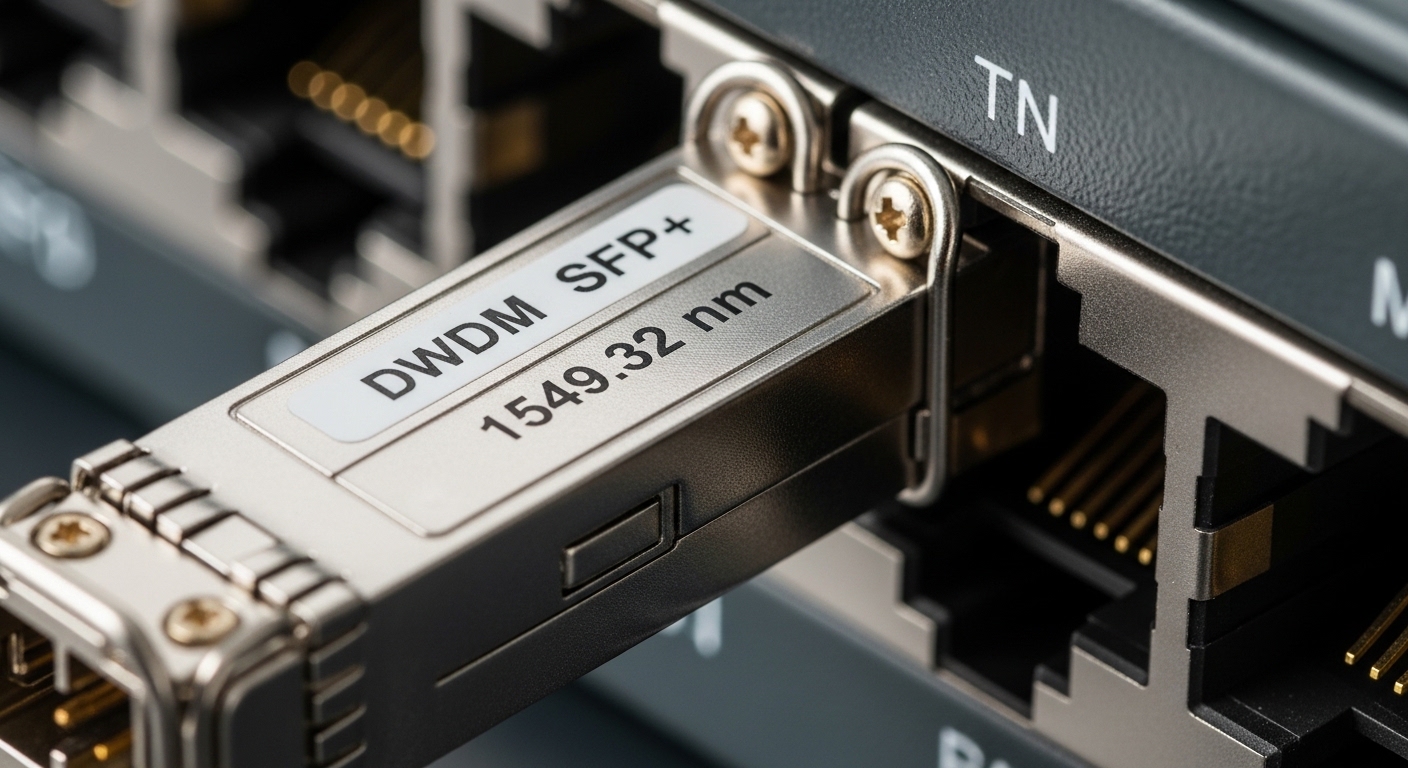
Below is a top-N list of SFP-class optics patterns that work well for Peplink Balance routers when the goal is stable WAN connectivity under load balancing. The emphasis is on link stability, optical budget margin, and operational observability (DOM) so you can correlate CRC bursts or LASER bias drift with WAN performance.
10GBASE-SR over OM3 multimode (best for short, dense sites)
Key specs/details: Typical SFP+ SR optics target 850 nm with 300 m reach on OM3 and 400 m on OM4 under IEEE 802.3 power and receiver sensitivity assumptions. You will usually see modules like Cisco SFP-10G-SR, Finisar/FS-branded SR variants, and many compatible third-party optics with similar electrical interfaces (SFP MSA) and optical parameters.
Best-fit scenario: A small metro edge office where Peplink Balance has two fiber handoffs into a patch panel, and the router-to-MPO/LC run is under 200 m on OM3. In practice, you can keep the optical margin high enough that hot/cold cycling does not push you into borderline receive levels during seasonal humidity swings.
Pros/cons: Pros: low cost, abundant inventory, easy to validate with standard MMF test gear. Cons: multimode modal effects and bandwidth grading can bite if someone “helpfully” swaps OM3 with a mismatched cable type.
10GBASE-LR over single-mode (best for longer WAN segments)
Key specs/details: 10GBASE-LR uses 1310 nm optics with reach commonly specified at 10 km over single-mode fiber per IEEE 802.3class assumptions. Look for modules that publish receiver sensitivity and transmitter launch power so you can compute link margin with your actual fiber attenuation and splitter loss (if present).
Best-fit scenario: A Peplink Balance router at a branch office connects to a provider handoff over 6–8 km of SMF with splice loss around 0.3 dB per splice and 0.2 dB connector loss. LR keeps you in spec while allowing load balancing without frequent link flaps when ambient temperature drifts.
Pros/cons: Pros: long reach, resilient with SMF, predictable behavior. Cons: higher module cost than SR, and SMF certification matters; a “works on my laptop” MMF mistake can silently degrade link quality.
10GBASE-ER over extended reach single-mode (when budget allows margin)
Key specs/details: ER optics typically operate at 1550 nm and target 40 km reach class in many vendor datasheets. For ER, you must consider chromatic dispersion, fiber plant quality, and higher end-of-life aging effects on laser bias current.
Best-fit scenario: A rural WAN where you need 18–25 km of SMF and conservative optical margin for load balancing under worst-case temperature. ER is often chosen when the provider link budget is tight or when you expect future splice additions.
Pros/cons: Pros: maximum reach headroom. Cons: more expensive, and some older plants with higher polarization mode dispersion can show intermittent issues.
25G SFP28 SR over OM4 (best for scaling throughput without swapping chassis)
Key specs/details: SFP28 SR modules typically target 850 nm over multimode with 100 m on OM3 and 150 m on OM4 depending on vendor. Ensure the Peplink Balance model’s optics support the expected data rate and lane mapping behavior for the WAN PHY.
Best-fit scenario: You are upgrading WAN capacity while keeping the same router chassis, moving from 10G to 25G per side. You have short OM4 runs in a patch-panel environment and want to reduce the number of parallel links.
Pros/cons: Pros: higher throughput, modern inventory availability. Cons: distance is shorter than 10G LR/ER; OM3 deployments may fail if you exceed vendor reach.
25G SFP28 LR on single-mode (best “middle ground” for 2–10 km)
Key specs/details: SFP28 LR typically operates at 1310 nm with 10 km reach class. This is a common fit for second-mile fiber circuits where you want stable load balancing without the cost of ER.
Best-fit scenario: A distribution site with 7 km SMF and moderate splice/connector losses. You need both WAN links to maintain link stability during peak traffic bursts so the load balancing algorithm does not see micro-outages.
Pros/cons: Pros: balanced reach and cost, good fit for SMF plants. Cons: ensure the Peplink platform actually negotiates at 25G on the WAN interface; some models may require specific optics compatibility.
Load balancing with dual optics: “matched pair” approach (same vendor, same part family)
Key specs/details: The most overlooked selection factor is optics heterogeneity. Even when two transceivers are both “10G LR,” vendors can differ in transmitter power, receiver sensitivity, and DOM calibration. Using matched optics for both WAN SFPs reduces variability in how link counters and error rates behave under temperature swings.
Best-fit scenario: Peplink Balance router with two distinct WAN providers where you still want consistent optics behavior for troubleshooting. You install two identical part families (for example, same wavelength class and power range), then compare DOM thresholds and error counters when one WAN appears degraded.
Pros/cons: Pros: faster triage, fewer “it’s only on one side” anomalies. Cons: reduces sourcing flexibility if you must mix OEM and third-party optics during procurement shocks.
DOM-capable SFP with conservative thresholding (best for observability)
Key specs/details: Digital Optical Monitoring (DOM) provides real-time temperature, laser bias current, received optical power, and transceiver diagnostics. Many SFP MSA and vendor implementations expose DOM via I2C and standardized registers; your router and monitoring stack can alert on drift before errors spike.
Best-fit scenario: A site with intermittent CRC bursts that correlate with summer heat. With DOM, you can detect increasing laser bias current while received power slowly drops, then dispatch a proactive optics swap before the WAN fails load balancing.
Pros/cons: Pros: earlier warning, better MTTR. Cons: not all third-party optics expose DOM reliably; some may report values but not trigger alerts as you expect.
Third-party compatible optics with documented MSA compliance (best when budget is tight)
Key specs/details: Many third-party SFP modules claim SFP MSA compliance and IEEE 802.3 optical characteristics. Examples you may see in the market include FS.com SFP-10G-SR variants (e.g., FS.com SFP-10GSR-85), Finisar-branded compatible parts, and other optics built to match the same electrical and optical envelopes. The key is to validate DOM support, vendor qualification lists, and optical power ranges for your specific Peplink interface.
Best-fit scenario: You need to refresh 20–60 sites with matched optics but OEM lead times are long. You standardize on a third-party part number family, keep optical budgets conservative, and track RMA rates per lot.
Pros/cons: Pros: lower unit cost, flexible procurement. Cons: higher operational variance unless you enforce validation and monitoring baselines.
SFP optics spec comparison table for load balancing planning
Use the table below to map your fiber type and distance to a wavelength class and connector style. For Peplink WAN links, the most common operational failure is not “wrong speed” but “insufficient optical margin,” so treat reach as a planning baseline, not a guarantee.
| Optics type | Data rate | Wavelength | Typical reach | Fiber type | Connector | DOM | Operating temp (typ.) |
|---|---|---|---|---|---|---|---|
| 10GBASE-SR | 10G | 850 nm | 300 m (OM3), 400 m (OM4) | MMF | LC | Usually yes | 0 to 70 C |
| 10GBASE-LR | 10G | 1310 nm | 10 km | SMF | LC | Usually yes | -5 to 70 C |
| 10GBASE-ER | 10G | 1550 nm | 40 km (class) | SMF | LC | Usually yes | -5 to 70 C |
| 25G SFP28 SR | 25G | 850 nm | 100 m (OM3), 150 m (OM4) | MMF | LC | Common | 0 to 70 C |
| 25G SFP28 LR | 25G | 1310 nm | 10 km | SMF | LC | Common | -5 to 70 C |
For standardization, ground your optical expectations in IEEE 802.3 link specifications and the vendor datasheets for each transceiver family. [Source: IEEE 802.3 Ethernet specifications] [[EXT:https://standards.ieee.org/standard/802_3]]
Peplink WAN fiber load balancing: what engineers must validate
In a load balanced design, you typically have two WAN interfaces and policy-based routing that spreads flows while preserving session continuity. The optics selection must therefore ensure both links maintain stable carrier detection and low BER under temperature variation, connector aging, and fiber plant changes. The goal is to prevent frequent micro-interruptions that can trigger TCP resets and make load balancing appear “broken.”
Concrete deployment scenario: dual-WAN leaf-spine edge with SFP optics
In a 3-tier data center leaf-spine topology with 48-port 10G ToR switches, a Peplink Balance router aggregates two ISP handoffs for WAN load balancing. One WAN is a 180 m OM3 run to an aggregation patch panel using 10GBASE-SR optics; the other is a 7.5 km SMF circuit using 10GBASE-LR. Engineers validate optical power with a calibrated optical power meter, confirm DOM temperature stays below 60 C at peak load, and monitor interface error counters during traffic spikes.
When one provider performs maintenance and adds splices, the SR side shows received power trending down by 1.2 dB over a week, while DOM alerts flag rising laser bias current. The team swaps the transceiver and stabilizes the WAN without changing routing policy, preserving load balancing behavior.
Pro Tip: In the field, the fastest way to confirm an optics problem is to compare DOM-reported received optical power on both WAN sides at the same time, then correlate with interface FEC/CRC counters. If the “bad” side shows normal temperature but steadily decreasing RX power, you likely have a fiber loss increase (dirty connector, new splice, or patch panel remap), not a Peplink configuration issue.
Selection criteria checklist for a load balancing fiber transceiver
Use this ordered checklist to reduce incompatibility risk and to keep optical margin high enough that load balancing stays stable during real-world aging and temperature shifts.
- Distance and fiber type: pick SR for short MMF, LR/ER for SMF. Convert your measured attenuation and connector/splice losses into a budget before choosing reach.
- Switch and router compatibility: verify Peplink Balance model optics support for the exact SFP type and speed; confirm whether 25G SFP28 is supported on that WAN interface.
- Optical budget margin: ensure your worst-case budget leaves headroom for aging (typically a few dB) and patch changes. Do not rely on “maximum reach” marketing figures.
- DOM support and alert behavior: confirm DOM is present and that the router/monitoring stack can read meaningful thresholds (temperature, TX bias, RX power).
- Operating temperature range: match the module grade to the enclosure environment; outdoor or poorly ventilated cabinets may require extended temperature optics.
- Vendor lock-in risk and procurement plan: decide whether you will standardize on OEM optics, third-party optics, or a hybrid. Track RMA rates per transceiver family and keep spares.
- Connector hygiene and installation practices: use fiber inspection tools; clean LC ends before plugging. Many “bad optics” incidents are actually contaminants.
Common mistakes and troubleshooting tips
Below are concrete failure modes that commonly affect load balancing fiber transceiver deployments with Peplink WAN SFPs. Each includes a likely root cause and a practical remediation path.
-
Mistake 1: Wrong fiber type assumption (MMF vs SMF)
Root cause: SR optics installed on a single-mode plant (or LR installed on multimode) due to patch panel labeling errors.
Solution: Verify fiber type at the patch panel using a certification report or OTDR classification. Then standardize labeling and record transceiver-to-circuit mapping in your CMDB. -
Mistake 2: Optical margin too tight for aging
Root cause: You chose SR “because it should reach,” but the real link includes extra patch cords and connectors; received power drifts over weeks.
Solution: Measure TX/RX power with a calibrated meter, compute margin, and leave headroom. If you are within ~1–2 dB of the vendor receiver sensitivity, replace with a higher-margin option or shorten the path. -
Mistake 3: DOM not supported or thresholds misinterpreted
Root cause: A third-party optic reports DOM fields differently or does not trigger expected alerts, so operators miss early drift.
Solution: Validate DOM readout in a staging environment. Confirm which DOM registers are accessible and whether the monitoring system interprets them correctly. -
Mistake 4: Dirty connectors causing intermittent CRC bursts
Root cause: LC ends are contaminated, leading to transient attenuation that appears like random WAN instability.
Solution: Inspect with a fiber scope, clean with lint-free methods, then re-measure RX power. If intermittent, check for micro-scratches and replace patch cords.
Cost and ROI note: OEM vs third-party transceivers
In typical enterprise refurb and edge deployments, OEM SFP optics often cost about 1.5x to 3x the price of third-party compatible units, but they may reduce integration risk and speed up RMA workflows for critical circuits. Third-party optics can be cost-effective when you standardize part families, validate DOM behavior, and track RMA rates across lots; otherwise, the operational cost can outweigh the unit savings due to additional troubleshooting time.
For TCO, include spares (at least one per site per optics class), cleaning tools, and field labor. In practice, teams that enforce optical budget measurement and DOM monitoring reduce mean time to repair (MTTR) by avoiding blind swaps, which is often worth more than the transceiver price difference.
FAQ
What does “load balancing fiber transceiver” mean in practice?
It is not a separate standards category; it describes optics chosen to keep both WAN links stable under load balancing policies. The practical requirements are consistent link behavior, sufficient optical margin, and observability via DOM so that WAN sessions do not reset due to transient optical failures.
Can I mix SR and LR optics on two WAN ports of a Peplink Balance router?
Yes, mixing wavelength classes is typically fine as long as each WAN port supports the corresponding speed and the fiber plant matches the optics (MMF for SR, SMF for LR). Ensure both links meet optical budget requirements and validate link stability with interface error counters.
How do I verify compatibility with Peplink Balance for a specific SFP model?
Start with Peplink’s documented optics compatibility guidance for your exact Balance model and interface type. Then validate in a staging environment by monitoring link up/down events, negotiated speed, and DOM fields during temperature variation and sustained traffic.
Are third-party SFPs safe for WAN load balancing?
They can be safe if you standardize part numbers, validate DOM behavior, and confirm optical performance against your measured link budget. Without validation, you risk inconsistent transmitter power and weaker receiver sensitivity margins that manifest as intermittent CRC bursts.
What optical test measurements should a field engineer take?
Measure received optical power at the router end with a calibrated power meter and compare to the vendor receiver sensitivity and your estimated budget. Also inspect fiber connectors with a scope; many intermittent failures originate from contamination rather than transceiver electronics.
Which reach should I choose if my link is borderline?
Prefer a higher-margin option (e.g., SMF LR instead of SR, or ER instead of LR) or shorten the optical path by re-patching. Borderline reach tends to fail first during aging and environmental extremes, which is exactly when load balancing needs maximum stability.
fiber transceiver selection for high availability
Ranked summary is below so you can decide quickly based on distance, fiber type, and operational risk. If you want a next step, use the linked high-availability selection topic to align optics choices with monitoring and change-management practices.
| Rank | Candidate | Best for | Main risk |
|---|---|---|---|
| 1 | 10GBASE-LR (1310 nm) on SMF | Most 2–10 km WAN circuits | Tight budgets if fiber loss is underestimated |
| 2 | 10GBASE-SR (850 nm) on OM4/OM3 | Short runs under patch closets | MMF type mismatch and connector contamination |
| 3 | 25G SFP28 LR on SMF | Scaling WAN throughput without ER cost | Router interface speed support variance |
| 4 | 25G SFP28 SR on OM4 | Short high-capacity links | Reduced reach on OM3 or longer patching |
| 5 | 10GBASE-ER (1550 nm) on SMF | High-loss or long rural links | Higher cost and stricter plant quality needs |
| 6 | Matched pair optics for dual WAN | Fast troubleshooting and consistent behavior | Procurement inflexibility during shortages |
| 7 | DOM-capable optics with validated alerts | Proactive maintenance and drift detection | DOM inconsistencies across third-party vendors |
| 8 | Third-party compatible optics (validated) | Cost reduction at scale | Operational variability without staging validation |
Update date: 2026-05-02. This guidance is based on IEEE 802.3 optical class expectations and vendor datasheet behavior; always confirm against your Peplink model’s optics support list and each transceiver’s published optical parameters. [Source: IEEE 802.3 Ethernet specifications] [Source: SFP MSA documentation] [[EXT:https://www.sfpalliance.org/specifications]]
Author bio: I am a CTO focused on WAN edge reliability, optics-aware observability, and reducing operational risk from tech debt in network infrastructure. I have deployed SFP-based WAN failover across multi-site estates and tuned monitoring around
