
If you support municipal networks, traffic systems, or wide-area surveillance, you already know the pain: bandwidth spikes, strict latency budgets, and harsh outdoor conditions. This article walks through industry applications of 400G transceivers in smart cities, focused on what field teams need to decide fast and install cleanly. You will get a practical selection checklist, a troubleshooting playbook, and a spec comparison you can use when standardizing optics across multiple vendor closets.
Top 8 industry applications of 400G transceivers in smart cities
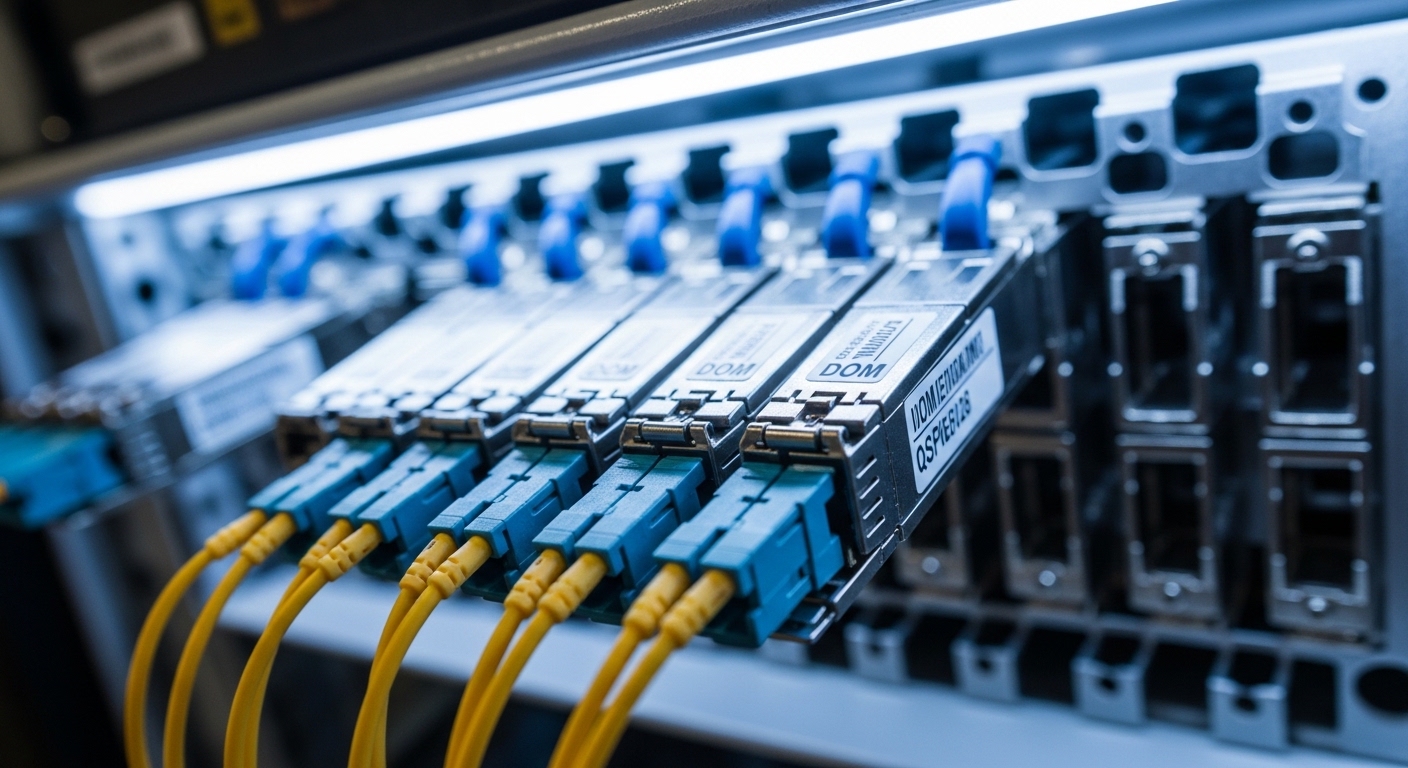
400G optics let operators consolidate uplinks and reduce the number of physical ports, which matters when you are space-constrained in cabinets and central offices. In smart cities, the key is matching fiber type, reach, and optics temperature limits to real deployment distances and redundancy requirements.
400G leaf-spine uplinks for traffic operations centers
In a typical traffic operations center, you might run a 3-tier design: access switches at intersections, aggregation at a regional site, and a leaf-spine fabric in the main operations room. Engineers often target 400G uplinks from ToR/aggregation to the spine to keep east-west traffic from saturating during peak incident response windows. For example, if 12 intersections each generate bursty camera analytics, you can see sustained throughput growth that makes 100G uplinks feel “fine” only until you add new feeds.
- Best fit: short-to-mid reach within the metro ring (often 0 to 10 km)
- Pros: fewer cables, higher capacity per slot
- Cons: higher per-port power and stricter optics compatibility testing
400G metro aggregation for smart grid substation backhaul
Utilities frequently backhaul SCADA telemetry, outage alerts, and maintenance video from substations to regional control centers. With 400G, you can standardize aggregation links across multiple sites and still leave headroom for firmware updates and diagnostic streams. If your substation-to-hub distance is, say, 2 km over OM4 or 10 km over OS2, you select optics based on the actual fiber plant, not the marketing reach.
- Best fit: metro aggregation rings and hub-spoke designs
- Pros: capacity scaling without adding switch chassis
- Cons: careful budgeting for dispersion and link margin on older fibers
400G for city-wide video surveillance core networks
Surveillance is the classic bandwidth hog: multiple camera tiers, variable bitrate streams, and occasional bursts during events. In practice, operators deploy 400G to the aggregation layer where they terminate transport streams and run analytics pipelines. A common operational goal is to keep packet loss low during simultaneous incidents, because retransmissions can create “late” detections.
- Best fit: core and aggregation where traffic is aggregated from many sources
- Pros: reduces oversubscription risk
- Cons: requires accurate optics and consistent cleaning practices
400G in public safety dispatch and emergency communications
Public safety networks often prioritize reliability and fast failover. 400G links help reduce latency pressure by moving more traffic off constrained 10G/25G tiers and onto higher-capacity paths with stable queue behavior. In the field, teams typically pair 400G with redundant routing and verify link-level counters after every maintenance window.
- Best fit: resilient aggregation where failover times are scrutinized
- Pros: better headroom for bursts
- Cons: tighter operational discipline for optics handling
400G for connected vehicle edge-to-cloud transport
Smart mobility projects use roadside units (RSUs) to upload sensor data to edge servers and then to cloud platforms. When you centralize processing in a few regional edge sites, 400G optics become a practical way to support higher telemetry volumes without expanding the number of links. If the RSU aggregation site is within a campus or data hall, short-reach optics are usually the cost-effective choice.
- Best fit: edge aggregation in campuses and regional hubs
- Pros: simplifies topology and reduces port sprawl
- Cons: compatibility matters across switch generations
400G for broadband backhaul of municipal Wi-Fi and kiosks
Even when kiosks are “low bandwidth” individually, the combined demand during festivals or emergencies can spike quickly. Operators often upgrade uplinks at the aggregation points first, then tune QoS. 400G links can reduce the need for frequent stepwise upgrades across many small sites.
- Best fit: aggregation points with many access endpoints
- Pros: smoother scaling curve
- Cons: depends on consistent fiber quality across the fleet
400G for industrial IoT and environmental sensor networks
City sensors for air quality, noise monitoring, and water management may seem modest, but they generate continuous telemetry and periodic firmware updates. When you add analytics and historical storage replication, traffic patterns can shift from steady-state to bursty. 400G at the aggregation tier helps absorb replication traffic without destabilizing control-plane performance.
- Best fit: sensor aggregation and analytics backhaul
- Pros: supports future sensor rollouts
- Cons: ensure your transceiver supports the temperature range for outdoor cabinets
400G for data center interconnect in smart city cloud platforms
Some smart cities run private cloud or hybrid platforms where municipal data must move between regional data centers. 400G can be used on interconnect links to maintain predictable replication windows for video analytics and GIS datasets. In these cases, teams focus on optical reach, link budgets, and consistent DOM telemetry for monitoring.
- Best fit: inter-data-center links within metro distances
- Pros: improved replication throughput
- Cons: must validate dispersion tolerance and fiber aging
400G transceiver technical specs you actually need
400G is not one single thing; it is a family of optics choices tied to form factor, encoding, and fiber reach. For smart city deployments, engineers usually narrow down by switch transceiver type (QSFP-DD vs OSFP, etc.), then choose the wavelength and reach that match the installed fiber.
| Key spec | Example short-reach option (SR) | Example long-reach option (LR) |
|---|---|---|
| Typical data rate | 400G | 400G |
| Wavelength | 850 nm (multimode) | 1310 nm (single-mode) |
| Reach (typical) | ~100 m to 150 m on OM4 (varies by vendor) | ~10 km to 20 km on OS2 (varies by vendor) |
| Connector | LC duplex | LC duplex |
| Operating temperature | Commercial or industrial; verify for outdoor cabinets | Commercial or industrial; verify for outdoor cabinets |
| DOM support | Usually supported via I2C/SFF-8472-like interfaces | Usually supported via I2C/SFF-8472-like interfaces |
For standards context, 400G Ethernet line rates and objectives align with IEEE Ethernet work, while module electrical/optical behavior is commonly described through industry transceiver specifications. See [Source: IEEE 802.3], and vendor datasheets for DOM and optical parameters. For deployment decisions, you should also follow cleaning and handling guidance consistent with fiber best practices; the transceiver cannot compensate for contaminated connectors.
Pro Tip: In smart city field work, DOM alarms often show up as “early drift” before link failures. Instead of waiting for link down events, set thresholds on receive power and error counters right after installation, then re-check after seasonal temperature swings.
How to choose 400G optics for smart city industry applications
Selection is usually a two-step process: first match the optics type to the switch and transceiver slot requirements, then match reach and fiber plant limits. If you get either step wrong, you can end up with intermittent link behavior that is expensive to debug.
- Distance and fiber type: confirm OM4 vs OS2, then use vendor reach specs plus a link margin calculation.
- Switch compatibility: verify the exact transceiver form factor and the switch vendor’s compatibility matrix.
- Wavelength plan: SR for short multimode runs, LR for longer single-mode runs; do not mix assumptions.
- DOM telemetry: ensure monitoring is supported end-to-end so your NMS can alert on drift.
- Operating temperature: pick industrial modules if cabinets see high summer or cold winter extremes.
- Vendor lock-in risk: weigh OEM optics vs third-party, factoring support and return policies.
- Connector quality and cleaning: plan for LC cleaning tools and inspection procedures before every patch.
Common mistakes and troubleshooting in 400G smart city installs
Below are failure modes that show up repeatedly in municipal and enterprise deployments. I am intentionally calling out root cause and fix, because “it should work” is not a troubleshooting strategy.
-
Mistake: Installing the correct wavelength but wrong reach class for the fiber plant.
Root cause: vendor reach assumes specified fiber attenuation and link margin; older or poorly maintained fiber reduces margin.
Solution: measure end-to-end loss with an OTDR or certified test equipment, then reselect optics (SR vs LR) or add margin via shorter patch lengths. -
Mistake: Using third-party optics without validating DOM and compatibility.
Root cause: some platforms behave differently with optics that implement DOM fields or thresholds in slightly non-identical ways.
Solution: confirm against the switch’s verified optics list; run a burn-in test and monitor receive power and error counters. -
Mistake: Connector contamination after “quick” cleaning.
Root cause: LC endfaces can retain microfilm; you get elevated receive errors and intermittent link flaps.
Solution: use fiber inspection, re-clean with approved methods, replace damaged jumpers, and verify with a known-good patch cord. -
Mistake: Ignoring temperature constraints for outdoor cabinets.
Root cause: commercial modules may be out of spec during winter cold snaps or summer heat soak.
Solution: select industrial-rated optics, ensure airflow/heat management, and validate alarms during seasonal transitions.
Cost and ROI note for 400G in smart city networks
Street pricing varies, but as a planning baseline, 400G optics often cost more per module than 100G or 25G equivalents, especially for long-reach single-mode options. OEM optics can carry a premium for guaranteed compatibility, while third-party optics may reduce upfront cost but increase validation effort and warranty complexity. From a TCO view, the ROI usually comes from consolidating ports, reducing power per bit via higher-capacity links, and avoiding repeated forklift upgrades across multiple municipal sites.
Operationally, consider failure rates and spares strategy: if you deploy dozens of links across intersections and substations, keep a small pool of known-good optics and patch cords. Also count labor time for cleaning/inspection and post-install monitoring, because those minutes add up in the field.
Top 8 selection ranking for smart city industry applications
Use this table to quickly rank which application categories tend to benefit most from 400G right now, assuming typical metro and campus constraints.
| Rank | Industry application | Why 400G helps

🍪 We use cookies to improve your browsing experience and analyse site traffic.
Privacy Policy
|
|---|