
Telecom teams are under pressure to scale capacity while reducing operational friction, and that is why analysis of pluggable optics is now a board-level topic. This article helps network engineers, data-center architects, and field technicians forecast where modules are headed from 100G and 200G toward 400G and 800G. You will get a practical implementation guide, a specs comparison table, a selection checklist, and troubleshooting steps tied to real-world failure modes.
Prerequisites: what you must measure before doing analysis
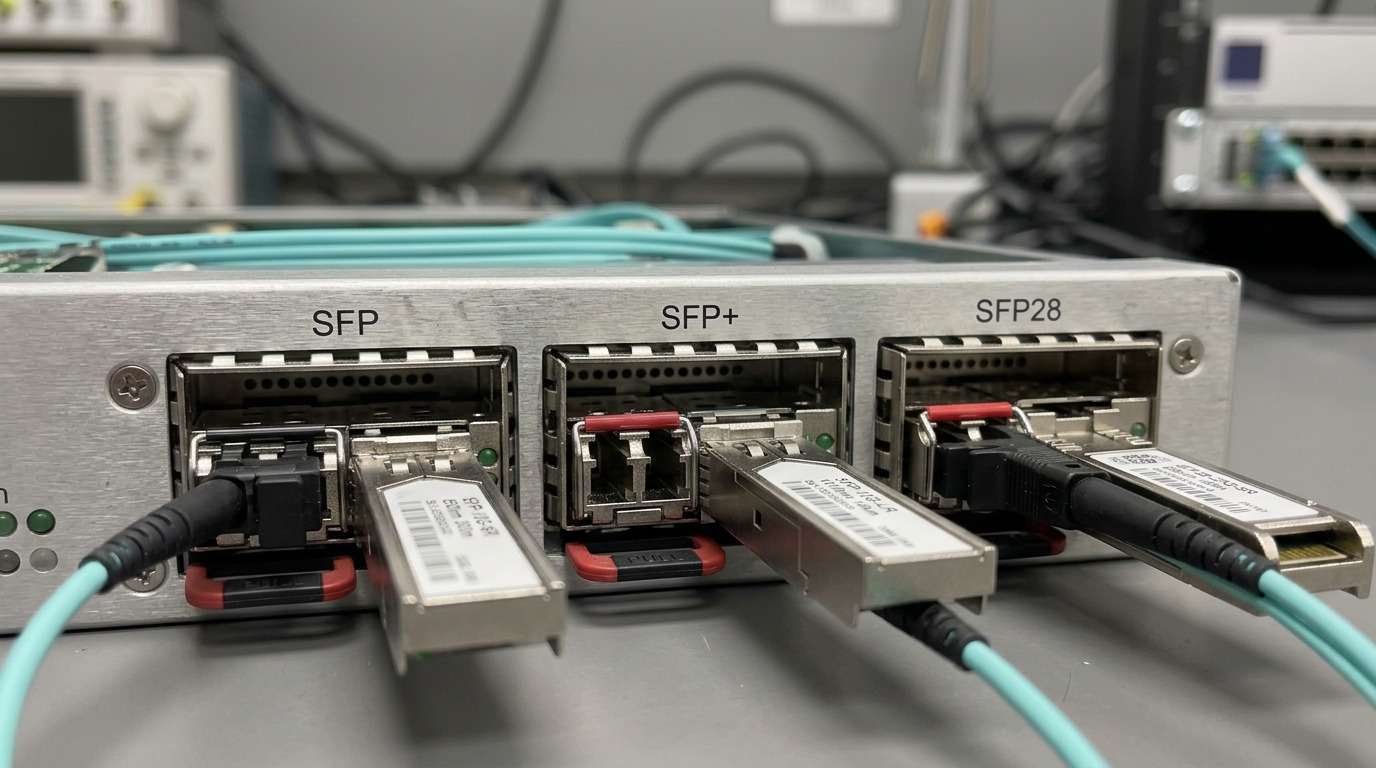
Before predicting the future of pluggable optics, capture the physical and electrical constraints of your plant. In my deployments, the fastest way to avoid bad module orders is to confirm lane counts, link rates, and cooling margin before you touch optics. Also verify that the switch vendor supports the specific transceiver platform and optical budget class you intend to use.
What to gather (field checklist)
- Switch and line-card part numbers: e.g., Cisco Nexus 9300/9500 optics compatibility lists, Juniper QFX/QSF/QFX10000 transceiver guidance, or Arista EOS-supported optics tables.
- Link plan: target speed (10G/25G/50G/100G/200G/400G/800G), expected reach, and whether the path is OM4/OM5 multimode or OS2 single-mode.
- Fiber type and plant loss: connector type (LC vs MPO), measured insertion loss, and estimated span loss using OTDR or certified test results.
- Power and thermal headroom: verify airflow direction, fan profiles, and the module cage temperature limits from the switch datasheet.
- DOM support: confirm whether the platform requires Digital Optical Monitoring (DOM) and whether it enforces thresholds or read-only operation.
Expected outcome: a list of supported transceiver form factors and a quantified link budget (or at least a defensible estimate) so your analysis is grounded in measured reality.
Step-by-step implementation guide: analysis-driven optics migration
This section turns analysis into an execution plan you can run across a pilot, then scale. The idea is to reduce risk: validate optics behavior with DOM telemetry, validate optics reach against fiber test data, and validate thermal/power margins under load. Follow each step in order and record results so future migrations become cheaper.
Lock the standards and lane mapping you are targeting
Pluggable optics evolution is tightly linked to IEEE Ethernet PHY generations and vendor-specific electrical lane mapping. For example, 100G Ethernet over fiber is defined by IEEE 802.3 and implemented as 10 lanes of 10G or 4 lanes of 25G depending on optic type; 400G typically uses 8 lanes of 50G or 16 lanes of 25G depending on the module and platform. For 800G, you will commonly see QSFP-DD or OSFP-like ecosystems with a much higher lane count and stricter skew control across the module-to-cage interface.
Expected outcome: a deterministic lane map (how many lanes, what speeds per lane, and which form factor) that matches your switch’s PHY design.
Select the right optical technology by reach and fiber type
In practice, your future-ready choice depends more on reach and fiber plant than on marketing specifications. Multimode deployments often move from 10GBASE-SR to 25G/50G SR variants, while metro and long-haul commonly use coherent or advanced direct-detect optics on single-mode. In many telecom networks, the migration path is not “one module replaces another” but “new module types appear while old ones remain for legacy ports.”
Expected outcome: a shortlist of candidate optics that match OM4/OM5 or OS2, with reach aligned to your measured link loss.
Compare key transceiver specifications that actually matter
Use the table below as an engineering sanity check. Specs like wavelength and connector type decide fiber compatibility, while optical power and receiver sensitivity decide whether your link budget survives aging and cleaning variability. Temperature range matters for telecom huts and outdoor cabinets where ambient swings can exceed office assumptions.
| Module example | Form factor | Data rate | Wavelength | Typical reach | Connector | DOM/telemetry | Operating temp |
|---|---|---|---|---|---|---|---|
| Cisco SFP-10G-SR | SFP+ | 10G | 850 nm | ~300 m (OM3), ~400 m (OM4) | LC | Supported (vendor-specific) | Industrial/Commercial class (per datasheet) |
| Finisar FTLX8571D3BCL | SFP+ | 10G | 850 nm | ~300 m (OM3), ~400 m (OM4) | LC | DOM typically supported | Commercial/Industrial variants |
| FS.com SFP-10GSR-85 | SFP+ | 10G | 850 nm | ~300 m class (OM3/OM4 depending on spec) | LC | DOM depends on listing | Commercial/Industrial options |
| QSFP-DD 400G SR8 class (example) | QSFP-DD | 400G | ~850 nm | ~100 m OM4 class (varies by vendor) | MPO-12 | DOM via MDIO/I2C profile | 0 to 70 C typical; check vendor |
| QSFP-DD 400G FR4 class (example) | QSFP-DD | 400G | ~1310/1550 nm band (varies) | ~2 km class (varies) | LC or MPO-to-LC adapters | DOM/telemetry | 0 to 70 C typical; check vendor |
Expected outcome: a comparison view that prevents you from ordering “the right speed” but “the wrong wavelength or connector class.”
Validate with DOM telemetry and link tests, not assumptions
DOM is not just for diagnostics; it is how you operationalize analysis over time. In field tests, I log temperature, laser bias current, received optical power, and alarm/warning flags while running traffic for at least 30 minutes and then again after 2 to 4 hours to catch thermal drift. Combine this with traffic error counters (e.g., CRC errors, FEC event counters where applicable) to confirm the PHY layer stays stable.
Expected outcome: measured baseline telemetry so your future migration does not repeat the same blind spots.
Plan for interoperability, including vendor lock-in risk
Pluggable optics ecosystems increasingly rely on EEPROM programming, authentication, and vendor-specific thresholds. Many operators have learned the hard way that “it lights up” is not the same as “it stays supported under firmware updates.” When doing analysis for the future, assume that firmware releases can tighten compatibility checks, change DOM interpretation, or alter threshold behavior.
Expected outcome: an approved optics sourcing plan that includes OEM and third-party options with documented qualification results.
Scale with an inventory strategy designed for telecom lifecycle realities
Telecom optics are long-lived, but the platforms are not. A realistic rollout uses a staged approach: qualify one module SKU per platform generation, keep a small spares pool, and track failure rates by lot code when available. Include return material authorization (RMA) workflows and clean-room handling procedures to avoid “false failures” caused by dirty connectors.
Expected outcome: a maintainable spares model that reduces downtime and shortens mean time to repair.
Selection criteria checklist for future-facing pluggable optics
Use this ordered checklist when you perform analysis for capacity growth. It reflects how engineers actually decide under budget, downtime windows, and compatibility constraints.
- Distance and fiber type: OM4/OM5 vs OS2, connector style (LC vs MPO), and measured span loss.
- Target data rate and lane mapping: ensure the module matches the switch PHY expectations.
- Switch compatibility: consult the vendor transceiver matrix for your exact model and firmware.
- DOM and telemetry behavior: verify alarms, thresholds, and whether the platform requires DOM for link stability.
- Operating temperature: confirm module cage airflow and module temperature class for huts, cabinets, and outdoor-adjacent racks.
- Connector cleaning and loss budget margin: add a margin for end-face contamination and aging.
- Vendor lock-in risk: qualify at least one third-party option if your procurement process demands it.
- Supply chain and lifecycle: check lead times and whether the module line is actively supported.
Expected outcome: a repeatable decision process that prevents last-minute swaps and reduces requalification costs.
Pro Tip: In many production networks, the dominant cause of intermittent link issues is not the transceiver “failing,” but connector contamination interacting with higher lane counts. When you move from 10G to 400G/800G optics, the optical budget margin tightens and the number of optical interfaces increases, so cleaning discipline becomes a first-class reliability control rather than a maintenance afterthought.
Common mistakes and troubleshooting tips (top failure modes)
Even good analysis fails if you do not troubleshoot systematically. Below are concrete mistakes I have seen in field deployments, with root causes and fixes.
Failure mode 1: Link comes up briefly then flaps
Root cause: marginal optical power due to excessive insertion loss, dirty connectors, or a fiber polarity/mapping error (especially with MPO fanouts). Higher-speed optics are less forgiving and can trigger receiver overload or under-power conditions.
Solution: clean connectors using approved lint-free wipes and isopropyl alcohol or manufacturer-recommended cleaning kits, then re-test with a certified loss meter or OTDR. Confirm polarity and ensure the correct transmit/receive pair mapping for each lane group.
Failure mode 2: DOM alarms show temperature or bias warnings under load
Root cause: inadequate airflow, blocked cage vents, or selecting a module temperature class that does not match the environment. In some telecom cabinets, ambient can exceed the assumption used during initial qualification.
Solution: check fan speed, verify airflow direction, remove obstructions, and compare measured cage airflow against the switch datasheet requirements. If needed, swap to an industrial temperature-rated module variant and re-run the DOM telemetry baseline.
Failure mode 3: “Incompatible transceiver” or “unsupported optics” after firmware updates
Root cause: EEPROM profile changes, stricter authentication, or changed DOM threshold interpretation by the switch firmware. This can happen even when the module is from the same vendor family.
Solution: consult the switch release notes for optics compatibility changes, then re-qualify the exact module SKU against the new firmware. Maintain a rollback plan and keep a verified spares set that matches your current software image.
Cost and ROI note: what analysis should include
Price varies widely by form factor, reach, and whether you buy OEM or third-party. In my experience, third-party QSFP-DD and SFP/SFP+ modules can reduce unit cost, but they can increase operational friction due to qualification time and potential compatibility surprises. TCO should include labor for qualification, spares stocking risk, cleaning/handling supplies, and the probability of downtime during firmware transitions.
As a practical range: enterprise-grade SR modules are often in the tens to low hundreds of dollars per unit, while coherent or long-reach 400G/800G modules can be several multiples higher. For ROI, the most defensible savings come from avoiding truck rolls and reducing time-to-repair by keeping a small set of validated optics on-site, rather than chasing the lowest acquisition price.
Expected outcome: an optics budget that accounts for lifecycle costs, not only procurement price.
Telecom deployment scenario: applying analysis in a leaf-spine migration
Consider a 3-tier data center leaf-spine topology supporting a telecom workload mix: 48-port 10G ToR switches uplinking into 8x100G spine links, with a planned step to 400G uplinks on the next refresh. In the migration window, the team runs traffic at 60% utilization for 6 hours during each cutover to reduce risk, then compares DOM telemetry trends across optics batches. They also enforce a cleaning SOP for MPO fanouts and LC jumpers, using certified loss measurements before and after the move. The result of the analysis is a staged bill of materials: keep SR optics for short reaches, introduce FR4/other single-mode options for longer aggregation, and reserve coherent optics only for metro/long-haul segments where economics justify it.
Expected outcome: fewer link flap incidents, predictable thermal behavior, and a repeatable qualification process for future 400G/800G ports.
FAQ
Q: What does analysis mean for pluggable optics, beyond reading datasheets?
Datasheets tell you nominal reach and typical optical power, but real networks add connector loss, aging, and thermal constraints. In practice, analysis means validating with DOM telemetry, traffic error counters, and fiber test results before full-scale rollout.
Q: Are DOM and telemetry required for reliable operation?
Many platforms can detect DOM presence and may enforce thresholds or alarm behavior. Even when the optics “work” without full telemetry, DOM is essential for predictive maintenance and root-cause analysis when links degrade.
Q: How do I choose between multimode SR and single-mode FR options?
Start with measured distance and fiber type. If the plant is OM4/OM5 and the reach is within SR budgets, SR is usually simpler and cheaper; if you need longer reach or have OS2 fiber, FR-class single-mode optics typically fit better.
Q: What is the biggest risk when upgrading to 400G or 800G?
The biggest risk is compatibility and tight margins: lane mapping, connector cleanliness, and platform firmware behavior. Higher speeds increase sensitivity to insertion loss and misconfiguration, so qualification must include DOM and sustained traffic testing.
Q: Should I buy OEM or third-party optics for telecom deployments?
OEM optics reduce compatibility uncertainty but can raise unit cost. Third-party optics can be cost-effective, but you must qualify the exact SKU on the exact platform firmware and maintain documentation for future RMAs and troubleshooting.
Q: Which standards or references should I cite in internal documentation?
Reference IEEE 802.3 for Ethernet PHY behavior and vendor datasheets for module electrical/optical specs. For optics ecosystem details like DOM and transceiver management conventions, also cite vendor technical documentation and relevant industry guidance. IEEE 802.3 Standard and Cisco product and transceiver guidance are common starting points.
Update date: 2026-05-02. For next steps, use analysis of fiber optic transceiver reach budgeting to build a link budget workflow that matches your specific fiber plant and operational margins.
Author bio: I am a field-focused electronics and optical hardware specialist who has deployed and validated pluggable transceivers across telecom switching platforms. My work centers on measurable link budgets, DOM telemetry baselining, and failure analysis rooted in real rack conditions.
