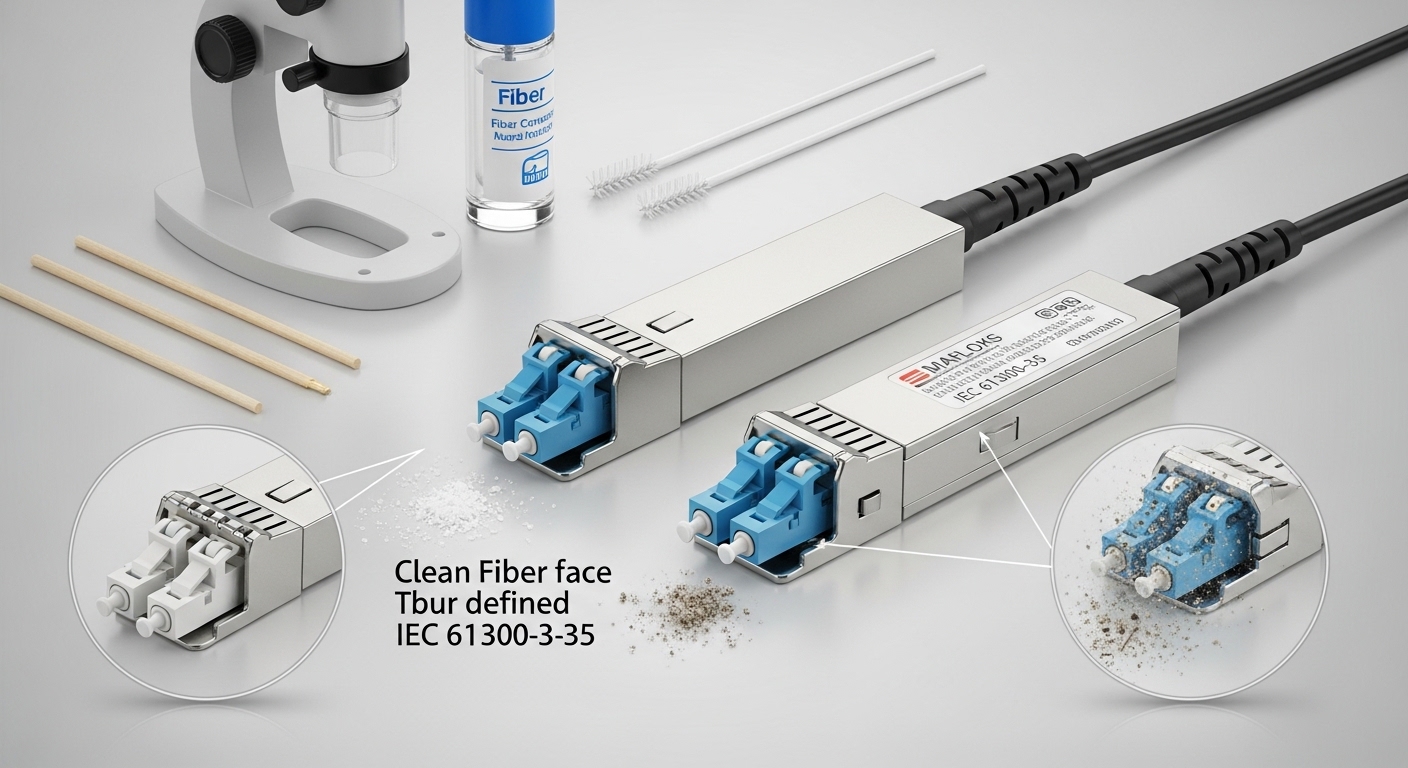
In high-speed SFP deployments, link flaps and “mysterious” CRC bursts often trace back to one root cause: dirty optical connector endfaces. This article explains how IEC 61300-3-35 cleanliness testing maps to real failure modes in SFP transceivers, helping network engineers, field techs, and data center operators reduce returns and outages. You will get a top-N decision framework, a spec comparison table, and troubleshooting steps tied to measurable operational effects.
Top 7 cleanliness failure mechanisms IEC 61300-3-35 is meant to catch
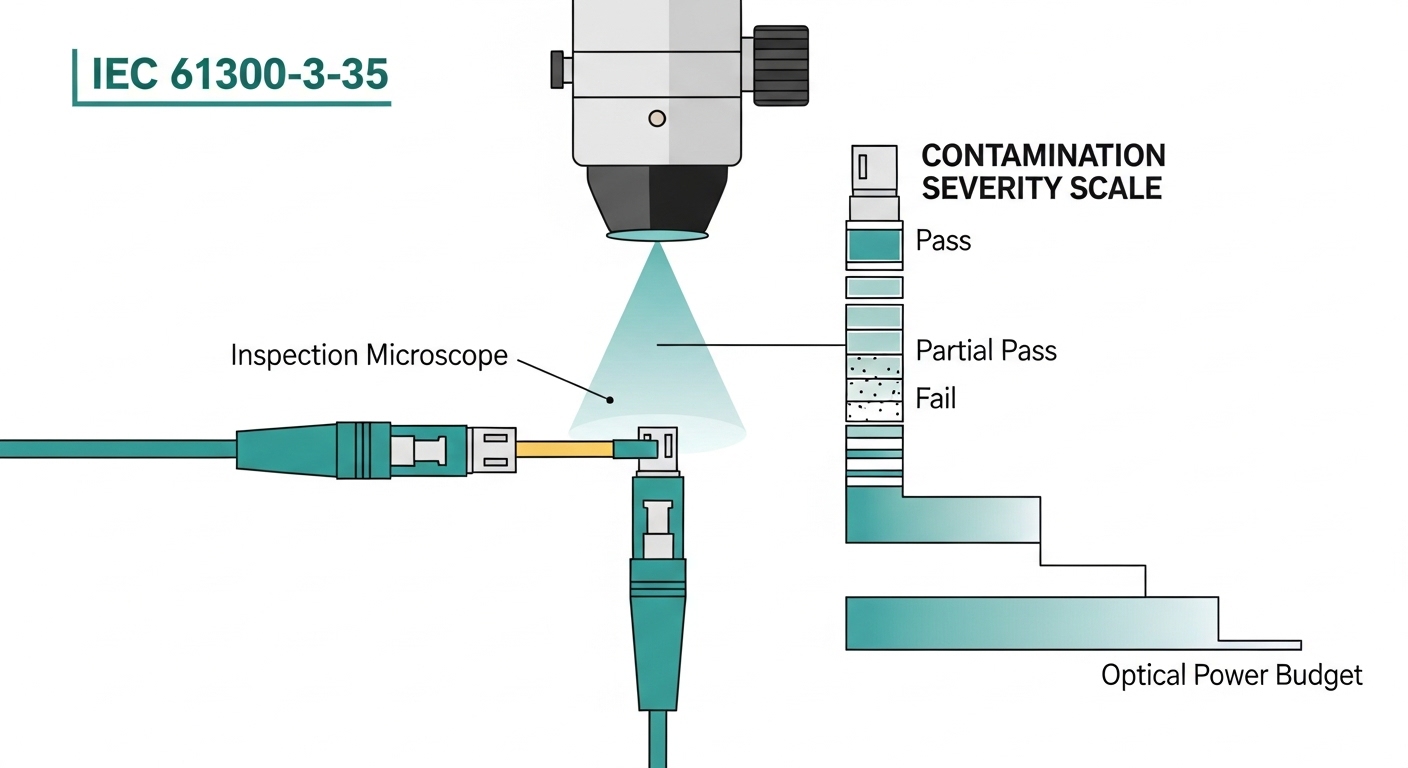
IEC 61300-3-35 is the cleanliness and contamination test approach used to verify optical connector conditions and classify contamination severity. In practice, the test correlates to optical power penalty, increased backscatter, and higher insertion loss, which SFP receiver sensitivity can tolerate only up to a point. Field teams typically see failures after moves, patch-panel churn, or transceiver swaps without end-cap discipline. The same contamination can appear “clean” under low-magnification inspection yet still violate cleanliness thresholds under standardized test illumination.
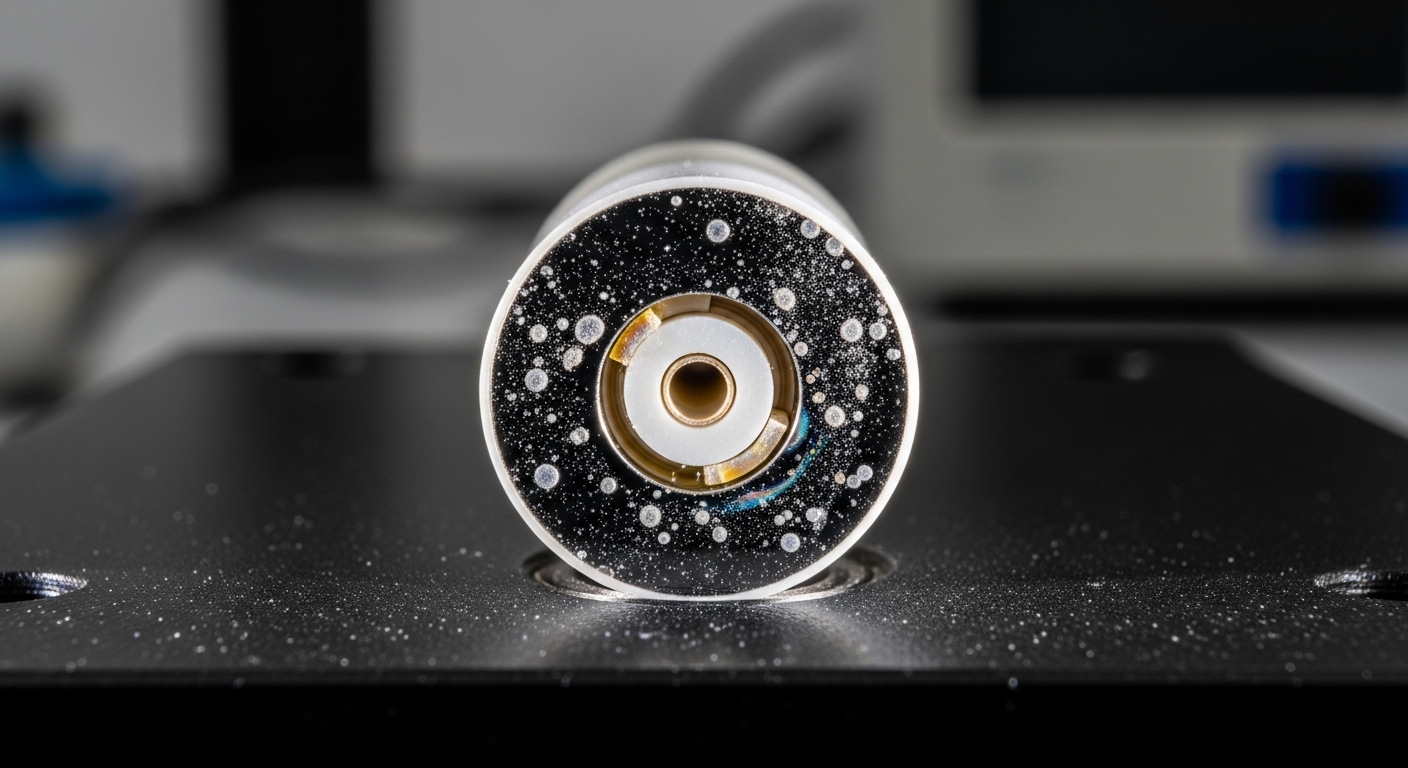
Film residues and micro-wetting that increase insertion loss
Thin films (dust with oils, fingerprints, or flux residues) change the effective refractive interface and scatter light. Even a few microns of residue can raise loss enough to collapse margin at 10GBASE-SR/SW and 1G links, depending on launch power and receiver sensitivity. Best-fit scenario: multi-tenant patch panels where technicians frequently open dust caps and reconnect under time pressure.
- Pros: quick to detect with standardized test fixtures
- Cons: may be missed by handheld scopes without correct illumination
Dry particulates that cause localized scattering
Dry dust particles create point scatterers that spike attenuation and degrade eye opening. The penalty is often worse when the particle is on the active core-adjacent region rather than the outer cladding. Best-fit scenario: outdoor or construction-adjacent facilities where airborne particulates persist.
- Pros: highly repeatable failure signature
- Cons: cleaning alone may not restore if residue has baked in
Scratches and abrasion that permanently increase loss
Scratches are not “cleanliness” in the strict dust sense; they are damage that cleanliness tests can reveal indirectly by highlighting contamination trapped in grooves. A scratched ferrule face can hold films that are difficult to remove and will re-contaminate faster. Best-fit scenario: legacy patch cords that have been repeatedly mated without proper inspection.
- Pros: drives strong corrective action (cord replacement)
- Cons: requires physical remediation, not just wiping
Oil or fingerprint smears that create optical interference effects
Smears can form a thin layer that both scatters and changes reflection behavior, increasing return loss issues. In marginal links, that can manifest as higher BER or receiver alarms. Best-fit scenario: “rapid swap” procedures where endfaces are touched during SFP handling.
- Pros: often preventable with process discipline
- Cons: may require solvent-grade cleaning and re-inspection
Connector geometry mismatch that magnifies contamination impact
Even if both ends are “dirty,” mismatch between ferrule geometry, polishing quality, and mating alignment concentrates scatter. IEC 61300-3-35 testing helps standardize the cleanliness assessment so teams can distinguish contamination from mechanical mismatch. Best-fit scenario: mixing OEM patch cords and third-party jumpers across racks.
- Pros: reduces false blame on transceivers
- Cons: needs consistent mating hardware and cleaning tools
Endface fogging and condensation in cold-to-warm transitions
Condensation can deposit water films that look like haze. Optical tests can classify contamination severity, but the operational fix is to control environmental cycling and use correct protective dust caps. Best-fit scenario: edge sites with HVAC setbacks and rapid temperature changes.
- Pros: prevents recurring failures after “seasonal” changes
- Cons: may require environmental mitigation beyond cleaning
Backscatter-triggered receiver instability in marginal power budgets
Dirty interfaces increase backscatter, which can destabilize some receiver front-ends in marginal optical budgets. The outcome is intermittent link drops that correlate to vibration or patch-panel flex. Best-fit scenario: high-density spine-leaf deployments where marginal links are numerous and only some flake out.
- Pros: explains intermittent symptoms beyond static loss
- Cons: requires correlating optical diagnostics with cleanliness scans
Pro Tip: Field engineers often get the best results by pairing IEC 61300-3-35 cleanliness scoring with an optical power sanity check (Tx/Rx levels or vendor digital diagnostics). If a link’s power margin is healthy but errors spike after a connector event, cleanliness is the first suspect—even when a low-cost scope “looks fine.”
Specs that matter when IEC 61300-3-35 cleanliness meets SFP optics
Cleanliness standards are only useful when you translate them into optical budget impact. SFP receivers have finite sensitivity, and connector contamination can add insertion loss and scatter that consume margin. Below is a practical comparison of common SFP optical classes and what teams should consider when evaluating cleanliness test outcomes.
| Parameter | 10G SFP+ SR (850 nm MMF) | 1G SFP SX (850 nm MMF) | 10G SFP+ LR (1310 nm SMF) |
|---|---|---|---|
| Typical wavelength | 850 nm | 850 nm | 1310 nm |
| Typical reach (spec class) | 300 m (OM3) / 400 m (OM4) | 550 m (depending on OM) | 10 km |
| Optical budget sensitivity (order of magnitude) | ~ -9 to -12 dBm class | ~ -9 dBm class | ~ -14 to -18 dBm class |
| Connector type (typical) | LC | LC | LC |
| Common failure sensitivity to dirt | High in dense patching | Moderate to high | Moderate; intermittent possible |
| Operating temp range (typical SFP) | 0 to 70 C (commercial) | 0 to 70 C | -40 to 85 C (varies) |
For concrete optics, use vendor datasheets and transceiver class limits. Example modules include Cisco SFP-10G-SR (850 nm), Finisar FTLX8571D3BCL (10G SR-class), and FS.com SFP-10GSR-85 variants; exact receive sensitivity and DOM behavior vary by part number. When you interpret IEC 61300-3-35 results, treat them as a cleanliness classification that must be mapped to the link’s margin and the connector type used in the patch path.
IEC 61300-3-35 test-to-failure mapping in a real SFP leaf-spine deployment
Consider a 3-tier data center leaf-spine topology with 48-port 10G ToR switches and 10G uplinks using SFP+ transceivers over OM4 MMF. Over a 30-day period, one pod experiences intermittent link down events on two uplinks after a staffing change in patch management. Engineers pull the SFPs, run link diagnostics, and observe link-state flaps with rising FEC or BER counters, while optical power remains within vendor thresholds. The team then performs IEC 61300-3-35 cleanliness scoring on the affected LC jumpers and discovers contamination class severity consistent with thin residue and particulate films on both mating endfaces.
Operationally, the remediation is not “clean once and assume.” The field process is: inspect with a calibrated scope, clean with lint-free wipes and approved alcohol/cleaner (as per connector manufacturer guidance), re-clean with fresh wipes, and re-inspect until the connector endface meets the cleanliness acceptance class. After replacement of one scratched patch cord, the pod stabilizes for the remainder of the maintenance window. This scenario matches a common pattern: the receiver rarely fails immediately, but errors accumulate until the link drops under traffic bursts and temperature-induced alignment changes.
Selection criteria checklist for cleanliness testing and connector remediation
When deciding how to operationalize IEC 61300-3-35 cleanliness testing, engineers weigh process, compatibility, and risk. The goal is to reduce mean time to repair while preventing recurrence across high churn patch panels.
- Distance and optical budget margin: if you run near minimum budgets, treat cleanliness class deviations as critical events and prioritize aggressive re-inspection.
- Switch and transceiver compatibility: verify SFP+ vendor support for DOM monitoring and ensure optics are within specified temperature and link-length class.
- Connector standard alignment: confirm LC/SC type, ferrule geometry, and polishing format match the patch ecosystem you deploy.
- DOM support and alarm visibility: prefer modules with reliable digital diagnostics so you can correlate error bursts with optical power and temperature.
- Operating temperature and condensation risk: in cold-to-warm environments, plan for scheduled inspection and end-cap discipline.
- Vendor lock-in risk: choose inspection tools and cleaning consumables that are not tied to one transceiver OEM; validate performance across third-party cords.
- Process throughput: define how many connectors can be inspected per hour by your team and integrate it into change windows.
Common mistakes and troubleshooting tips for dirty SFP links
Even with IEC 61300-3-35 testing available, teams often make errors that keep links unstable. Below are the most frequent failure modes and how to fix them with root-cause clarity.
Pitfall 1: Cleaning without re-inspection
Root cause: wiping removes some residue but can redistribute micro-particulates or leave a film on the ferrule edge. Solution: enforce “clean, re-inspect, clean again if needed,” and replace any connector showing scratches or persistent haze.
Pitfall 2: Using mismatched inspection illumination or uncalibrated scopes
Root cause: low-cost microscopes may under-report contamination because of illumination angle, magnification, and autofocus behavior. Solution: use inspection equipment with documented alignment and consistent lighting; periodically validate against known reference conditions and record the cleanliness class outcome.
Pitfall 3: Touching endfaces during SFP handling
Root cause: fingerprints deposit oils that are not fully removed by dry wipes. Solution: train technicians to handle transceivers by the body, keep dust caps on until the moment of insertion, and use approved cleaning media when contamination is suspected.
Pitfall 4: Swapping only one side of a mating pair
Root cause: contamination on both ends means cleaning one connector can still leave enough scatter to fail. Solution: inspect and clean both mating endfaces, or replace the entire jumper if the contamination class remains elevated.
Cost and ROI note: what cleanliness programs actually cost
In typical enterprise deployments, third-party inspection scopes and connector cleaning kits can range from roughly $300 to $2,000 per inspection workstation depending on magnification and camera features, while replacement patch cords and transceivers drive ongoing spend. OEM optics may cost more (often 1.2x to 2.0x versus equivalent third-party modules), but they can reduce incompatibility risk if your ecosystem is tightly standardized. TCO improves when cleanliness workflows reduce RMA rates and reduce downtime; a single avoided maintenance incident can justify the program if your operational cost of downtime is high.
Practically, teams should budget for consumables (lint-free wipes, approved cleaners, compressed air if allowed by connector guidance) and for connector replacement when scratches are detected. If your failure rate is elevated due to frequent patch changes, the ROI from IEC 61300-3-35-driven inspection is usually fastest when implemented at the patch-panel boundary rather than only after link alarms appear.
Summary ranking: which actions reduce dirty SFP failures fastest
Below is a practical ranking of the most effective cleanliness and operational controls for SFP link reliability, ordered by expected impact in real deployments.
| Rank | Action | Best ROI scenario | Key limitation |
|---|---|---|---|
| 1 | Enforce “inspect before mate” with IEC 61300-3-35 scoring | High patch churn, multi-tenant panels | Requires disciplined workflow adoption |
| 2 | Bi-directional cleaning and re-inspection of both mating ends | Intermittent errors after connector events | May increase maintenance time |
| 3 | Replace scratched or repeatedly contaminated cords | Persistent failures on specific runs | Direct hardware replacement cost |
| 4 | Use SFP modules with reliable DOM and alarm visibility | Large fleets needing faster correlation | DOM does not replace cleanliness validation |
| 5 | Control environmental cycling to prevent condensation films | Edge sites and temperature swings | May require facility changes |
| 6 | Standardize connector ecosystem and mating hardware | Mix-and-match jumper environments | Procurement and inventory complexity |
| 7 | Targeted training to prevent endface contact during swaps | High-change teams and rapid RMA handling | Process maturity takes time |
Next step: if you are seeing SFP link instability, combine IEC 61300-3-35 cleanliness scoring with optical diagnostics and patch-path verification. Then standardize your change workflow using fiber optic connector inspection and cleaning best practices.
FAQ
What does IEC 61300-3-35 practically change for SFP troubleshooting?
It gives a standardized way to assess connector contamination severity, so you can move from “looks dirty” to measurable acceptance criteria. In SFP link troubleshooting, that reduces time spent swapping optics and shifts focus to the patch path and endface condition. [Source: IEC 61300-3