
Central banks and financial institutions run connectivity that must be fast, auditable, and resilient under strict change control. This article helps network and infrastructure teams choose the right financial IT transceiver for leaf-spine, campus, and inter-facility fiber links, while avoiding costly downtime. You will get practical selection criteria, real deployment numbers, and field-grade troubleshooting tips.
Why central bank networks demand “boring” transceivers that never fail
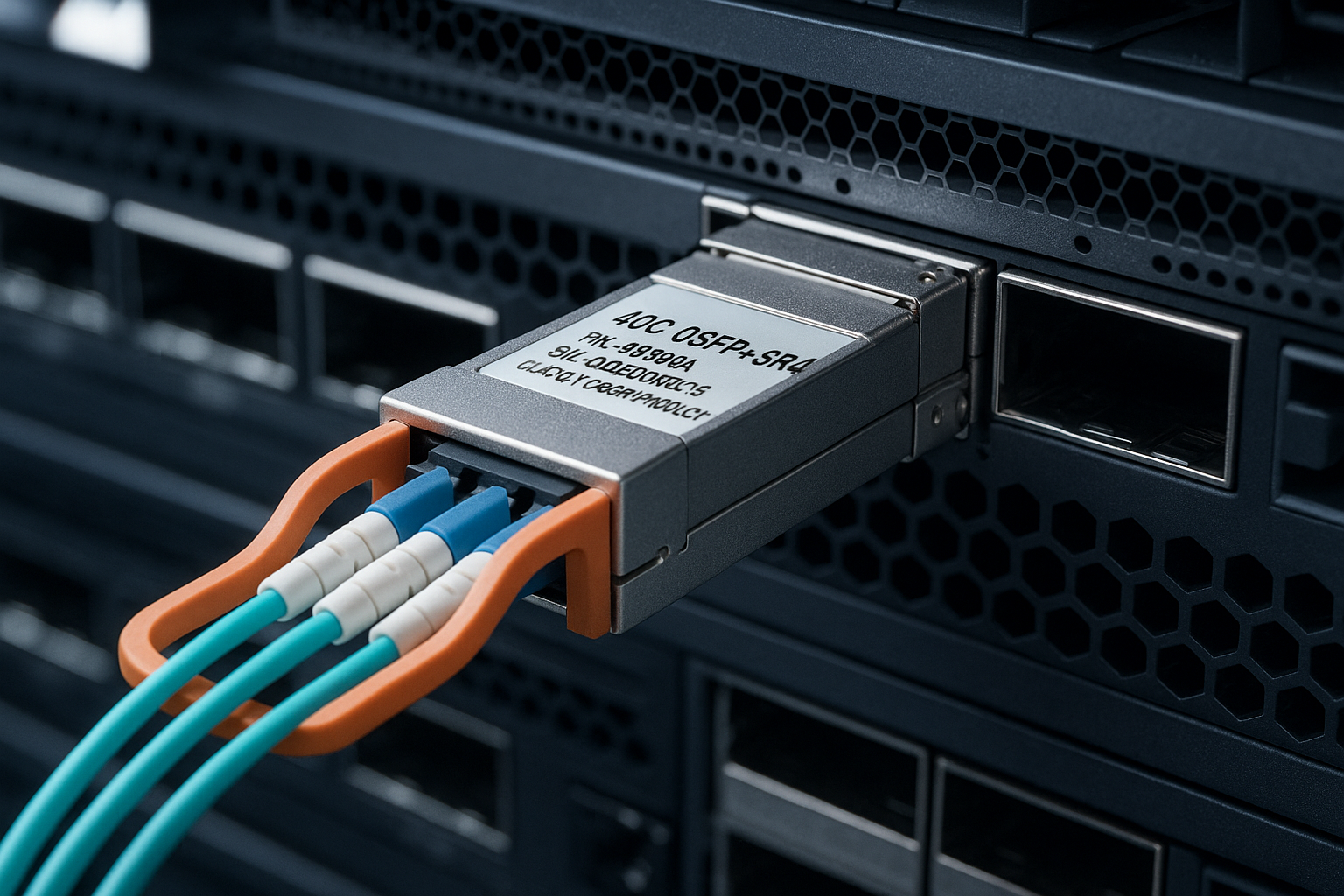
In financial IT, optics are not just bandwidth—they are part of the control plane’s reliability story. Most deployments use IEEE 802.3 Ethernet PHY layers over multimode or single-mode fiber, then rely on vendor-supported features like Digital Optical Monitoring (DOM) for alarms and proactive maintenance. In practice, teams standardize on specific transceiver families (for example, Cisco SFP-10G-SR or equivalent optics) to reduce interoperability risk and simplify acceptance testing.
Operationally, the “moat” is not marketing; it is predictable behavior across temperature swings, fiber aging, and optics vendor tolerances. Central bank environments often run in controlled data halls, but field engineers still see link degradations from connector contamination, dust, and patch panel rework. A well-chosen financial IT transceiver minimizes these variables by matching wavelength, reach class, and interface expectations.
For authority on Ethernet optical interfaces and PHY behavior, see [Source: IEEE 802.3] and vendor datasheets for specific optical modules. For wiring and structured cabling practices that affect optical loss budgets, align with [Source: ANSI/TIA-568].
Core technical specs: match wavelength, reach, and interface reality
Before you choose a model number, map your link budget: transmit power, receive sensitivity, fiber attenuation, and connector/patch losses. Most 10G and 25G optics for datacenters follow common wavelength bands and reach categories—multimode for short distances, single-mode for longer runs.
| Module type | Typical standard | Wavelength (nm) | Target reach | Connector | Data rate | Typical DOM | Temp range |
|---|---|---|---|---|---|---|---|
| SFP+ SR | 10GBASE-SR | 850 | Up to 300 m (OM3) / 400 m (OM4) | LC | 10G | Yes (vendor-dependent) | 0 to 70 C (varies) |
| SFP+ LR | 10GBASE-LR | 1310 | Up to 10 km | LC | 10G | Yes (vendor-dependent) | -5 to 70 C (varies) |
| SFP28 SR | 25GBASE-SR | 850 | Up to 100 m (OM4 typical) | LC | 25G | Yes (vendor-dependent) | 0 to 70 C (varies) |
| QSFP28 SR | 100GBASE-SR4 | 850 | Up to 150 m (OM4 typical) | MPO/MTP | 100G | Yes (vendor-dependent) | 0 to 70 C (varies) |
Concrete examples you can anchor on: Finisar FTLX8571D3BCL (25G/10G SR class depending on exact part), FS.com SFP-10GSR-85 (10G SR 850 nm class), and vendor-specific Cisco optics like Cisco SFP-10G-SR. Always verify the exact bit rate, speed grade, and DOM implementation in the datasheet before ordering.
Pro Tip: In high-availability financial networks, the fastest way to cut “mystery outages” is to standardize DOM alarms and thresholds across transceiver batches. If your monitoring stack treats DOM telemetry differently by vendor, you will lose early warning signals and only discover issues during link flaps.
Real-world deployment scenario: leaf-spine in a regulated data hall
Consider a central bank data center with a 3-tier leaf-spine topology: 48-port 10G ToR switches at the leaf, 100G spine uplinks, and a mix of SR and LR optics. Engineers deploy 10GBASE-SR between ToR and server aggregation over OM4 patch runs capped at 70 m, then use 10GBASE-LR for inter-row links up to 2.5 km through dark fiber. For spine uplinks at 100G, they select 100GBASE-SR4 modules over MPO trunks sized to 120 m with a conservative loss budget.
Operational details matter: field teams enforce APC/UPC cleanliness procedures, implement automated fiber inspection before acceptance, and lock transceiver vendor SKUs in change tickets. They also verify optics power levels and DOM readings during burn-in, then set alert thresholds so that a drifting receive power triggers ticket creation before the link reaches a hard failure point.
Selection checklist: how engineers avoid compatibility and risk traps
Use this ordered decision checklist when purchasing a financial IT transceiver for production:
- Distance and fiber type: confirm OM3 vs OM4 vs single-mode, and measure patch loss with a certified meter.
- Interface and speed grade: ensure the module matches the switch port capability (10G vs 25G vs 100G, SFP+ vs SFP28 vs QSFP28).
- Wavelength and reach class: verify 850 nm SR vs 1310 nm LR and that reach fits your budget with margin.
- Switch compatibility: check vendor compatibility lists and run a staged pilot in a non-critical rack.
- DOM support: confirm telemetry format, alarm behavior, and what your monitoring system expects.
- Operating temperature: validate transceiver temp range against your ambient and airflow profile.
- Vendor lock-in risk: weigh OEM optics vs third-party with a documented acceptance test and warranty terms.
Cost, TCO, and monetization reality: OEM vs third-party optics
Pricing varies by market and volume, but typical budgets for enterprise optics often land in these rough bands: 10G SR SFP+ modules commonly cost a few dozen to low hundreds of USD; 25G SR SFP28 modules often cost more; 100G SR4 QSFP28 can be materially higher. OEM optics may be pricier, but their compatibility and DOM behavior are usually the smoothest path for regulated environments.
TCO is driven by failure rate, mean time to repair, and acceptance cycles. A third-party module that “works” but lacks consistent DOM alarms can increase operational overhead and extend MTTR. Conversely, a well-vetted third-party SKU can reduce capex while keeping uptime stable—if you enforce acceptance testing and maintain a rollback plan.
Common mistakes / troubleshooting for financial IT transceivers
1) Wrong fiber category or connector loss underestimation
Root cause: teams assume OM4 reach works, but patch panel loss and dirty connectors push the link beyond the margin. Solution: validate with a light meter or OTDR where appropriate, clean LC/MPO ends, and re-measure end-to-end loss.
2) Port speed mismatch or wrong form factor
Root cause: attempting to deploy an SFP28 optic into an SFP+-only port, or mixing 25G-capable optics on a 10G-only configuration. Solution: confirm switch port mode support and admin configuration; stage a pilot and record negotiated link speed.
3) DOM telemetry mismatch breaks monitoring and delays action
Root cause: monitoring scripts expect one vendor’s DOM fields or units, so alarms never trigger or appear inconsistent. Solution: align your monitoring integration with the optics’ DOM implementation and test alarm thresholds during commissioning.
4) Thermal and airflow surprises
Root cause: transceivers run hotter than lab conditions during partial fan failures or blocked airflow. Solution: verify airflow direction, measure ambient near cages, and ensure modules meet the specified temperature range.
FAQ
What is a financial IT transceiver, and how is it different from generic optics?
A financial IT transceiver is selected with reliability, monitoring, and change-control requirements in mind. In practice, that means strict compatibility validation, DOM integration, and conservative link budgets for audited uptime.
Can I use third-party optics in a central bank network?
Yes, but only after a structured acceptance test in a pilot environment. Validate link negotiation, DOM telemetry, alarm behavior, and error counters, then document rollback procedures.
How do I calculate whether SR optics will work over my fiber?
Start with the vendor’s transmit power and receive sensitivity, then subtract measured fiber attenuation plus connector and patch losses from the link budget. Add margin for aging and cleaning variability.
What should I monitor besides link up/down?
Track DOM values (laser bias/current, received power), interface error counters, and any vendor-specific optical diagnostic alarms. The goal is early detection of drift, not just reaction to outages.
Why do links flap even when the module “seems compatible”?
Common causes include contaminated connectors, marginal loss budgets, or DOM/threshold issues that lead to repeated resets. Clean optics, re
